

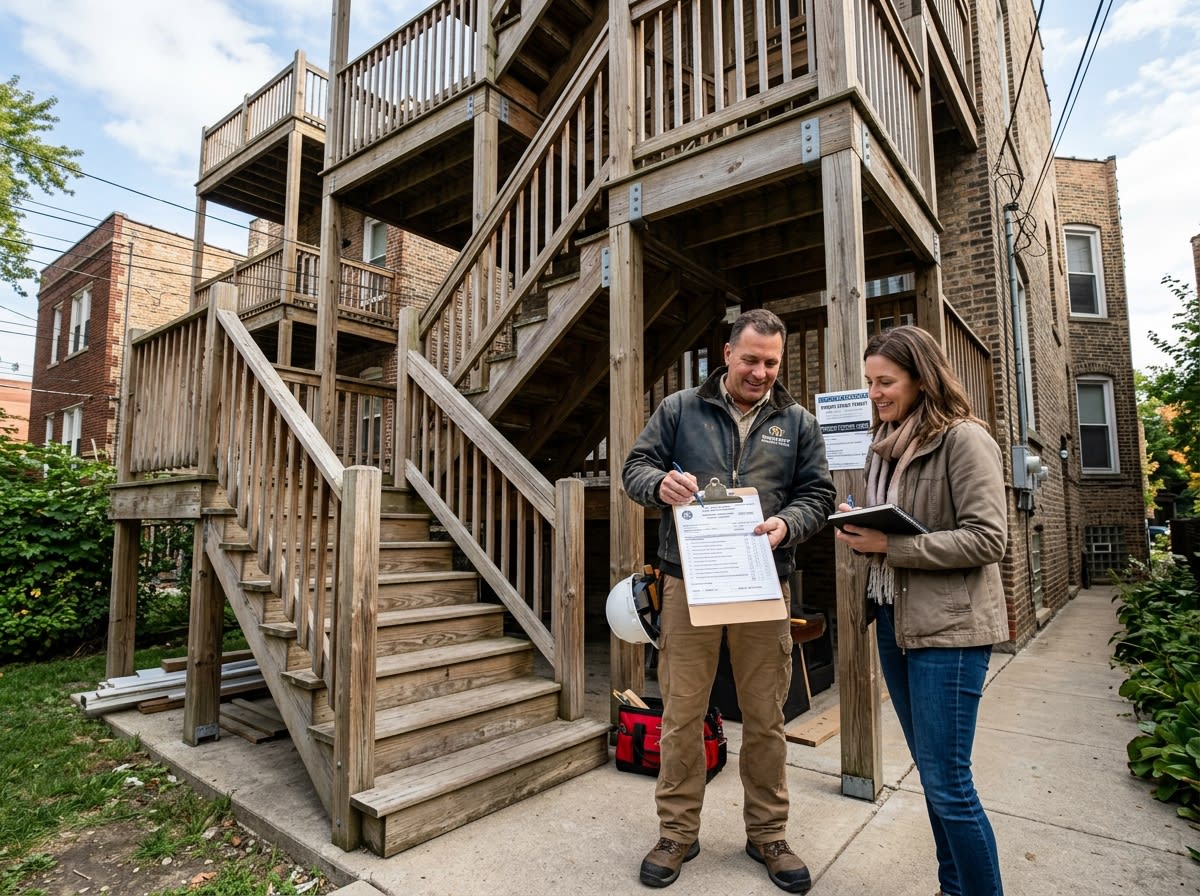
Chicago's wooden back porches are a defining feature of the city's two-flats and apartment buildings, but they are also among the most heavily scrutinized structures by building inspectors, and for good reason. After past tragedies, the city tightened and rigorously enforces its porch code, and violations carry real consequences for property owners, from fines to orders to vacate. Most porch violations fall into a handful of recurring categories. Understanding the five that inspectors flag most often, and how to fix each one properly, helps you keep your porch safe, legal, and sound. Here is what to watch for and how to address it.
1. Structural Integrity and Deterioration
The most serious and common porch violations involve the structure itself. Chicago's freeze-thaw cycles, heavy snow, and constant moisture are brutal on wood, and over time posts, beams, joists, and connections deteriorate. Inspectors look for rot, splitting, insect damage, sagging, and inadequate or undersized framing members. They also examine how the porch attaches to the building, since a failed connection at the building wall is one of the most dangerous defects a porch can have.
Fixing structural violations means replacing deteriorated members with properly sized, code-compliant lumber and ensuring sound connections throughout. This is not a cosmetic patch job. Rotted posts must be replaced, weakened beams reinforced or rebuilt, and the ledger connection to the building secured with the correct hardware. Because structural porch work affects safety and requires permits, it should be done by an experienced contractor who understands Chicago's specific porch requirements, which are stricter than general deck codes in important ways.
2. Railing and Guardrail Problems
Railing violations are extremely common because the requirements are specific and older porches frequently predate current standards. Chicago code dictates guardrail height, typically requiring guardrails of a minimum height on elevated porches, and limits the spacing between balusters so that a small child cannot pass through or get stuck. Inspectors routinely cite railings that are too low, have gaps that are too wide, are loose or wobbly, or are missing entirely on elevated walking surfaces.
The fix is to bring railings up to current code: correct height, proper baluster spacing, and secure, sturdy attachment that can withstand a significant horizontal load. A guardrail that looks fine but flexes when pushed will fail inspection and, more importantly, will not protect anyone in an emergency. Replacing or rebuilding non-compliant railings with properly anchored components is usually a manageable fix, and it is one of the most important for everyday safety on a porch where people gather.

3. Stair and Tread Deficiencies
Stairs connect every level of a Chicago porch and are a frequent source of violations because small inconsistencies add up to real hazards. Inspectors check that stair treads and risers are uniform in size, since irregular steps cause trips and falls, and that treads are deep enough and properly supported. They also look for stairs missing handrails, handrails at the wrong height or improperly graspable, and deteriorated or undersized stringers, the angled boards that support the steps.
Correcting stair violations involves rebuilding steps to consistent, code-compliant dimensions, ensuring stringers are sound and properly sized, and adding graspable handrails at the required height on the open sides. On the tall, stacked porches common in Chicago, stairs see heavy use and constant weather exposure, so they deteriorate faster than other components and deserve regular inspection. Well-built stairs with proper handrails are essential, since stairway falls are among the most frequent porch injuries.
4. Missing or Improper Permits
A surprising number of porch problems come down to paperwork. Building, repairing, or significantly altering a porch in Chicago requires a permit, and inspectors regularly find work that was done without one. Unpermitted porch work is a violation in itself, even when the construction quality is acceptable, because it was never reviewed or inspected for compliance. This commonly surfaces when a porch is being sold, refinanced, or inspected for an unrelated reason.
The fix depends on the situation. For new work, the answer is straightforward: pull the proper permit before starting, and schedule the required inspections. For existing unpermitted work, a property owner may need to obtain a permit after the fact and have the work inspected, which sometimes means opening up or modifying construction to demonstrate compliance. Chicago does offer programs intended to streamline certain porch repair permits, which our guide to the Chicago express permit program for porches explains in detail. Keeping permit and inspection records protects you at resale.
5. Inadequate Load Capacity and Overcrowding Risk
Chicago's porch code places strong emphasis on load capacity, because these structures are often used for gatherings where many people stand in one place. Violations arise when a porch is built or has degraded to the point that it cannot safely support the required live load, whether due to undersized framing, weak connections, or deterioration. Inspectors assess whether the structure is built to carry the loads the code requires, and a porch that falls short is a serious safety concern.
Addressing load-capacity issues means reinforcing or rebuilding the structure to meet code requirements, using properly sized members and robust connections throughout. This is closely tied to the structural integrity issues discussed earlier, and the two are often cited together. Beyond construction, property owners can reduce risk by being mindful of how many people gather on a porch at once, though the real solution is ensuring the structure itself is built and maintained to carry its required load with a safe margin.
How Chicago Porch Code Differs From General Deck Rules
Many property owners are surprised to learn that Chicago holds porches to standards stricter than typical deck construction, and understanding why helps you avoid violations. After past porch failures in the city, Chicago strengthened its requirements for these structures, with particular attention to load capacity, connections, and the durability of materials in our climate. A porch built to ordinary deck assumptions may fall short of what Chicago specifically requires, which is one reason work done by contractors unfamiliar with the city's porch code so often gets flagged.
The practical implication is that experience with Chicago porches specifically, not just general carpentry, matters when you build or repair one. The correct lumber sizing, the proper hardware at connections, the right approach to attaching the porch to the building, and the detailing that keeps water out all reflect requirements honed for this city's conditions and history. Treating a Chicago porch like a standard suburban deck is a recipe for both violations and genuine safety risk, while building to the city's actual standard produces a structure that passes inspection and lasts.
Preventive Maintenance That Keeps Violations Away
The most effective way to deal with porch violations is to prevent them through regular maintenance, since most citations stem from deterioration that developed gradually and unnoticed. An annual inspection, ideally each spring after winter's freeze-thaw punishment, catches problems while they are small. Look for soft or discolored wood that signals rot, loose or wobbly railings, cracked or splitting boards, rusted or loosened hardware, and any sagging or movement in the structure. Catching these early turns a major repair into a minor one.
Routine upkeep extends a porch's life and protects its compliance. Keeping the wood sealed or painted slows moisture damage, clearing leaves and debris prevents trapped moisture that accelerates rot, and ensuring water drains away from the structure rather than pooling protects the framing. Addressing small issues promptly, a single rotted board or a loosening railing, prevents the cascade of deterioration that eventually triggers a structural violation. A porch that is inspected and maintained on a regular schedule rarely becomes the subject of an inspector's citation in the first place.
What to Do When You Receive a Violation Notice
Receiving a porch violation notice is stressful, but a calm, methodical response resolves most cases without drama. Start by reading the notice carefully to understand exactly what was cited and any deadline for correction, since ignoring a notice only escalates the consequences. The citation tells you whether you are dealing with a structural issue, a railing or stair deficiency, a permit problem, or a combination, which determines your next steps and how urgent they are.
The wise move is to have the porch assessed promptly by a contractor experienced with Chicago porch code, who can confirm the scope of the problem and outline the proper fix. Some violations require pulling a permit before repairs begin, and your contractor can guide that process. Communicating with the city as needed, meeting the correction timeline, and keeping documentation of the permitted, inspected repair work closes out the violation cleanly. Acting quickly also matters for safety, since a cited structural or railing defect is a genuine hazard to anyone using the porch. Treating the notice as a prompt to make the structure safe, rather than a bureaucratic nuisance, leads to the best outcome for both compliance and the people who use your porch.
The Real Cost of Ignoring Porch Problems
It can be tempting to delay porch repairs, especially when a problem seems minor or a violation notice feels like an inconvenience, but ignoring porch issues is one of the costliest decisions a Chicago property owner can make. Deterioration only accelerates, so a small area of rot or a slightly loose railing today becomes a larger structural repair tomorrow. Unaddressed violations can escalate to fines, and in serious cases the city can deem a porch unsafe and order it closed or vacated, which is devastating for a rental property and dangerous for anyone using it.
The most serious cost is the human one. A porch that fails under the weight of people gathered on it can cause grave injuries, which is precisely why Chicago enforces its porch code so rigorously. Viewed against that risk, the cost of timely inspection and repair is modest and worthwhile. Property owners who treat their porches as the significant structures they are, maintaining them, repairing problems promptly, and keeping them properly permitted, protect their finances, their tenants or families, and themselves from liability. A sound porch is both a legal obligation and a genuine safeguard for everyone who steps onto it.
Keeping Your Chicago Porch Safe and Compliant
Most porch violations trace back to deterioration over time or work done without proper permits. The reassuring news is that each has a clear fix when handled by someone who understands Chicago's specific porch requirements. Regular inspection, prompt repair, and proper permitting keep a porch safe and free of the fines and orders that come with violations. If you have received a porch violation or want your porch assessed before problems arise, contact us for a consultation and we will evaluate your structure and bring it safely up to code.
Related Posts
- Chicago Porch Repair Costs 2026
- Chicago Porch Repair vs. Replacement
- Chicago Deck and Porch Inspection Checklist
- Chicago's Express Permit Program for Porch Repairs: What Homeowners Need to Know
- 2026 Chicago Area Renovation Costs: Room-by-Room Budget Breakdown
- Chicago Deck Weather Durability: How Freeze-Thaw Cycles Affect Wood vs. Composite
Reviewed by the Budget Construction Company Editorial Team
Budget Construction Company has served Chicago homeowners since 1976. Project costs and requirements vary by property, scope, and municipality.