
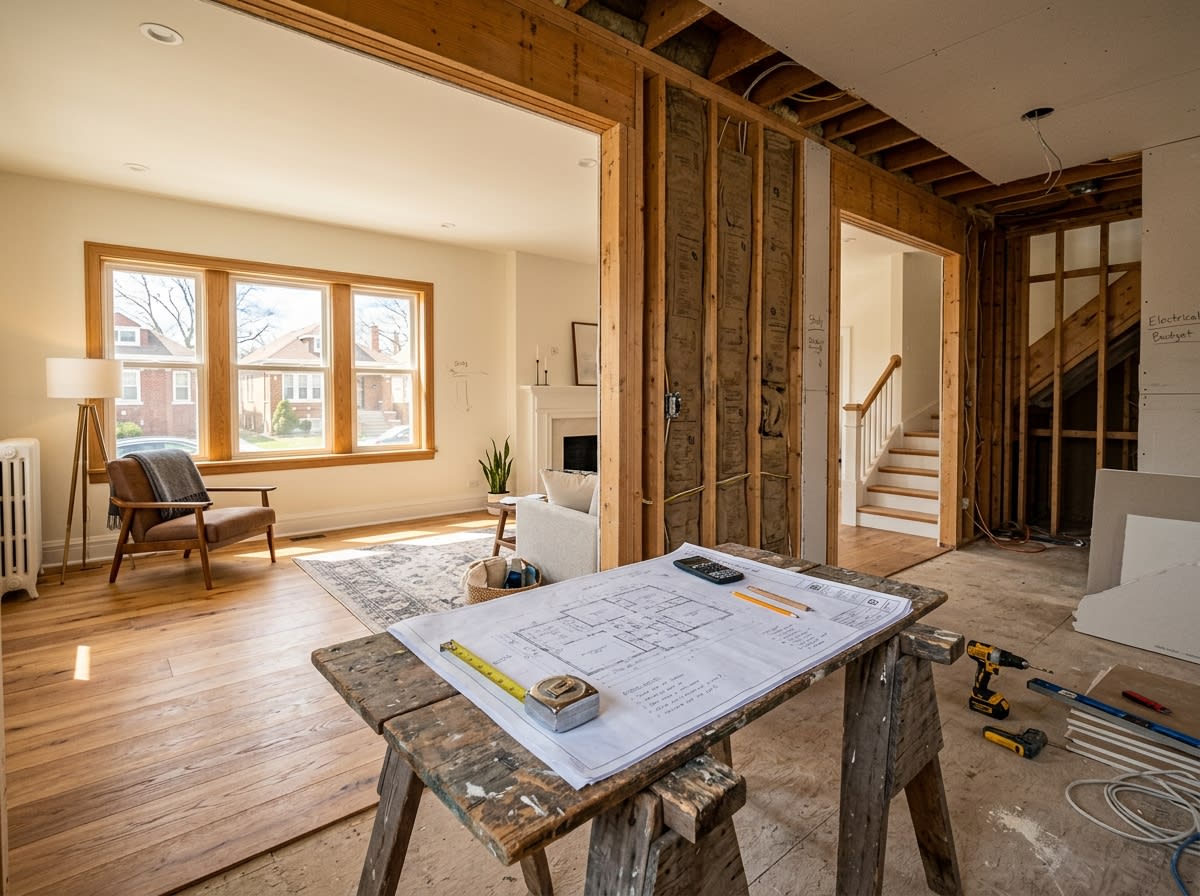
Most online renovation calculators are built for national averages, which means they quietly underestimate what a project costs here. Home renovation costs in the Chicago area in 2026 carry expenses those tools never account for: union and skilled-trade labor rates that run higher than the national median, city and suburban permit fees that vary block to block, and the material upgrades our freeze-thaw climate practically demands. If you are planning a project this year, you need numbers grounded in the Chicago metro reality rather than a figure pulled from a sunbelt suburb. This room-by-room breakdown gives you realistic 2026 ranges, explains where your money actually goes, and shows you how to allocate a budget that holds up once the work begins.
What Drives Chicago Renovation Costs in 2026
Three local factors push Chicago-area renovation costs above national figures. The first is labor. Skilled trades in the Chicago metro command strong wages, and good contractors stay booked months out, so you are paying for genuine expertise rather than the cheapest available crew. The second is permitting. The City of Chicago, plus suburbs like Evanston, Oak Park, and Skokie, each maintain their own permit fees, inspection schedules, and code requirements, and those costs land on your budget before a single wall comes down. The third is climate. Materials and systems that survive sub-zero Januarys and humid Augusts cost more upfront than builder-grade alternatives, but they prevent the premature failures that turn a one-time project into a recurring expense.
It helps to separate your budget into three buckets: materials, labor, and what we call soft costs. Soft costs include permits, design or architectural fees, dumpster and disposal charges, and the contingency fund every honest contractor will tell you to keep. On most Chicago projects, labor represents the largest single share, often 40 to 60 percent of the total, which is why the quality of your crew matters more than almost any material choice you will make.
Kitchen Remodel Costs in the Chicago Area
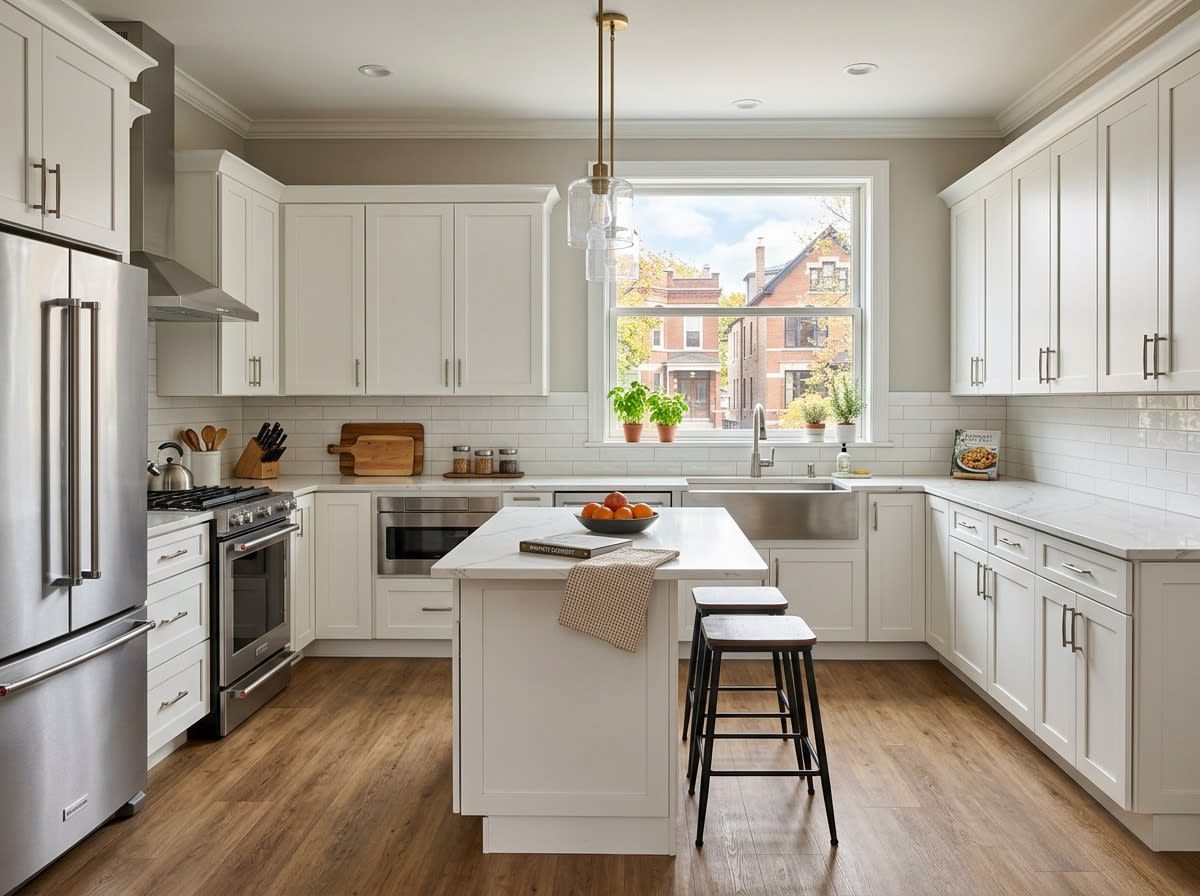
Kitchens remain the most expensive room to renovate per square foot, and they deliver some of the strongest resale value when done well. A minor kitchen refresh in the Chicago area, meaning new countertops, refreshed cabinet fronts, updated hardware, a new sink, and paint, typically runs $18,000 to $35,000 in 2026. A mid-range full remodel with new semi-custom cabinetry, quartz counters, updated appliances, new flooring, and modest layout changes generally falls between $45,000 and $80,000. A high-end kitchen with custom cabinetry, premium appliances, stone slab surfaces, and significant structural changes such as removing a wall or relocating plumbing commonly exceeds $90,000 and can pass $150,000 in higher-cost neighborhoods.
The biggest cost swings come from layout changes. Moving plumbing, gas lines, or load-bearing walls adds both labor and permit requirements, and in older Chicago homes it often surfaces surprises like outdated wiring or galvanized supply lines that must be replaced to pass inspection. Budgeting a realistic contingency here is not optional.
Bathroom Renovation Budgets
Bathroom costs vary widely by size and ambition. A standard hall or guest bathroom remodel in the Chicago area generally runs $12,000 to $28,000 for new tile, a vanity, a tub or shower, fixtures, and lighting. A primary or master bathroom is a different animal. A full master bath renovation with a custom shower, double vanity, quality tile, and upgraded fixtures typically lands between $30,000 and $65,000, and luxury features push it higher. If you want specifics on the high end, our guide to Chicago master bathroom renovation costs breaks the numbers down feature by feature, and our look at bathroom countertop materials for Chicago homes helps you choose surfaces that survive our humidity.
The hidden cost in Chicago bathrooms is almost always behind the walls. Older homes frequently hide deteriorated subfloors, failing waterproofing, and plumbing that no longer meets code. Heated floors, a popular and genuinely sensible upgrade for Chicago winters, add $1,500 to $4,500 depending on the room size and the system you choose. Ventilation matters more here than in drier climates too, because a poorly vented Chicago bathroom traps the moisture that feeds mold and shortens the life of every finish in the room, so budget for a quality exhaust fan rather than the builder-grade minimum.
Flooring and Interior Finishes
Flooring is one of the few line items that touches nearly every room, and it is where Chicago's climate quietly raises the bill. Luxury vinyl plank, popular for its durability against salt, snow, and freeze-thaw movement, typically runs $6 to $12 per square foot installed. Engineered hardwood, which handles our humidity swings better than solid hardwood, generally costs $9 to $16 per square foot installed. Porcelain tile in entryways and bathrooms runs $10 to $20 per square foot installed once you account for proper substrate preparation, which Chicago's older, often uneven subfloors frequently require. Refinishing existing hardwood, when the floors are sound, is a far cheaper path at roughly $4 to $8 per square foot and preserves the character of a vintage home.
Interior finishes like trim, doors, paint, and lighting add up faster than most homeowners expect. A whole-home interior repaint in the Chicago area commonly runs $4,000 to $10,000 depending on square footage and prep, and replacing original trim or doors in a historic home to match existing millwork carries a premium because the work is custom. These are the details that make a renovation feel finished, so plan for them rather than treating them as afterthoughts.
Basement Finishing and Remodeling

Finishing a basement is one of the most cost-effective ways to add usable square footage in Chicago, since the structure and roof already exist. A basic basement finish with framing, insulation, drywall, flooring, lighting, and an egress-compliant layout generally runs $35,000 to $60,000. Adding a full bathroom, a wet bar, or a dedicated home office or media room raises that figure to $65,000 to $100,000 or more.
Moisture is the variable that defines a Chicago basement budget. Before any finishing work, the space needs to be dry and stay dry, which may require interior drainage, sump pump upgrades, or foundation sealing. Skipping that step is the single most common and most expensive basement mistake we see. Proper waterproofing might add several thousand dollars upfront, but it protects everything you build on top of it.
Room Additions and Expanding Square Footage

When finishing existing space is not enough, additions deliver new square footage at the highest cost per foot of any project, because you are building foundation, walls, roof, and systems from scratch. In the Chicago area in 2026, a ground-floor room addition typically runs $300 to $500 per square foot, meaning a 400-square-foot addition commonly falls between $120,000 and $200,000. Second-story additions run higher still, often $400 to $650 per square foot, because of the structural reinforcement and the complexity of tying new construction into an existing roof and load path.
Permits, zoning review, and architectural drawings represent a meaningful share of an addition budget, and the timeline in Chicago can stretch for months before ground breaks. If an addition is on your radar, factor that approval window into both your budget and your patience.
Permits, Soft Costs, and Timeline
The numbers homeowners tend to forget are the soft costs, and in Chicago they are not trivial. Building permit fees vary by municipality and project value, and a significant remodel in the city or a suburb like Evanston or Oak Park can run anywhere from a few hundred dollars to several thousand once you include plan review and inspection charges. Architectural or design fees for a project that changes layout typically add 5 to 15 percent of construction cost. Then come the practical line items that appear on every job: dumpster rental and debris disposal, temporary protection, and the cost of working around an occupied home rather than an empty shell.
Timeline affects budget too, because a longer project means more overhead and, often, temporary living arrangements. A single-room remodel might take three to six weeks, a kitchen or primary bath commonly runs eight to twelve weeks, and a whole-home or gut-level renovation can extend from four months to well over a year once permits, inspections, and material lead times are factored in. Chicago winters can pause exterior work entirely, so the season you start in genuinely affects how smoothly your project moves.
How to Allocate Your Renovation Budget
A reliable way to plan a whole-home or multi-room project is to allocate by priority and protect a contingency. Set aside 10 to 20 percent of your total budget as a contingency fund, and treat it as untouchable until a genuine surprise appears. In older Chicago housing stock, surprises are not rare events, they are the baseline expectation: knob-and-tube wiring, asbestos-wrapped ducts, undersized electrical service, and plumbing that predates current code all turn up regularly once walls open.
Spend where it shows and where it lasts. Quality cabinetry, durable flooring, and climate-appropriate windows and exterior materials reward the investment over time. Our breakdown of Chicago window replacement costs and our full gut renovation cost guide are useful companions if your project touches the building envelope or the whole house at once.
It also helps to know which projects return the most at resale, especially if you may sell within a decade. In the Chicago market, kitchens and bathrooms reliably return a strong share of their cost, basement finishing adds usable square footage at a favorable price per foot, and energy-efficient windows and insulation pay back through lower heating bills during our long winters. Highly personalized or luxury-tier choices, by contrast, rarely return their full cost at sale, so it is worth being honest about whether a given upgrade is for your own enjoyment or for resale value. Where homeowners most often overspend is in rushing decisions mid-project, changing scope after work begins, and choosing the lowest bid only to pay again for corrections. Where they save is in planning thoroughly before demolition, ordering materials early to avoid lead-time delays, and hiring a contractor whose estimate is detailed enough to hold up.
Planning Your Chicago Renovation With Confidence
The most accurate budget comes from a detailed, line-item estimate based on your specific home, neighborhood, and goals rather than a calculator average. Chicago's older homes, varied neighborhoods, and demanding climate make local experience genuinely valuable, both for pricing the work correctly and for anticipating the issues that generic estimates miss. If you are ready to turn these ranges into a real plan for your home, contact us for a consultation and we will walk you through realistic costs, timelines, and priorities for your project.
Related Posts
- Chicago Kitchen Remodeling Costs 2026: A Practical Budget Guide
- How to Compare Chicago Contractor Estimates
- Chicago Gut Renovation Costs in 2026: What Homeowners Actually Pay
- Chicago Master Bathroom Renovation Costs 2026
- Chicago Window Replacement Costs 2026: What Homeowners Actually Pay
Reviewed by the Budget Construction Company Editorial Team
Budget Construction Company has served Chicago homeowners since 1976. Project costs and requirements vary by property, scope, and municipality.