

Renovating a condo in Chicago is a different financial exercise than remodeling a single-family home, and the numbers reflect it. Between freight elevator scheduling, restricted work hours, HOA approval requirements, and the logistics of moving materials and debris through a shared building, a condo project commonly costs 15 to 30 percent more than a comparable single-family renovation. If you are budgeting a kitchen, bathroom, flooring, or full gut renovation in a Chicago condo for 2026, you need cost ranges that account for those realities rather than generic figures. This guide breaks down what each project type actually costs in the Chicago condo market and explains the factors that push your final price up or down.
Why Condo Renovations Cost More in Chicago
The premium on condo work comes from logistics and rules, not from the construction itself being fundamentally different. In a high-rise, materials and debris travel through a freight elevator that must be reserved, often during limited hours, and sometimes for a fee or deposit. Crews can typically work only during association-approved construction hours, which compresses the schedule and adds labor days. Many buildings require dust containment, floor protection in common areas, and proof of contractor insurance naming the association. Each of these is reasonable, but together they add cost and coordination that a detached home never requires.
HOA requirements add another layer. Most Chicago associations require board approval of renovation plans, a signed alteration agreement, and sometimes architect or engineer review for anything touching plumbing, electrical, or structure. Building these approvals into your budget and timeline from the start prevents expensive surprises. For the rules side of this process, our companion guidance on working with condo boards is worth reading alongside these numbers, and our room-by-room Chicago renovation cost guide is a useful reference point for how condo pricing compares to single-family work.
Condo Kitchen Renovation Costs
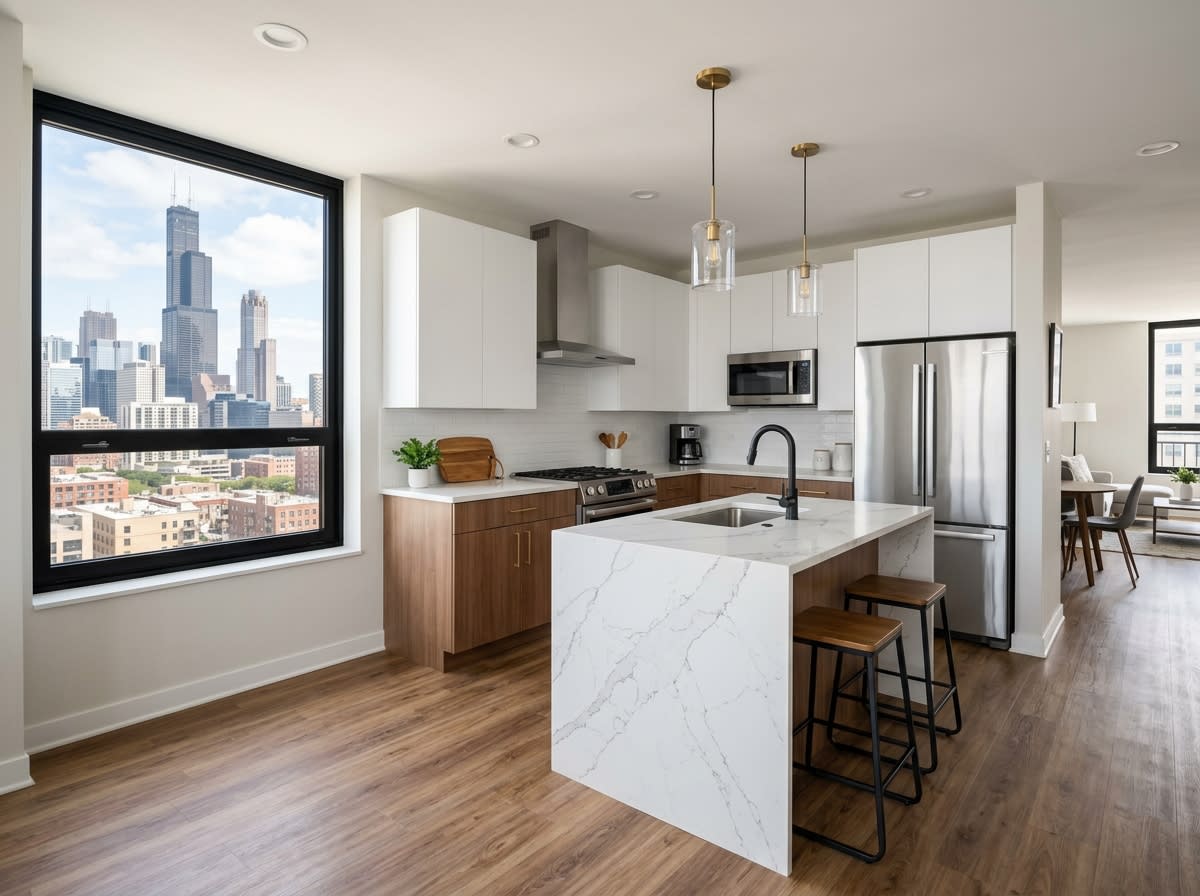
Kitchens are the most expensive room per square foot in a condo, just as in a house, but condo kitchens are often smaller, which can moderate the total. A cosmetic refresh with new countertops, refreshed or repainted cabinets, updated hardware, a new sink and faucet, and a backsplash typically runs $15,000 to $30,000 in a Chicago condo. A mid-range remodel with new semi-custom cabinetry, quartz counters, new appliances, and updated flooring generally falls between $35,000 and $70,000.
A high-end condo kitchen with custom cabinetry, premium appliances, and layout changes commonly exceeds $80,000. The biggest cost driver in any condo kitchen is moving plumbing, gas, or electrical, because in many buildings those systems are shared or run through concrete floors that cannot be easily altered. If your design requires relocating the sink or range, expect both higher costs and additional HOA and engineering review. Smart layouts that keep plumbing and venting in their existing locations save thousands.
Condo Bathroom Renovation Costs
Bathrooms are the other high-cost, high-value condo project. A standard condo bathroom remodel with new tile, a vanity, a tub or shower, fixtures, and lighting generally runs $12,000 to $30,000. A primary bathroom with a custom shower, higher-end tile, a double vanity, and upgraded fixtures typically lands between $25,000 and $50,000 or more.
Waterproofing is the critical detail in any condo bathroom, because a leak does not just damage your unit, it damages the unit below and exposes you to liability and HOA penalties. Quality waterproofing membranes, proper drainage, and careful tile work are not places to economize in a condo. Buildings frequently require a licensed plumber and specific waterproofing standards for bathroom work, and inspections may be more rigorous than in a single-family home for exactly this reason. Heated tile floors are a popular condo upgrade and add roughly $1,500 to $4,000 depending on the size of the room.
Flooring, Painting, and Finish Work
Flooring in a condo carries a requirement that houses rarely face: sound control. Most Chicago associations mandate an acoustic underlayment beneath hard flooring to limit noise transmission to the unit below, and some specify a minimum sound rating. Quality luxury vinyl plank with proper underlayment generally runs $7 to $13 per square foot installed in a condo, and engineered hardwood runs $10 to $17 per square foot installed. Tile runs higher once substrate prep and the acoustic layer are included. Skipping the required underlayment is a common and costly mistake, because the association can require you to tear out and redo non-compliant flooring.
Painting, trim, lighting, and door updates are the affordable finishing touches that make a renovation feel complete. A full condo repaint commonly runs $2,500 to $6,000 depending on size and prep. Updated lighting and modern hardware are inexpensive relative to their visual impact, and they are usually among the few changes that need no HOA approval at all.
Full Gut Renovation Costs
A full gut renovation, where the unit is taken down to the studs and rebuilt, is the most involved condo project and the one where logistics matter most. In the Chicago condo market, a gut renovation typically runs $150 to $300 per square foot, meaning a 1,200-square-foot unit commonly falls between $180,000 and $360,000 depending on finishes and the extent of system upgrades. High-end downtown units with premium finishes can exceed that range.
Gut renovations almost always involve electrical and plumbing updates, which trigger permits and, in many buildings, engineering review and association oversight. Older Chicago condo buildings frequently hide outdated wiring, cast-iron drain lines, and other surprises behind the walls, so a healthy contingency of 15 to 20 percent is essential. The payoff is a unit reconfigured exactly to your needs, often with significant value added in a strong Chicago neighborhood.

Budgeting Smart for HOA Fees and Hidden Costs
Beyond construction, condo renovations carry soft costs that single-family projects do not. Many associations charge a renovation deposit, an alteration application fee, or a freight elevator reservation fee, and some require you to cover the cost of common-area protection. Permit fees apply just as they would for a house, and architect or engineer fees may be required by the building even when the city would not demand them. It is wise to read your association's alteration policy before finalizing your budget so none of these land as surprises.
The smartest condo budgets phase work thoughtfully, keep plumbing and electrical in place where possible, and build in a contingency for the hidden conditions common in older Chicago buildings. Pairing your cost plan with a clear understanding of your building's rules is the single best way to avoid delays and redo work. Our master bathroom renovation cost guide and full gut renovation cost breakdown offer additional detail if your condo project leans toward either of those.
Where Condo Owners Save and Where They Overspend
Knowing where money is well spent and where it is wasted helps you stretch a condo budget. The smartest savings come from working with your unit rather than against it. Keeping the kitchen and bathroom plumbing in their existing locations avoids the expense and approval hurdles of relocating shared systems. Refacing or repainting solid cabinet boxes instead of replacing them, or keeping a sound layout while upgrading only finishes, delivers a dramatic visual change for a fraction of a full remodel. Choosing quality mid-range materials that perform well, rather than the most expensive premium options, often gives the best balance of durability and value in a condo you may eventually sell.
The most common overspending happens in a few predictable places. Changing the design mid-project, after cabinets are ordered or tile is set, triggers expensive rework and wasted materials. Relocating plumbing for a marginal layout improvement rarely returns its cost. And choosing the lowest contractor bid without checking high-rise experience frequently leads to delays, building penalties, and corrections that erase any initial savings. In a condo, a contractor who knows how to work efficiently within building rules is worth more than a slightly lower hourly rate.
Financing and Return on Investment
Condo renovations can be financed in several ways, and the right choice depends on your equity and plans. Home equity lines of credit, renovation loans, and personal savings are all common, and some owners phase work to spread costs over time. Whatever the source, building a contingency into the financed amount protects you from the hidden conditions that older Chicago buildings tend to reveal once walls open.
On the return side, kitchens and bathrooms reliably deliver the strongest resale value in the Chicago condo market, since buyers weigh those rooms heavily. Quality flooring and fresh, modern finishes also show well. Highly personalized or luxury-tier choices, by contrast, may not return their full cost at sale, so it is worth being honest about whether an upgrade is for your own enjoyment or for resale. In a desirable building or neighborhood, a well-executed renovation can meaningfully increase both the unit's value and how quickly it sells, but the quality of the work and its compliance with building rules matter as much as the dollars spent.
Getting Accurate Numbers for Your Building
Published cost ranges are a starting point, but the most reliable budget comes from an estimate tailored to your specific unit and building, because two seemingly similar condos can carry very different costs. The age of the building, the condition of the systems behind your walls, the rules and fees your association imposes, and the logistics of your particular floor and freight access all shape the final number. A unit in a well-maintained newer building with flexible rules will renovate more easily than one in an older building with rigid protocols and aging infrastructure, even for identical finishes.
This is why a detailed, itemized estimate based on a walkthrough of your unit is worth far more than a generic per-square-foot figure. A good estimate separates materials, labor, and the building-specific soft costs so you can see where your money goes and make informed choices. It also surfaces the questions that matter, such as whether your desired layout requires moving shared plumbing or whether your building mandates particular flooring ratings. Going into a condo renovation with numbers grounded in your actual unit, rather than averages, is the single best protection against mid-project budget surprises.
Planning Your Chicago Condo Renovation
A condo renovation done right balances three things: a realistic budget, a contractor experienced with high-rise logistics, and full compliance with your association's rules. Getting all three aligned before demolition is what keeps a project on schedule and on budget. If you are planning a condo renovation in Chicago and want accurate numbers for your specific unit and building, contact us for a consultation and we will help you build a budget that accounts for both the construction and the logistics unique to condo work.
Related Posts
- 2026 Chicago Area Renovation Costs: Room-by-Room Budget Breakdown
- Chicago Master Bathroom Renovation Costs 2026
- Chicago Gut Renovation Costs in 2026: What Homeowners Actually Pay
Reviewed by the Budget Construction Company Editorial Team
Budget Construction Company has served Chicago homeowners since 1976. Project costs and requirements vary by property, scope, and municipality.