

Your contractor quotes six weeks for the bathroom, but your realistic move-in date is closer to fourteen weeks out. That gap is not poor estimating, it is the difference between construction time and total project time. In a Chicago condo, the actual building work is only one phase. Board approval, permits, material lead times, and high-rise logistics all add weeks that a bare construction estimate leaves out. Understanding how long each project type truly takes, start to finish, lets you plan your life around the renovation instead of being surprised by it. Here is what to expect for each kind of Chicago condo project in 2026.
Why Condo Timelines Run Longer Than Quoted
The quoted construction time assumes a crew working continuously with all materials on hand and no outside constraints. A condo project rarely works that way. Before construction even starts, you typically need HOA approval of your plans, which can take several weeks depending on how often the board meets. City permits add their own processing window. Materials like custom cabinetry and stone counters carry lead times measured in weeks, not days. And once work begins, high-rise rules limit working hours and freight access, stretching the calendar further.
Thinking of a renovation in phases helps set expectations. There is the planning and approval phase, the permitting phase, the material ordering and lead-time phase, and finally the construction phase, and these overlap only partially. The construction estimate your contractor gives is accurate for the building work, but the full timeline from decision to finished space is considerably longer. Our high-rise condo logistics guide explains the building constraints that affect the construction phase specifically.
HOA Approval and Permit Windows
For most condo renovations, the clock starts with association approval, not demolition. Boards that meet monthly can take four to eight weeks to review and approve an alteration request, longer if they require revisions or additional documentation. Buildings that allow management to approve minor work move faster, while those requiring full board votes for anything beyond cosmetic changes move slower. Submitting a complete, well-documented request the first time is the best way to avoid a second review cycle.
Permits run in parallel or just after approval. Cosmetic work like painting and cabinet refacing usually needs no permit, while plumbing, electrical, and structural changes do. City permit processing for condo work can take anywhere from a couple of weeks for straightforward projects to longer for those requiring plan review. Building these approval and permit windows into your plan, often six to ten weeks combined before construction starts, is what closes the gap between the contractor's quote and reality.

Bathroom Renovation Timeline
A standard condo bathroom is one of the shorter projects in pure construction time, typically three to five weeks of work, but the full timeline tells a different story. Add board approval, permits for the plumbing work, and lead times for a vanity, tile, and fixtures, and the realistic span from decision to finished bathroom is often ten to fourteen weeks. Custom or specialty tile and fixtures extend that further.
The work itself follows a fairly fixed sequence that cannot be rushed without risking quality. Demolition, plumbing and electrical rough-in, inspection, waterproofing, tile, and then fixtures and finishes each depend on the one before. Waterproofing and tile setting in particular require cure time, and skipping it causes failures that are far costlier in a condo than a house because of the unit below. A realistic timeline that respects these steps protects you from leaks and redo work.
Kitchen Renovation Timeline
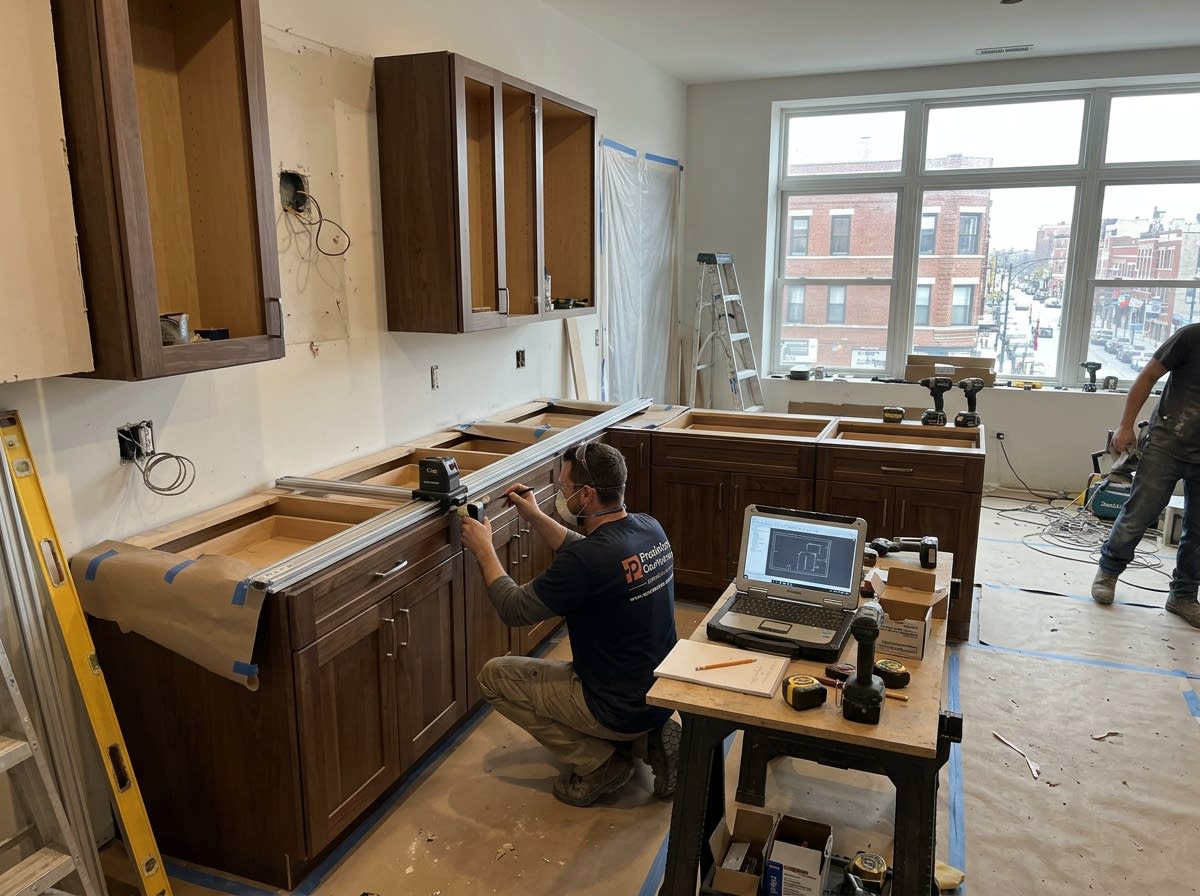
Kitchens involve more trades and more materials than bathrooms, so they run longer. Construction time for a condo kitchen is commonly five to eight weeks, but the dominant variable is cabinetry lead time. Semi-custom cabinets often take six to ten weeks to arrive, and custom cabinetry longer, which means ordering early is essential. Stone countertops add their own step, since they are templated only after cabinets are installed and then fabricated over one to two weeks.
Counting approval, permits, and material lead times, a full condo kitchen realistically spans twelve to twenty weeks from decision to completion. The smartest move is to order long-lead items as soon as the design is final and approved, so cabinet and counter fabrication happens during the approval and demolition phases rather than after. A contractor who sequences ordering this way can shave weeks off the calendar.
Full Gut Renovation Timeline
A full gut renovation is the longest condo project, both in construction and in total timeline. The building work alone commonly takes three to six months depending on the size of the unit and the extent of system upgrades. Because gut work touches electrical, plumbing, and often structure, it requires the most extensive approvals, permits, and inspections, each of which adds time.
From the first decision to move-in, a condo gut renovation realistically spans six to twelve months or more. High-rise logistics compound this, since every load of debris from a full demolition and every delivery of new materials moves through the reserved freight elevator on the building's schedule. Owners planning a gut renovation should expect to live elsewhere during the work and should build generous buffers into their plans, because the surprises hidden in older Chicago buildings tend to add time as well as cost.
Material Lead Times: The Hidden Schedule Driver
Of all the factors that stretch a condo timeline, material lead times are the most underestimated. Stock materials available at a supplier ship quickly, but the items that define a renovation, custom and semi-custom cabinetry, stone countertops, specialty tile, and certain fixtures, are made to order and arrive on the manufacturer's schedule, not yours. Semi-custom cabinets commonly take six to ten weeks, custom cabinetry longer, and a backordered tile or fixture can hold up an entire phase even when the crew is ready to work.
The practical takeaway is to finalize selections and place orders as early as possible, ideally during the approval and permitting phases when no construction is happening anyway. A contractor who pushes you to make material decisions early is doing you a favor, because it lets long-lead items arrive in parallel with other work rather than becoming a bottleneck at the end. Waiting to choose finishes until demolition is underway is one of the most common ways owners unintentionally add weeks to their own timeline.
Factors That Stretch or Compress Your Timeline
Several variables determine whether your project lands on the short or long end of these ranges. Older Chicago buildings tend to add time, because opening walls reveals outdated wiring, corroded plumbing, or other conditions that must be corrected before work continues. The extent of system upgrades matters too: a project confined to finishes moves faster than one rewiring or re-plumbing the unit. The responsiveness of your HOA board and the complexity of permit review can each add or save weeks.
On the other side, a few habits genuinely compress the schedule. Submitting a complete, well-documented approval package the first time avoids a second review cycle. Ordering long-lead materials early keeps them off the critical path. Hiring a contractor who coordinates approvals, permits, deliveries, and trades in parallel rather than in sequence prevents idle time. And making decisions promptly when questions arise keeps momentum. The owners who finish closest to the optimistic end of the range are almost always the ones who planned thoroughly before demolition began.
Building Buffers Into Your Plan
Even a well-planned condo renovation benefits from realistic buffers, because some delays are outside anyone's control. A shipment arrives damaged and must be reordered, an inspection reveals a condition that needs correcting, or the freight elevator is unavailable on the day you needed it. None of these are failures of planning, they are normal events in a process with many moving parts, and a schedule with no slack turns each one into a crisis. Adding a reasonable buffer to your expected completion date keeps small setbacks from derailing your plans.
This matters most when your timeline is tied to a hard deadline, such as a lease ending, a sale closing, or a family event. In those cases, it is wise to start earlier than you think necessary and to treat the optimistic estimate as the best case rather than the expectation. Communicating openly with your contractor about your real deadline lets them flag risks early and sequence the work to protect what matters most. The owners who feel calm during a renovation are almost always the ones who built in time for the unexpected rather than assuming everything would go perfectly.
Living Through the Renovation
How you plan to live during the work also shapes the timeline that matters to you. For a single bathroom or a cosmetic project, many owners stay in the unit and work around the disruption, though dust, noise, and the loss of a room for several weeks take a toll. For a kitchen renovation, being without a functioning kitchen for the duration means arranging temporary cooking and eating plans. For a gut renovation, staying in the unit is rarely practical, so owners typically arrange to live elsewhere, which adds cost and makes the total timeline a real factor in the household's finances.
Thinking through these logistics early helps you decide whether to phase the work, complete it all at once, or time it around travel or a temporary move. It also affects which timeline you should optimize for, since a project where you are living elsewhere creates pressure to minimize total duration, while one where you remain in place may prioritize keeping key rooms usable as long as possible. Discussing your living situation with your contractor lets them sequence the work to fit your real life rather than just the construction logic.
Planning Realistically Around Your Renovation
The single best way to avoid timeline frustration is to plan from the finish backward and add the approval, permit, and lead-time phases that bare construction quotes omit. Order long-lead materials early, submit a complete approval package the first time, and choose a contractor who coordinates these phases in parallel rather than in sequence. A realistic timeline set at the start is far less stressful than an optimistic one that slips week after week. If you want an accurate, phase-by-phase schedule for your specific condo and building, contact us for a consultation and we will map your project from approval through move-in.
Related Posts
- Chicago Bathroom Remodeling Timeline: From Design to Final Inspection
- High-Rise Condo Renovation in Chicago: Logistics and Timing You Cannot Ignore
- Chicago Condo Renovation Costs 2026: Complete Budget Guide by Project Type
- What to Do When Your HOA Denies Your Renovation Request in Chicago
Reviewed by the Budget Construction Company Editorial Team
Budget Construction Company has served Chicago homeowners since 1976. Project costs and requirements vary by property, scope, and municipality.