

Noise is the most common source of friction between condo neighbors, and in Chicago it is also a code and HOA issue, not just a comfort one. Most associations set sound transmission requirements for hard flooring, and getting soundproofing wrong means redo work, fines, and tension with the unit below. The good news is that proven, building-approved solutions genuinely reduce sound transmission when they are specified and installed correctly. The trick is knowing which methods actually work, which merely seem to, and what your building requires. This guide covers the soundproofing solutions that satisfy Chicago condo boards and codes while making your home noticeably quieter.
Understanding How Sound Moves in a Condo
Soundproofing decisions get easier once you understand the two kinds of sound that travel between units. Airborne sound, like voices, music, and television, moves through the air and passes through gaps, thin walls, and ceilings. Impact sound, like footsteps, dropped objects, and furniture scraping, travels through the structure itself when something strikes the floor. These two problems need different solutions, and most condo noise complaints involve impact sound traveling down to the unit below.
Buildings measure these with two ratings. The Sound Transmission Class, or STC, rates how well an assembly blocks airborne sound, while the Impact Insulation Class, or IIC, rates how well a floor blocks impact noise. Many Chicago condo associations require a minimum IIC rating for hard flooring, often around 50 or higher, specifically because hard floors transmit footstep noise so readily. Knowing your building's required ratings before you choose materials is the first step, because it determines what you are allowed to install.
Acoustic Flooring Underlayment That Meets Code
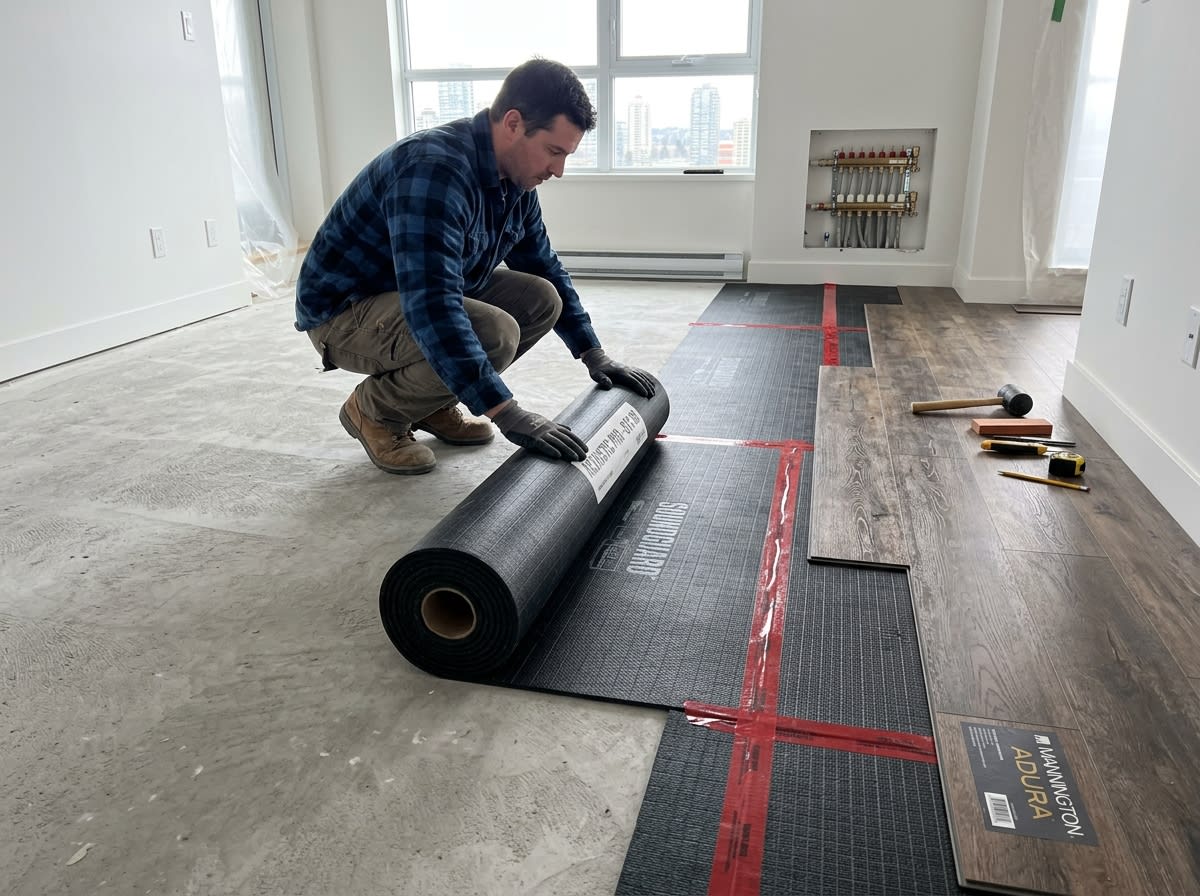
Flooring is where most condo soundproofing requirements focus, and acoustic underlayment is the heart of the solution. When you install hard flooring like luxury vinyl, engineered hardwood, or tile, a quality acoustic underlayment beneath it absorbs and dampens impact sound before it reaches the structure. Good underlayments are rated for specific IIC performance, so you can match the product to your building's requirement and document compliance for the board.
Not all underlayments are equal, and the cheapest options often fail to meet condo standards. Dense rubber, cork, and engineered acoustic mats outperform thin foam for impact sound. For tile, a sound-rated uncoupling membrane serves double duty by reducing both cracking and noise transmission. The key is to select a product with a documented IIC rating that meets or exceeds your association's minimum, then install it exactly per the manufacturer's instructions, since gaps or shortcuts undermine the rating. Submitting the product's rating to your board before installation is the simplest way to avoid being ordered to tear out non-compliant flooring later.
Wall Soundproofing Solutions
Walls shared with neighbors or between rooms benefit from a different set of techniques aimed at airborne sound. The most effective approaches add mass and decoupling. Adding a second layer of drywall, ideally with a damping compound between the layers, increases mass and significantly cuts sound transmission. Resilient channels or sound isolation clips decouple the drywall from the studs so vibrations do not pass straight through the wall framing.
Filling the wall cavity with mineral wool or dense acoustic insulation absorbs sound within the wall and is one of the most cost-effective improvements during any wall-opening project. Equally important is sealing gaps, since sound leaks through the same openings air does. Acoustic sealant around outlets, switch boxes, and the perimeter of the wall closes the paths that undermine otherwise good construction. These wall measures generally do not require special HOA approval since they stay within your unit, but confirming with your building is always wise before opening walls.
Ceiling and Above-Unit Noise
Noise coming from the unit above is the hardest problem to solve, because the most effective fix, treating the floor above, is not within your control. From your side, the practical approach is to treat your ceiling to block and absorb the sound coming down. Adding mass with an extra drywall layer, decoupling the ceiling with isolation clips and channels, and filling the cavity with acoustic insulation all reduce transmission, much as they do for walls.
A suspended or resiliently mounted ceiling assembly offers the strongest results but lowers ceiling height, which is a real tradeoff in condos that may already have modest ceilings. Because ceiling work can be involved and sometimes touches building systems, it is worth confirming the scope with your association and a contractor experienced in acoustic work. Realistic expectations matter here: ceiling treatments meaningfully reduce noise from above, but they rarely eliminate it entirely without cooperation from the upstairs neighbor.

Finishing Touches and Realistic Expectations
Beyond structural soundproofing, soft furnishings make a genuine difference in how quiet a space feels. Area rugs over hard floors, upholstered furniture, heavy curtains, and acoustic panels absorb sound within a room and reduce echo, complementing the work done inside the walls and floors. Solid-core interior doors and good weatherstripping around them block far more sound than hollow doors. These finishing measures are inexpensive, need no approval, and noticeably improve daily comfort.
It helps to set realistic goals. Soundproofing reduces sound transmission substantially, but no condo solution short of major construction makes a unit truly silent. The aim is to bring noise down to a level that no longer disrupts daily life and that satisfies your building's requirements and your neighbors. Targeting the biggest problem first, usually impact sound through the floor, gives the best return on your investment.
Getting HOA Approval for Soundproofing Work
Because flooring and any work touching shared assemblies can affect neighbors, soundproofing projects often require HOA awareness or approval, and handling that correctly protects you from costly conflicts. The most important step is documentation. When you select an acoustic underlayment or flooring system, obtain the product's IIC and STC ratings from the manufacturer and submit them to your board or management showing that they meet or exceed the building's requirements. This simple step turns a potential dispute into a routine approval and creates a record that protects you if a downstairs neighbor later complains.
It also helps to understand what your governing documents actually require before you design the work. Some buildings specify a minimum rating, some require approval of the specific product, and some mandate that a professional install it. Meeting these requirements precisely is what prevents the worst-case outcome, being ordered to tear out finished flooring that does not comply. When work stays entirely within your unit, such as adding drywall mass or cavity insulation to your side of a wall, approval is often unnecessary, but confirming with your association first is always the safer path.
Soundproofing During a Renovation Versus After
The most cost-effective time to soundproof is during a renovation when walls, floors, or ceilings are already open. Adding cavity insulation, isolation clips, an extra drywall layer, or acoustic underlayment costs far less when the assembly is already exposed than it does as a standalone project requiring demolition first. If you are planning any renovation in your condo, it is worth deciding on soundproofing at the same time, since the incremental cost of doing it then is modest compared to retrofitting later.
For owners not undertaking a full renovation, targeted improvements still deliver results without tearing the unit apart. Replacing flooring with a properly underlaid system, adding mass to a shared wall, sealing gaps around outlets and doors, swapping hollow doors for solid-core ones, and layering in rugs and soft furnishings can meaningfully quiet a space. Prioritizing the single biggest noise problem first, usually impact sound through the floor, concentrates your budget where it does the most good and lets you add further measures over time if needed.
Common Soundproofing Mistakes to Avoid
Several recurring mistakes undermine condo soundproofing, and avoiding them saves both money and frustration. The most common is relying on a single thin foam underlayment and expecting it to solve serious impact noise, when in fact dense, properly rated materials are what perform. Another is treating only one path while ignoring others, such as soundproofing a wall while leaving gaps around outlets and doors through which sound freely passes. Sound behaves like water, finding every opening, so a partial treatment often disappoints.
Overlooking the building's requirements is another costly error, since installing flooring that does not meet the association's rating can lead to an order to remove it. Finally, some owners expect total silence and feel let down by results that are actually quite good, simply because their expectations were unrealistic. Understanding that soundproofing reduces rather than eliminates sound, addressing all transmission paths together, using properly rated materials, and confirming compliance before installing all prevent the disappointments that give soundproofing projects a bad reputation. Done thoughtfully, the improvement is real and lasting.
Being a Good Neighbor Through Sound
Soundproofing is partly a construction question and partly a matter of being considerate in a shared building, and the two reinforce each other. Even a well-soundproofed unit benefits from mindful habits, like placing rugs in high-traffic areas, using felt pads under furniture, and being aware of noise during quiet hours. These small courtesies reduce the impact sound that travels most readily between units and often resolve minor complaints before they require any construction at all.
When complaints do arise, responding constructively goes a long way. A neighbor bothered by footstep noise is usually satisfied by a genuine effort to address it, whether through added rugs, an underlayment upgrade during a flooring project, or simply a conversation. Approaching sound as a shared concern rather than a dispute keeps relationships healthy in a building where you live in close quarters. Pairing solid soundproofing construction with considerate daily habits creates a unit that is genuinely quiet and a household that neighbors are glad to live near, which is the real goal behind any sound-control investment.
Quieting Your Condo the Right Way
Effective condo soundproofing combines code-compliant flooring underlayment, mass and decoupling in walls and ceilings, careful sealing of gaps, and sound-absorbing furnishings. Matching every material to your building's required ratings and documenting compliance protects you from costly redo work and HOA penalties. If you want a soundproofing plan that meets your Chicago building's standards and genuinely quiets your home, contact us for a consultation and we will recommend solutions matched to your unit and your association's requirements.
Related Posts
- Chicago Condo Renovation Costs 2026: Complete Budget Guide by Project Type
- High-Rise Condo Renovation in Chicago: Logistics and Timing You Cannot Ignore
- Chicago Condo Renovation Timeline: How Long Does Each Project Actually Take
Reviewed by the Budget Construction Company Editorial Team
Budget Construction Company has served Chicago homeowners since 1976. Project costs and requirements vary by property, scope, and municipality.