
Chicago Bathroom Remodeling Timeline 2026
A realistic, Chicago-specific guide to bathroom renovation timing. Built for homeowners who want premium customization, predictable scheduling, and a contractor who manages the whole project.
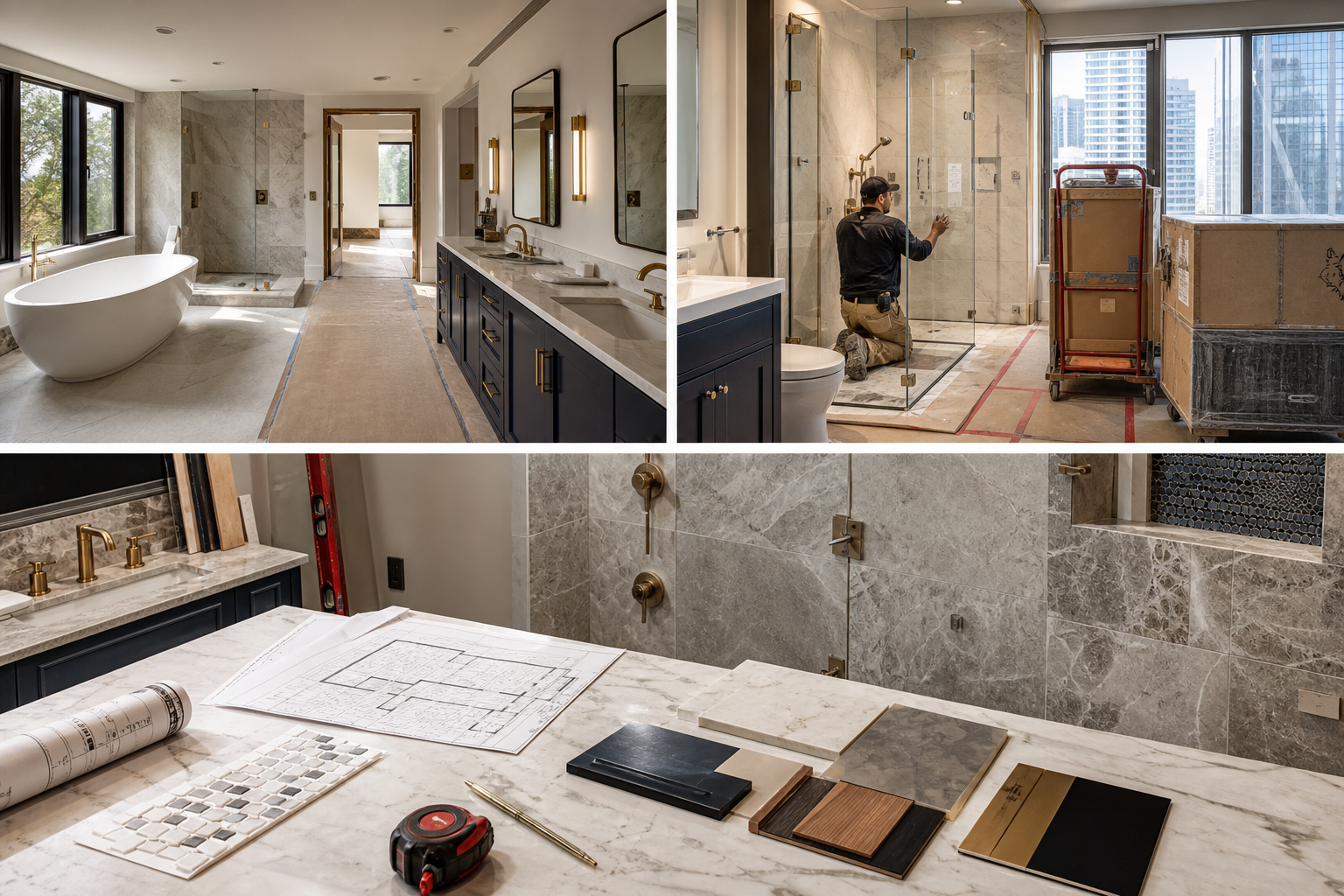
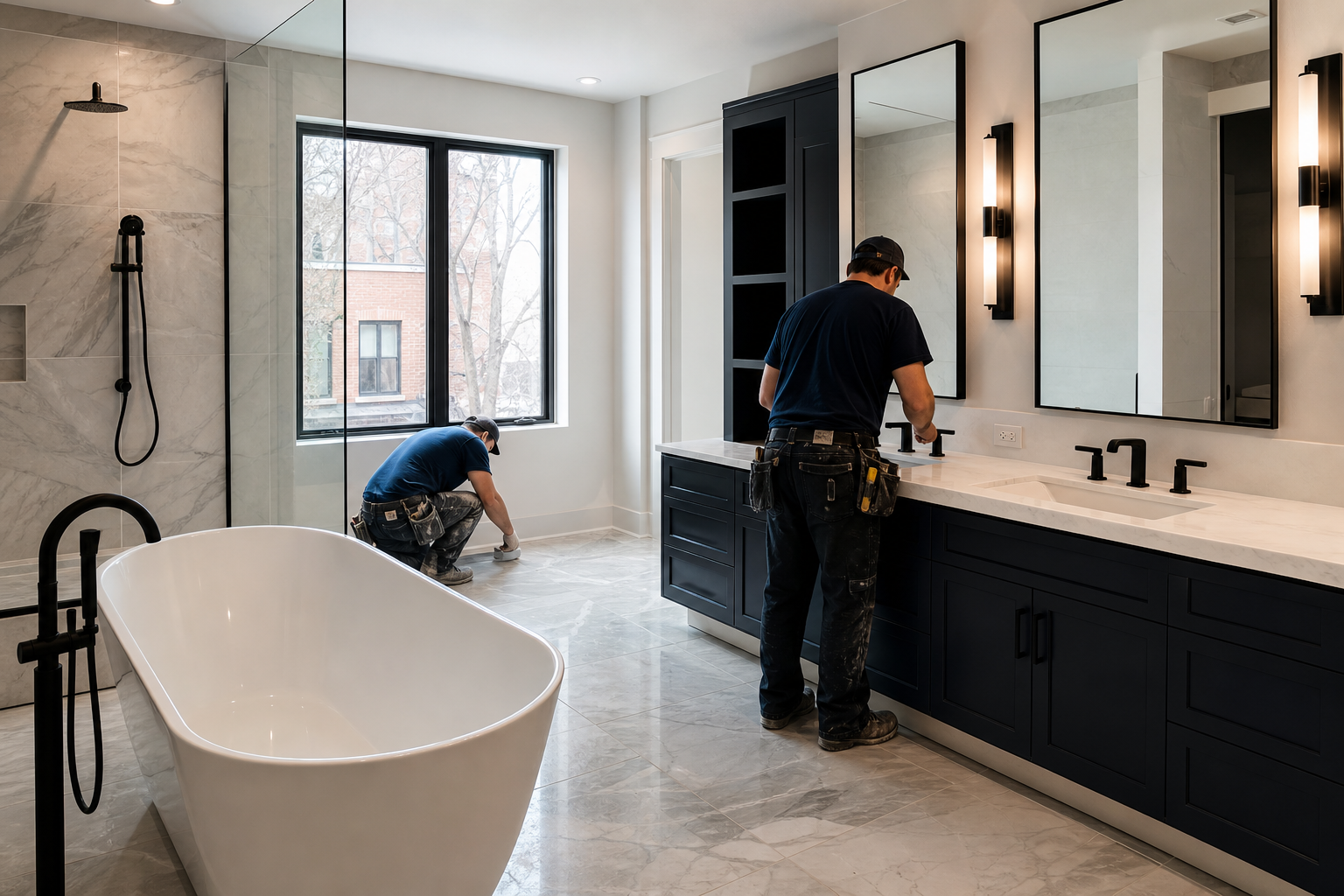
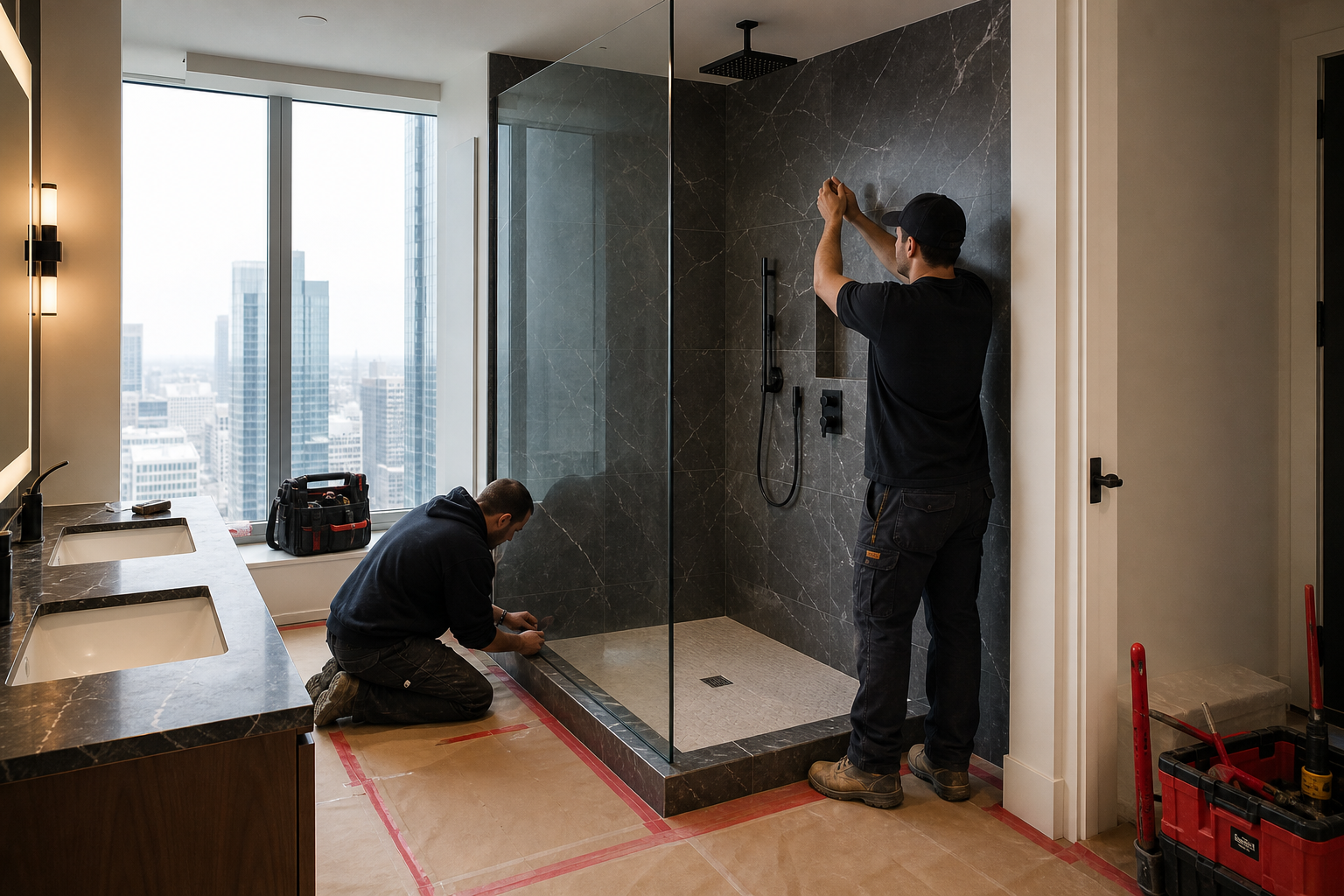
The 50-Year Difference
Budget Construction Company is a full-service Chicago general contractor, not a showroom assembly service. That means broader product access, better field coordination, and accountability when the walls open up.
Unlimited Design Access
With a true general contractor, you are not locked into one showroom’s pre-selected menu. We can source from local Chicago vendors and broader product lines to build a bathroom around your style, not around a limited package.
That flexibility matters in Chicago bathrooms where every inch counts. A custom vanity can be built to fit the room, a tile layout can be adjusted to preserve balance, and the shower can be designed around the actual walls instead of forcing the room to accept a stock solution.
Full-Service Accountability
If we uncover legacy plumbing, framing damage, or outdated electrical behind a wall, we manage the fix from start to finish instead of pushing you to hire another contractor mid-project.
That reduces delay, lowers confusion, and keeps the project moving under one contract, one schedule, and one accountable team from demolition to final inspection.
What the Timeline Really Includes
A bathroom remodel is not just demolition and tile. The realistic schedule has to cover planning, approvals, ordering, field corrections, waterproofing, glass, and final cleanup.
Design and Pre-Construction
- Existing-condition review and measurement
- Fixture placement, layout changes, and space planning
- Product sourcing across local and broader vendor networks
- Permit and condo package preparation before demo
- Long-lead item ordering so the schedule does not stall later
This is the part most homeowners do not see when they search for a bathroom remodel timeline. Good planning compresses the rest of the project because it eliminates guesswork before the crew mobilizes.
Construction and Closeout
- Demolition and hidden-condition discovery
- Rough plumbing, electrical, and ventilation
- Waterproofing, tile, trim, fixtures, and painting
- Frameless glass templating after tile
- Final inspection, punch list, and owner walkthrough
The final phase is not just a handoff. It is where we confirm that the room functions properly, the finish work is complete, and every detail matches the plan that was approved at the beginning.
Chicago Timeline at a Glance
These ranges reflect realistic construction time for Chicago bathrooms when design, ordering, and management are handled properly.
Powder Room Refresh
1 to 2 weeks construction. Quick cosmetic upgrades without moving core plumbing lines.
This timeline works best when the room is staying within its existing footprint. Fresh paint, a new vanity, updated lighting, and a flooring replacement can make a compact bathroom feel completely new without turning it into a full gut.
Standard Guest or Hall Bath Gut
3 to 5 weeks construction. Full strip-down, waterproofing, premium tile, and finish work.
This is the most common full remodeling scope for Chicago homeowners who want a durable upgrade with better tile, better waterproofing, and more efficient use of the existing plumbing layout.
Custom Master Suite Luxury Renovation
5 to 8 weeks construction. Steam shower, freestanding tub, radiant floors, smart lighting, and detailed stonework.
Luxury bathrooms typically include custom millwork, specialty lighting, steam or rain shower systems, and stone details that require careful sequencing. Those features are worth the time because they change how the room feels every day.
High-Rise Condo Renovation
4 to 6 weeks construction. Tight building logistics, freight scheduling, and direct admin coordination.
Chicago condo bathrooms move best when management paperwork, work hours, and shutoff notices are handled early. The construction itself can stay efficient if the administrative side is controlled.
Project Pace by Scope
The construction range changes based on how much custom work you want and how much existing infrastructure can stay in place.
Sequential vs. Budget Parallel Track
Most delays happen because contractors work one step at a time. Budget compresses the calendar by overlapping design, ordering, and approval work when it is safe to do so.
| Phase | Typical Sequential Track | Budget Parallel Track |
|---|---|---|
| Design and selections | Homeowner chooses finishes after demolition starts. | Layout, fixtures, tile, vanity, and glass direction are finalized before demo. |
| Ordering materials | Materials are ordered after each trade finishes work. | Long-lead items are ordered as soon as selections are approved. |
| Building approvals | Paperwork is submitted after design is done, then the team waits. | Condo approvals and vendor ordering happen at the same time. |
| Construction start | Crew waits on materials, approvals, or missing decisions. | Work begins with everything staged and ready. |
| Unexpected issues | Another contractor is called in to handle hidden problems. | Budget manages the correction through the same project team. |
Project Phases
A bathroom remodel is a sequence of dependencies. Each phase sets up the next one, and the best schedules are built with those dependencies in mind.
Why the schedule starts before demo
The real timeline begins with design, measurements, and ordering. If the vanity, tile, glass, or valve selection is unresolved, the project can stall even before the first wall is opened.
Why the finish schedule lasts after tile
After tile is set, the bathroom still needs grout curing, trim installation, glass templating, final fixture installation, and inspection closeout before it is truly complete.
In practical terms, the timeline is controlled by the slowest critical path item, not by the days when the crew is physically in the room. That is why a contractor who can order early, manage approvals, and keep trades sequenced correctly can finish faster without sacrificing quality.
What Causes Delays
These are the most common timeline disruptors, and each one can be reduced or eliminated with the right project management.
If you are comparing contractors, ask them where the schedule can move in parallel and where it cannot. The answer tells you whether they are managing the project as a whole or simply reacting to each phase after the prior one ends.
Shower Glass Surprise
This is the part of the schedule many homeowners do not realize exists until a contractor explains it.
This is one of the clearest examples of why a detailed bathroom remodeling timeline matters. The room may look close to finished, but one custom item can still be in fabrication. Explaining that up front is better than promising a finish date that ignores real-world lead times.
Need a schedule based on your actual bathroom?
We will map the timeline around your room, your building rules, your materials, and the scope you want to achieve. If you want a real project plan, start with a quote.