
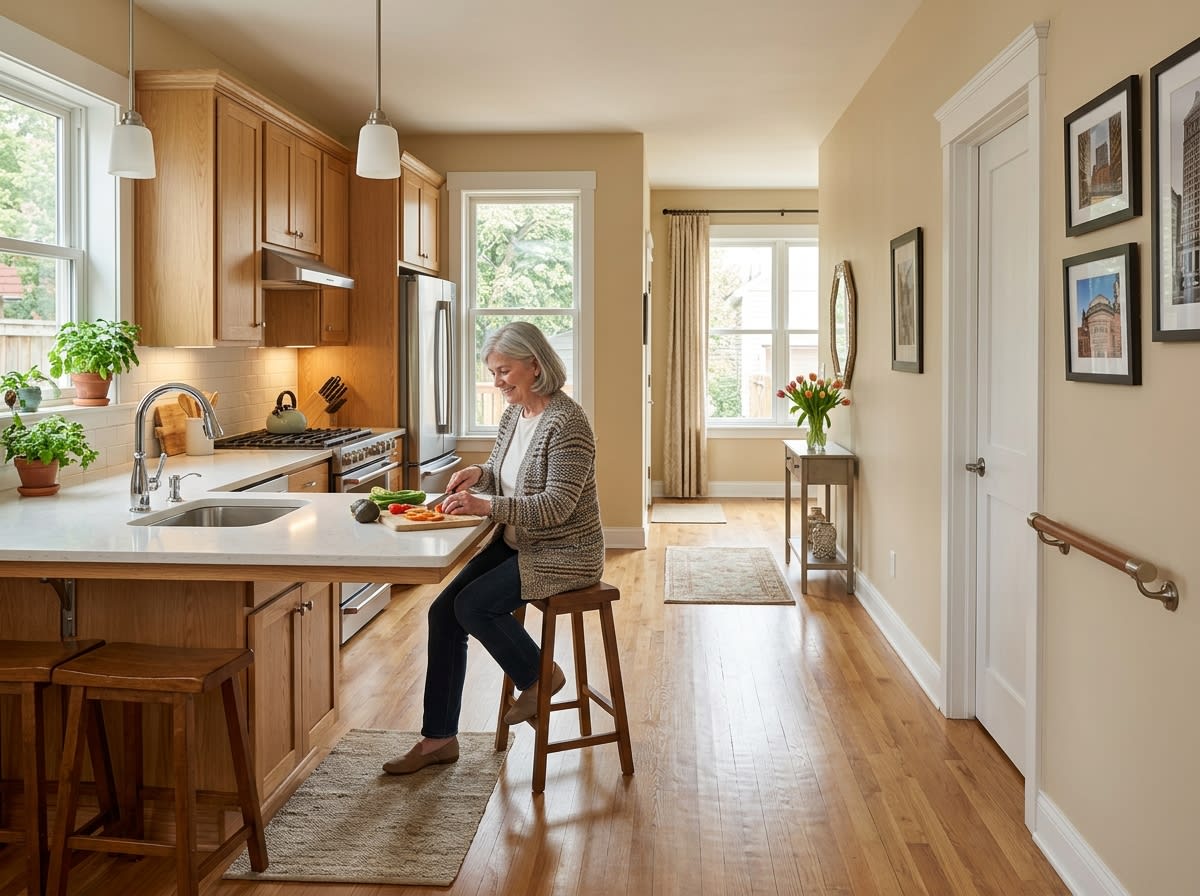
Most Chicago homes were not built with aging residents in mind. The classic bungalows, two-flats, and vintage suburban houses across neighborhoods like Portage Park, Evanston, and Wilmette feature narrow doorways, step-up entries, and bathrooms sized for a different era. The good news is that staying in the home you love rarely requires a full gut renovation. A focused set of kitchen and bathroom modifications, planned around how you actually move through your home, makes the biggest difference for safety and independence at a fraction of the cost. This guide walks through the upgrades that matter most for Chicago-area seniors, what they typically cost in 2026, and how to make a home both accessible and genuinely comfortable to live in.
What Aging in Place Really Means
Aging in place means staying in your own home safely and comfortably as your needs change, rather than relocating to assisted living. The goal is not to turn a house into a medical facility. It is to remove the everyday hazards and friction points that make a home harder to use over time, while keeping it feeling like home. That distinction matters, because well-designed accessibility features blend into a space so naturally that visitors never notice them, and they often make a home more pleasant for everyone, not just the person they were installed for.
The approach that works best is called universal design, which means creating spaces usable by people of all ages and abilities. A curbless shower, a lever door handle, and a well-lit hallway help a person using a walker, but they also help a parent carrying groceries or a guest recovering from surgery. Thinking this way keeps modifications from feeling clinical and protects your home's resale value, since universal design appeals to a broad range of future buyers in the Chicago market.
Accessible Bathroom Upgrades
The bathroom is where most falls happen, so it is the highest priority in nearly every aging in place project. The single most impactful change is converting a step-over tub into a curbless or low-threshold walk-in shower. This removes the dangerous act of stepping over a high tub wall on a wet surface. A curbless shower conversion in the Chicago area typically runs $8,000 to $20,000 depending on size, tile choices, and whether the floor structure needs to be rebuilt to set the drain properly, which is common in older homes with thick subfloors.
Grab bars are the most cost-effective safety upgrade you can make, but they must be installed correctly. Properly anchored grab bars are mounted into wall blocking or studs and can support significant weight, unlike suction-cup bars that offer a false sense of security. Professional grab bar installation in a Chicago bathroom generally costs $150 to $400 per bar including the blocking work, and placing them near the toilet and inside the shower covers the highest-risk movements. A comfort-height toilet, which sits a couple of inches taller than standard, makes sitting and standing far easier and costs little more than a conventional model.
Beyond the shower and grab bars, a few finishing choices add real safety. Slip-resistant flooring, such as textured porcelain tile or quality luxury vinyl, reduces fall risk on wet surfaces. A handheld shower wand on a slide bar lets a person bathe while seated. A wall-mounted or open-front vanity provides knee clearance for someone seated or using a wheelchair, and lever-style faucets are far easier than knobs for arthritic hands. Good, even lighting and a night-light path to the bathroom round out the most valuable improvements. For a higher-end take on combining safety with comfort, our guide to an accessible luxury master bath shows how these features fit into a premium design.
Accessible Kitchen Modifications
Kitchens are used constantly, so thoughtful changes here pay off every day. The guiding principle is to reduce reaching, bending, and the need to stand for long periods. Varying counter heights is one of the most useful moves: including a lower counter section, around 30 to 34 inches, creates a comfortable work surface for someone seated and a spot for food prep that does not strain the back. Building open knee space beneath a section of counter or the sink allows a person to roll or sit close to the work area.
Storage is the other half of an accessible kitchen. Pull-out shelves and deep drawers in base cabinets bring contents to the user instead of forcing them to bend and reach into the back of a dark cabinet. Pull-down shelving units in upper cabinets lower their contents to a reachable height. A wall oven set at counter height, a side-opening oven door, and a cooktop with front or side controls all remove the need to reach across hot burners. Drawer-style dishwashers and microwaves placed at counter level reduce bending. None of these require a different kitchen footprint, which keeps costs reasonable.
Lighting and surfaces deserve attention here too. Under-cabinet lighting eliminates shadows on work surfaces, which matters more as vision changes with age. Contrasting countertop edges and cabinet hardware help with depth perception, and large, easy-grip D-shaped cabinet pulls are far friendlier to aging hands than small knobs. Lever faucets, ideally with a pull-down sprayer, reduce the strength and dexterity needed at the sink. A full accessible kitchen remodel in the Chicago area generally falls in the $25,000 to $60,000 range depending on scope, while targeted upgrades like pull-outs, hardware, lighting, and a faucet can be done for a few thousand dollars.
Doorways, Floors, and Getting Around the Home
Accessibility does not stop at the two rooms. Many older Chicago homes have doorways too narrow for a walker or wheelchair, which typically need a clear width of about 32 inches. Widening a doorway runs roughly $700 to $2,500 depending on whether the wall is load-bearing or contains plumbing and wiring. Swapping standard hinges for offset or swing-clear hinges is a low-cost way to gain a couple of inches without major construction. Replacing round doorknobs with levers throughout the house is inexpensive and makes every door easier to use.
Transitions between rooms and flooring types are common trip hazards. Removing thresholds, securing or eliminating area rugs, and choosing continuous slip-resistant flooring all reduce fall risk. For homes with steps at the entry, a gently sloped walkway or a permanent ramp restores safe access, and these can be designed to look like an intentional part of the home rather than an add-on. Where stairs separate living levels, options range from a stairlift to relocating essential functions, such as a bedroom and full bath, to the main floor so daily life happens on one level.
Lighting, Technology, and Everyday Safety
Vision changes gradually with age, and good lighting is one of the cheapest, highest-impact upgrades in the entire project. Aim for bright, even, glare-free light in work areas and along every path traveled at night. Motion-activated lights in hallways, closets, and the route to the bathroom remove the need to fumble for a switch in the dark, which is exactly when many falls happen. Rocker-style switches are easier to operate than toggle switches, and placing them at accessible heights helps everyone in the home.
Simple technology can extend independence without turning a home into a gadget showroom. Smart thermostats keep the temperature comfortable without trips to a hard-to-reach dial, which matters during Chicago's temperature extremes. Video doorbells let a resident see and speak with visitors without rushing to the door. Voice-controlled lighting and assistants help people with limited mobility manage their environment from a chair. Medical alert systems and leak or smoke sensors add a layer of protection that gives both seniors and their families peace of mind. The point is to add the few tools that genuinely reduce risk or effort, not to over-automate a home that should still feel familiar and easy to use.
Costs, Codes, and Planning in the Chicago Area
A sensible way to budget an aging in place project is to start with the highest-risk areas and build out as needs and finances allow. Many Chicago households begin with a focused bathroom safety package of grab bars, a comfort-height toilet, better lighting, and slip-resistant flooring for a few thousand dollars, then move to a curbless shower and kitchen upgrades over time. Phasing the work keeps it affordable and lets you live with each change before deciding on the next.
It is also worth exploring whether any of the cost can be offset. Some modifications may qualify for assistance through programs aimed at helping older adults remain in their homes, certain veterans' benefits can help cover accessibility work for those who qualify, and a portion of medically necessary modifications may be deductible as a medical expense, so keeping documentation and consulting a tax professional is wise. Long-term care insurance policies sometimes include home modification benefits as well. These programs change over time and have specific eligibility rules, so it is worth checking current options before assuming a project must be paid entirely out of pocket.
Permits and codes matter here. Structural work like widening a load-bearing doorway, moving plumbing for a curbless shower, or building an exterior ramp generally requires a permit in Chicago and surrounding suburbs, and the rules differ from one municipality to the next. Working with a contractor who knows local requirements keeps the project compliant and avoids failed inspections. It is also worth planning these changes alongside any other remodeling you are considering, since combining projects saves on labor and disruption. Our room-by-room Chicago renovation cost guide and our master bathroom renovation cost breakdown are helpful companions when you are setting an overall budget.
Planning a Home That Grows With You
The most successful aging in place renovations are planned before they are urgently needed, when there is time to make thoughtful choices rather than react to a fall or a hospital stay. Done well, these modifications protect independence, reduce the risk of injury, and let people stay in the Chicago neighborhoods and homes they have built their lives around. They also tend to make a home more comfortable and more marketable for the long term. If you are ready to make your home safer and easier to live in for years to come, contact us for a consultation and we will help you prioritize the upgrades that matter most for your home and budget.
Related Posts
- Accessible Luxury Master Bath: Combining Safety and Style
- Chicago Master Bathroom Renovation Costs 2026
- 2026 Chicago Area Renovation Costs: Room-by-Room Budget Breakdown
Reviewed by the Budget Construction Company Editorial Team
Budget Construction Company has served Chicago homeowners since 1976. Project costs and requirements vary by property, scope, and municipality.