

The same features that make a bathroom accessible—grab bars, low-threshold entries, lever hardware—can actually elevate the design when specified correctly. Many Chicago homeowners assume that accessible design means compromising on style or luxury. A bathroom designed for aging in place doesn't need to look institutional or utilitarian. Instead, thoughtfully chosen universal design features integrate seamlessly into high-end master bathrooms, creating spaces that are both beautiful and genuinely livable for people with varying mobility and abilities. Chicago-area families increasingly plan bathrooms that work for their current lives and their future needs. Parents want spaces where aging parents can stay with them safely. Individuals plan for their own aging in place. Young families appreciate universal design features that work for children, adults, and guests with varying abilities. The result is bathrooms that are genuinely better for everyone—more functional, more beautiful, and more livable across decades and life changes.

Understanding Universal Design in Bathrooms
Universal design isn't about making spaces look medical or accessible. It's about designing spaces that work beautifully for people with varying abilities without looking or feeling different. A zero-threshold shower looks contemporary and open, not like a medical facility. A quality grab bar in brushed nickel looks like intentional design rather than a safety feature. Lever handles on faucets and doors look modern and elegant while working perfectly for people with arthritis or limited hand strength. Wide doorways that accommodate wheelchairs also feel spacious and generous. A curbless shower makes bathroom design cleaner and more open while being safer for everyone, not just people with mobility challenges.
The philosophical shift involves designing from the start with multiple users in mind rather than retrofitting accessibility features after the fact. When accessibility is part of the original design intent, it becomes invisible and beautiful rather than obviously added for safety reasons. A well-designed accessible bathroom is simply a good bathroom that happens to work particularly well for people with varying abilities.
Zero-Threshold Showers: Accessible and Contemporary
Zero-threshold showers—with no lip or step between bathroom floor and shower floor—are increasingly popular in Chicago master bathrooms for good reason. They look contemporary and open, create a spacious feeling, and work beautifully for people with mobility challenges while being accessible to everyone.
A properly designed zero-threshold shower requires careful slope and drainage to prevent water from flowing into the bathroom. The floor slopes gradually toward a linear drain or recessed drain system, creating a contemporary look while managing water effectively. When designed well, the slope is invisible and the shower looks open and spacious.
Material selection matters significantly. Large-format tiles with minimal grout lines look clean and contemporary while being practical. Slip-resistant tile is essential in wet areas. Color selection can be contemporary and luxurious—soft grays, warm whites, or subtle blues—rather than looking clinical.
A zero-threshold shower with quality fixtures, good lighting, and luxurious finishes can be the most beautiful feature in a master bathroom. It's genuinely accessible while looking simply like excellent contemporary design.
Walk-In Tubs and Accessible Soaking Options
Walk-in tubs—with a door that opens allowing easy entry without stepping over a tub rim—are increasingly popular for aging in place bathrooms. However, many traditional walk-in tubs look institutional. Contemporary walk-in tubs exist that integrate into luxury bathrooms beautifully.
Some walk-in tubs offer freestanding designs that look like luxury soaking tubs while incorporating accessibility features. These work beautifully in spacious bathrooms where a sculptural tub is part of the design aesthetic. The accessibility features become invisible because the tub looks intentionally designed for luxury.
The alternative to walk-in tubs is a combination of a zero-threshold or low-threshold accessible shower and a separate soaking tub positioned for safe, assisted use. A bench or seating area within the shower allows rest during showering. A shallow soaking tub with grab bars positioned for safety can be used independently or with assistance. This approach gives both showering and soaking options while maintaining flexibility for users with varying abilities.
Grab Bars as Design Elements
Grab bars don't need to look medical or utilitarian. Contemporary grab bars in finishes like brushed nickel, matte black, or brass integrate beautifully into luxury bathrooms. Strategic placement—along shower walls, at toilet, and near tub or bench—provides safety without looking like the space is designed around safety rather than beauty.
Recessed grab bars integrate into tile work and look less obvious than surface-mounted bars. Grab bars with integrated soap dishes or shelves serve dual purposes, reducing visual clutter while providing functionality. Grab bars positioned to work as part of towel bar placement, edge detailing, or overall design scheme feel intentional rather than obviously added for safety.
The key is treating grab bars as design elements rather than afterthoughts. Specify them upfront as part of your bathroom design. Choose finishes and styles that complement your overall aesthetic. Position them strategically to work with your tile design and overall layout. Quality grab bars in finishes that coordinate with your faucets and fixtures become invisible as safety features while simply being excellent design.
Lever Handles and Accessible Hardware
Lever handles on faucets and doors look contemporary and work perfectly for people with limited hand strength, arthritis, or mobility challenges. Modern lever-handle faucets are beautiful design in themselves, available in contemporary finishes and styles that complement any bathroom aesthetic. They're not obviously accessible—they're simply good design that happens to work perfectly for everyone.
Single-lever faucets are easier to operate than double-handle options. Hands-free or motion-sensor faucets eliminate the need to touch faucet handles, which is appealing for people with mobility challenges and simply good hygiene for everyone. Quality motion-sensor faucets look elegant and contemporary while being functionally superior.
Door hardware should include lever handles throughout the bathroom and adjacent spaces. Pocket doors that slide into walls rather than swinging outward are accessible to wheelchair users while being contemporary design. Pocket doors also maximize usable space by not requiring swing clearance.
Faucet and door hardware in finishes like matte black, brushed nickel, or warm bronze look contemporary and luxurious while being highly functional. Specifying quality accessible hardware upfront creates beautiful design that naturally accommodates people with varying abilities.
Lighting and Visibility for Safety and Comfort
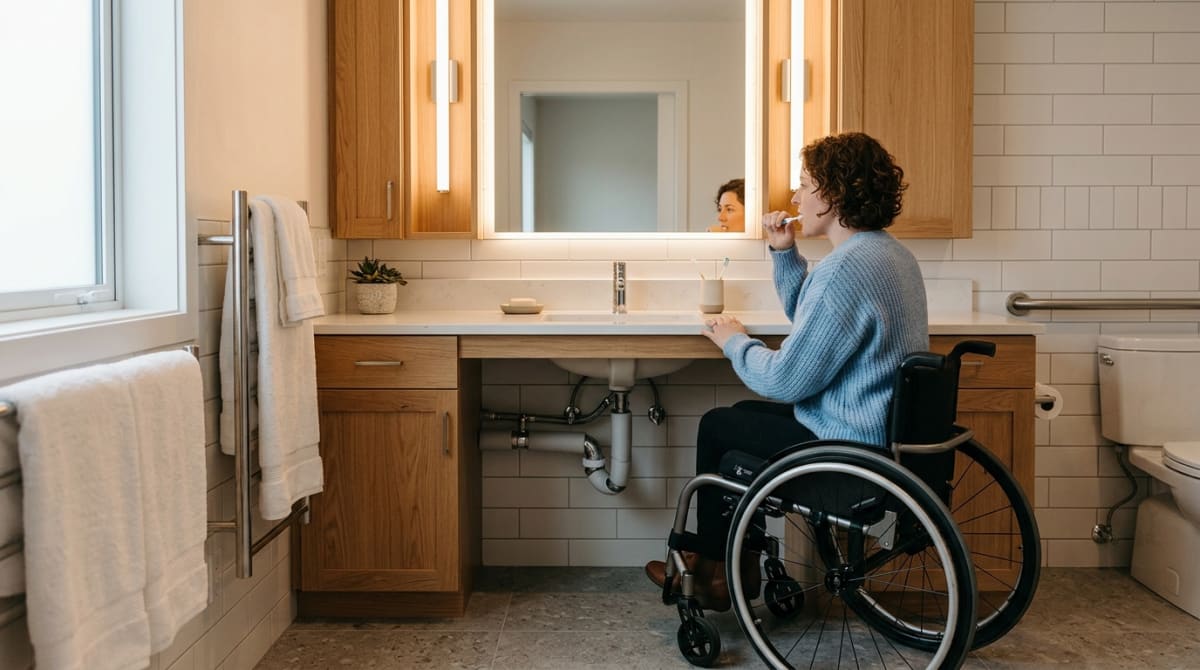
Good lighting is essential in accessible bathrooms. Vanity lighting that illuminates the face without harsh shadows helps people see clearly for grooming and toileting. Overhead lighting that's adjustable and dimmable provides flexibility for different times of day and activities. Task lighting around toilet and shower areas helps with safety and functionality.
Motion-sensor lighting in bathrooms is increasingly popular for accessibility and convenience. Lights that activate when entering the bathroom and automatically turn off prevent fumbling for switches and provide safety during nighttime bathroom visits. These are excellent features for aging in place while being convenient for everyone.
Natural light through windows or skylights is valuable if possible. Natural light is energizing and creates a more pleasant bathroom experience. When windows aren't possible, mimicking daylight through full-spectrum LED bulbs improves visibility and mood.
Contrasting colors between walls and fixtures, between floor and shower, between door frames and walls improve visibility for people with vision changes. These contrasts also create visual interest and contemporary design. A light-colored bathroom with darker accent walls or tile creates contrast that's both beautiful and functional.
Seating and Space Planning for Comfort
A bench or seating area within the shower allows bathing while seated, which is safer for people with balance challenges and more comfortable for everyone. A quality bench that matches your tile or coordinates with your design looks intentional rather than obviously functional. Benches with backs provide additional support and comfort.
A comfort height toilet—taller than standard height—is easier for people with mobility challenges to use while being comfortable for everyone. Modern comfort height toilets look contemporary and are becoming standard in master bathrooms.
Adequate space around fixtures makes bathrooms accessible and comfortable. A bathroom with space to move around, position a wheelchair or walker, or allow assistance feels spacious and pleasant rather than cramped. This works beautifully for young families with children, active adults with guests, and people aging in place. Space is simply good bathroom design.
Flooring Materials for Safety and Accessibility
Non-slip flooring is essential in wet areas but can look beautiful. Textured tiles with subtle variation provide slip resistance while looking contemporary. Larger format tiles with minimal grout lines create clean, modern aesthetics while being practical.
Avoiding dramatic level changes throughout the bathroom makes it accessible to wheelchairs and walkers while creating a seamless, contemporary look. Flooring materials that transition smoothly between spaces prevent trip hazards and look intentionally designed.
Material choices matter. Large-format porcelain tile is durable, slip-resistant when properly selected, and looks luxurious. Stone tile offers natural beauty with good durability if properly sealed and maintained. Luxury vinyl plank that mimics wood or stone provides comfort underfoot and excellent slip resistance while being warm and forgiving—important for barefoot bathroom use.
Spa Features That Include Accessibility
Heated floors aren't just luxury—they're genuinely comfortable and practical for people with arthritis or circulation challenges. The warmth underfoot feels wonderful for everyone and has the added benefit of providing comfort to people with joint pain.
Steam showers with appropriate ventilation and moisture management can include seating and accessible entry, working beautifully for people who enjoy steam bathing while needing support or seating options. The combination of accessibility features with spa-like comfort is genuinely luxurious.
Spa features can be designed with accessibility in mind from the start. A soaking tub with seating options and grab bars strategically positioned looks intentional rather than obviously made accessible. A rainfall showerhead with a bench creates a luxurious experience that also works perfectly for someone who prefers to sit while showering.
Working With Universal Design Professionals
Creating accessible luxury bathrooms benefits from professional guidance. A designer familiar with universal design principles knows how to make spaces beautiful while accessible. They understand material selection, color coordination, and fixture choice that creates luxury while serving people with varying abilities.
Occupational therapists who specialize in aging in place can advise on specific accessibility features based on your actual or anticipated needs. Their guidance ensures the bathroom works perfectly for your specific situation rather than implementing generic accessibility features that might not address your particular needs.
A contractor experienced with accessible bathrooms understands how to implement features beautifully and functionally. They know proper slopes for zero-threshold showers, adequate grab bar placement, and how to integrate accessible design elements seamlessly.
The Philosophy of Design for Everyone
The most successful accessible bathrooms aren't designed for "others"—they're designed by considering everyone's current and future needs. Parents design bathrooms that work for their young children, themselves, and their aging parents. Individuals design bathrooms that work beautifully now while accommodating their own aging in place. Families with members with varying abilities design spaces that work for everyone equally.
When you approach accessible bathroom design this way, the result is simply excellent design. A bathroom that's beautiful, functional, comfortable, and works for people across a wide range of abilities and ages is genuinely better for everyone.

Creating Your Accessible Luxury Bathroom
Start by considering who will use your bathroom across the years ahead. Design with current needs in mind while building in features that will work well if mobility or other abilities change. Choose finishes, fixtures, and details that you love aesthetically while serving accessibility purposes.
Work with professionals who understand that accessible design and luxury design aren't opposing goals. They're complementary approaches that together create bathrooms that are genuinely beautiful and functional for everyone.
The result is a master bathroom that's not just accessible—it's simply excellent. Beautiful, functional, comfortable, and designed to work for you and the people you love across decades and life changes. That's the ultimate luxury bathroom.
If you're planning a master bathroom renovation and want guidance incorporating universal design features that work beautifully with luxury finishes and contemporary style, Budget Construction Company can help. We've designed numerous bathrooms that are accessible and luxurious, demonstrating that these goals complement rather than conflict with each other. Contact us for a consultation to discuss your master bathroom vision and how to create a space that's beautiful, functional, and works perfectly for everyone who uses it.
Related Posts
- Chicago Master Bathroom Renovation Costs 2026: What Homeowners Actually Pay in the City and Suburbs
- Heated Floors, Rainfall Showers, and Beyond: Which Luxury Bath Features Actually Survive Chicago Winters
- Historic Chicago Homes: Master Bath Renovation Strategies That Honor Architecture While Adding Modern Luxury
Reviewed by the Budget Construction Company Editorial Team
Budget Construction Company has served Chicago homeowners since 1976. Project costs and requirements vary by property, scope, and municipality.