

If you are planning to repair, rebuild, or replace a porch in Chicago, the permit process is rarely as simple as filling out one form at the Department of Buildings. Many homeowners and landlords are surprised to learn that porch work in this city often requires sign-off from two separate sources before a contractor can pick up a hammer. Skipping either step, or assuming your project is too small to need a permit, is one of the most common and costly mistakes property owners make. This guide walks through exactly when a permit is required, who needs to approve your project, and how to move through the process without unnecessary delays.
Why Porch Permits Are Taken So Seriously in Chicago
Chicago's relationship with porch safety changed dramatically after a series of porch collapses exposed how dangerous deteriorated and improperly built structures could be. In response, the city overhauled its porch construction standards and built a permitting and inspection system specifically designed to catch problems before they become tragedies. That history is why porch permitting in Chicago is stricter and more closely watched than in many other cities, and why inspectors take porch violations seriously even when a structure looks fine from a distance.
For property owners, this means porch work is not an area where it pays to cut corners or hope nobody notices. The permitting system exists because porches in this city, especially the tall, stacked wooden porches common on two-flats, three-flats, and courtyard buildings, carry real structural loads and see heavy daily use. Treating the permit process as a formality rather than a safety check is exactly the mindset that leads to violations, fines, and in worst cases, structures being ordered closed.
When You Actually Need a Permit
The general rule is straightforward: any work that affects the structure of a porch, including framing, decking attached to the structure, stairs, landings, and railings, requires a permit from the Chicago Department of Buildings. This covers full porch replacements, partial rebuilds of deteriorated sections, adding or modifying stairs, and significant railing reconstruction. Even projects that feel relatively minor, like replacing a rotted beam or rebuilding a single flight of stairs, typically fall under this requirement because they involve structural components.
What does not always require a full permit are truly cosmetic items, such as repainting, staining, or replacing a small number of individual deck boards without touching the framing underneath. However, the line between cosmetic and structural is thinner than most people think, and what looks like a simple board replacement can reveal rot in the joists below once you open it up. Because of this, the safest approach for any porch project beyond basic surface maintenance is to assume a permit is needed and confirm with the Department of Buildings or an experienced contractor before starting work.
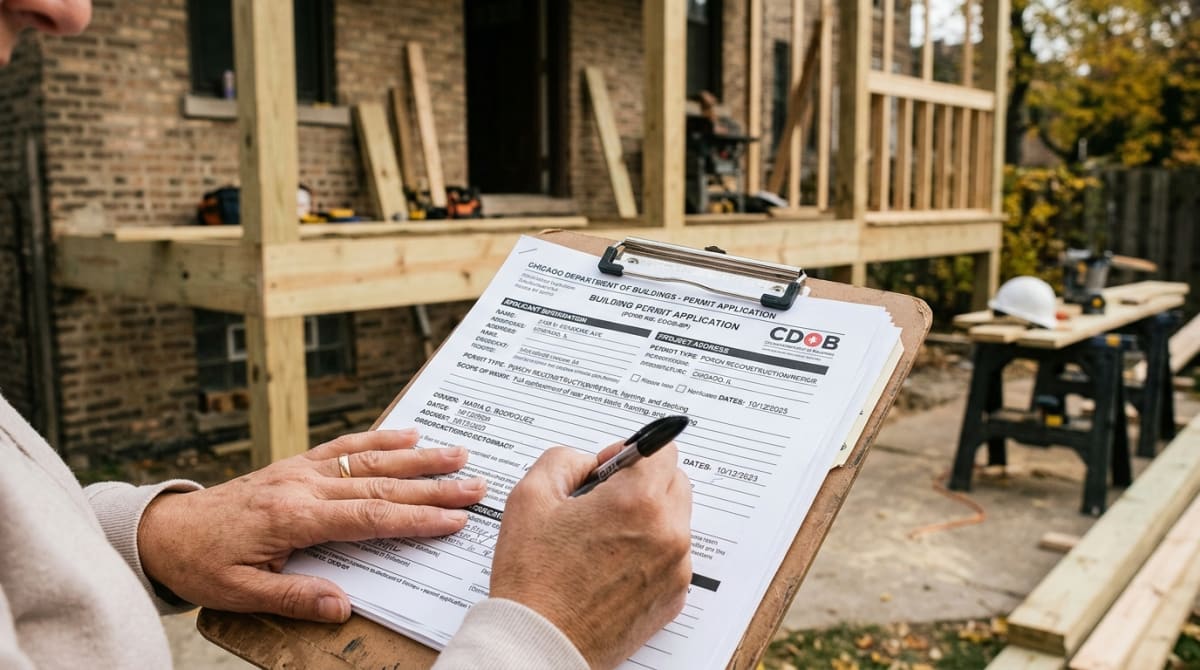
The Two-Approval System: Department of Buildings and Your Alderman
Here is where many Chicago property owners get tripped up. For many types of porch construction, particularly new porches, full replacements, and significant structural rebuilds, the Department of Buildings permit is not the only approval you need. Chicago's aldermanic privilege system means that certain construction projects, porches among them, may also require a sign-off or notification to your ward's Alderman's office before the permit can move forward.
This dual-approval requirement exists because aldermen historically have had input on construction projects within their wards, and porches, given their visibility and history of safety issues, are squarely within that scope. In practice, this can mean submitting your plans to the Department of Buildings while also reaching out to your Alderman's office to confirm there are no objections or additional local requirements. The exact process can vary somewhat by ward, which is part of why this step catches so many people off guard. A homeowner who has only ever dealt with the Department of Buildings may not realize a second conversation is needed, and that oversight can stall a project for weeks.
The practical takeaway is to start both conversations early. Contact the Department of Buildings to confirm what plans and documentation your specific project requires, and reach out to your Alderman's office at the same time to ask whether your project needs their review and what that involves in your ward. Doing this in parallel, rather than discovering the second requirement after you have already submitted to one office, can save significant time.
What Documentation You Will Need
Putting together a complete application package up front is the single best way to avoid back-and-forth delays. For most porch permit applications, you will need detailed construction drawings showing the existing and proposed structure, including dimensions, framing member sizes, footing details, and railing specifications. These drawings need to demonstrate that the design meets Chicago's porch construction standards, which are more specific than general residential deck codes in areas like load capacity, lumber grades, and connection hardware.
You will also typically need to provide a site plan showing the porch's location relative to the building and property lines, especially if the new or rebuilt porch will change the footprint at all. If your project involves a full replacement rather than a repair, additional structural documentation may be required to show that the new design accounts for the building's age and condition. For older buildings, this is particularly important, since the porch's connection to the building structure itself is one of the most heavily scrutinized details in the review process.
Working with a contractor experienced in Chicago porch permitting makes a significant difference here, because they will already know the format and level of detail the Department of Buildings expects and can prepare drawings that move through review more smoothly. Submissions that are incomplete or that do not match the city's expected format are a common cause of rejected or delayed applications.

The Inspection Process After Your Permit Is Issued
Getting the permit approved is not the end of the process, it is the beginning of a sequence of inspections that confirm the work matches what was approved. Depending on the scope of your project, the city may require inspections at multiple stages, such as after footings are poured, once the framing is complete but before it is covered or decked over, and again at final completion. Each of these inspections gives the city a chance to verify that the structure meets code before the next phase of work proceeds.
This staged approach is particularly important for porches because so many critical details, like the connection between the porch and the building, the size and spacing of joists, and the hardware used at structural connections, become hidden once decking and railings are installed. An inspector who only sees the finished product cannot verify these details, which is why the framing inspection in particular is treated as essential. Skipping or rushing past this stage, even informally, can create problems later if the city requires you to open up finished work to demonstrate compliance.
Scheduling these inspections promptly as each phase of construction is completed keeps your project moving and avoids the awkward situation of having finished work that cannot be signed off because an earlier inspection was missed. An experienced contractor will build these inspection points into the project timeline from the start, so they do not come as a surprise partway through.
What Happens If You Build Without a Permit
Unpermitted porch work is unfortunately common in Chicago, often because a previous owner did the work years ago, or because a property owner assumed a small repair did not need approval. The problem is that unpermitted work has never been reviewed for compliance, regardless of how solid it looks, and it frequently surfaces during a sale, refinance, or unrelated inspection. At that point, the property owner is faced with bringing the structure into compliance after the fact, which can be more complicated and costly than getting it right the first time.
Retroactively permitting existing work generally means having the structure assessed against current code, submitting an application that reflects what was actually built, and in many cases opening up portions of the structure so an inspector can verify framing and connections that are normally hidden. If the existing work does not meet code, which is common with older, unpermitted porches, some level of rebuilding may be required to bring it into compliance. This is a significant reason why even a porch that looks structurally sound should be checked for proper permit history, especially before listing a property for sale.
Working With a Contractor Who Knows Chicago's Process
The most efficient path through Chicago's porch permitting system is working with a contractor who handles this process regularly. An experienced local contractor will know what level of detail the Department of Buildings expects in drawings, understand how to approach the Alderman's office in your specific ward, and anticipate the inspection sequence your project will require. This experience translates directly into fewer rejected submissions, fewer surprise delays, and a project timeline that actually holds up.
It also means fewer surprises during construction itself. Because the contractor understands what inspectors will be looking for at each stage, the work is built correctly the first time rather than needing rework to pass a framing inspection. For property owners juggling a project alongside their normal lives, that reliability is often worth more than any other factor in choosing who to hire.
Planning Your Porch Project the Right Way
The permit process can feel like an obstacle standing between you and a finished porch, but it exists for good reason and, handled correctly, does not have to derail your timeline. Start early, confirm both Department of Buildings and Alderman's office requirements for your specific ward, assemble complete documentation, and build inspection scheduling into your project plan from day one. If you are weighing whether your porch needs a full rebuild or can be repaired, our guide to porch repair versus full replacement in Chicago can help you understand which path your project is likely to take before you even apply for permits.
Ready to get your porch project moving the right way? Contact us for a consultation and we will help you navigate the permit process from the first conversation with the city through final inspection.
Related Posts
- Porch Repair vs. Full Replacement: Making the Right Call for Your Chicago Home
- 5 Common Porch Violations Chicago Property Owners Face and How to Fix Them
- Chicago's Express Permit Program for Porch Repairs: What Homeowners Need to Know
Reviewed by the Budget Construction Company Editorial Team
Budget Construction Company has served Chicago homeowners since 1976. Project costs and requirements vary by property, scope, and municipality.