

Designing a porch that will pass inspection on the first try means understanding what Chicago's building code actually requires before a single board is cut. Chicago holds porches to a higher standard than most general residential deck codes, with specific requirements for lumber, framing, connections, dimensions, and load capacity that reflect the city's history with porch safety and its demanding climate. Whether you are planning a full replacement or a new porch on an addition, here is what your design needs to include to meet Chicago's requirements for 2026.
Why Chicago's Porch Standards Go Beyond General Deck Code
Many homeowners assume that porch construction is essentially the same as deck construction, just with a roof. In Chicago, that assumption can lead directly to a failed inspection. After past porch collapses revealed how dangerous undersized or poorly connected structures could be, the city developed porch-specific requirements that address the particular ways these structures are used and the loads they experience. Chicago's tall, stacked porches serving multiple units see far more concentrated foot traffic and gathering loads than a typical single-family backyard deck, and the code reflects that reality.
This means a design that would be perfectly acceptable for a suburban deck in another jurisdiction may fall short of what Chicago specifically requires. The differences show up in lumber sizing, the spacing and sizing of structural members, the hardware used at critical connections, and the way the porch attaches to the building itself. Designing to Chicago's actual standard from the outset, rather than a generic deck standard, is the difference between a smooth permit review and a design that gets sent back for revisions.
Lumber Specifications and Framing Requirements
Chicago's code is specific about the lumber grades and dimensions required for porch framing, and these requirements tend to be more conservative than what general deck-building guides recommend. Joists, beams, and posts need to be sized appropriately for the spans and loads involved, with pressure-treated lumber rated for ground contact used wherever wood is close to grade or exposed to standing moisture, which is a near-constant concern given Chicago's freeze-thaw cycles and wet seasons.
Framing layout also matters. Joist spacing needs to be tight enough to support the decking without excessive deflection, and beams need to be sized to carry the loads from the joists above without sagging over time. For the tall, multi-level porches common on Chicago's two-flats and three-flats, this also means careful attention to how loads transfer from the upper levels down through posts to the footings below, since a design that looks fine on the top level can be inadequate if the lower-level framing was not sized to carry the cumulative load.
Footings and Foundation Requirements
A porch is only as good as what it stands on, and Chicago's code requires footings that extend below the frost line to prevent the seasonal heaving that frost can cause in shallow foundations. Footings that are too shallow will move as the ground freezes and thaws each winter, gradually throwing the entire structure out of level and stressing connections throughout the porch. This is one of the most common issues found in older, non-compliant porches, where shallow or undersized footings have allowed years of slow movement.
For new construction or full replacements, footings need to be sized appropriately for the loads they will carry and placed at the correct depth for Chicago's climate. This is also an area where soil conditions on the specific property matter, since some Chicago lots have fill soil or other conditions that affect how footings perform. A design that gets the footings right from the start avoids the slow, creeping problems that plague porches built on inadequate foundations.

Connection Details: Where Porches Meet the Building
The connection between a porch and the building it serves is one of the most heavily scrutinized details in Chicago's porch code, and for good reason. This connection carries significant load and, if it fails, can cause the entire porch to pull away from the building. Code-compliant designs specify the hardware, fastener types, and attachment methods required at this connection, and these requirements are generally more rigorous than what a generic deck ledger attachment would call for.
For older brick buildings, this connection needs to account for the condition and composition of the masonry, since attaching a heavy structure to deteriorated brick or mortar creates a weak point regardless of how strong the porch framing itself is. Designs for porches on older buildings often need to address the masonry condition as part of the overall plan, which is one more reason why porch projects on Chicago's older housing stock benefit from a contractor who understands both the structural and masonry sides of the work.
Railing Height, Spacing, and Strength Requirements
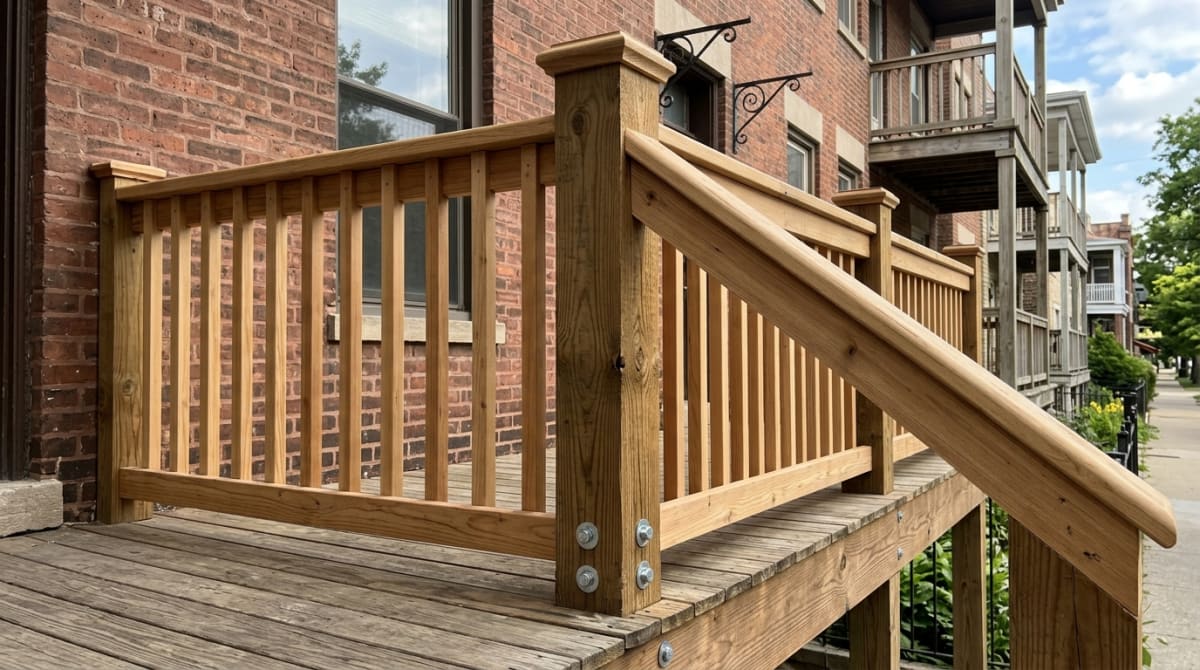
Railings are one of the most visible code requirements and also one of the most commonly cited in violations, because the requirements are specific and many older porches predate them. Chicago code specifies a minimum guardrail height for elevated porches and limits the spacing between balusters to prevent small children from passing through. Beyond dimensions, railings also need to be built and anchored to withstand a significant horizontal load, which means the posts and connections, not just the balusters themselves, need to be substantial.
A design that gets the height and spacing right but uses undersized posts or weak attachment to the framing will still fail if the railing flexes under pressure. Code-compliant railing design treats the entire railing system, posts, rails, balusters, and their connections to the porch frame, as a unit that needs to perform together under load, not just look correct from a distance.
Stair Design and Dimensional Requirements
Stairs on Chicago porches need consistent tread depth and riser height throughout each flight, since irregular dimensions are a major cause of trips and falls and are flagged quickly during inspection. Stringers need to be sized appropriately for the span and properly supported, particularly important on the tall porches where stairs may run multiple stories and see heavy daily use. Handrails are required on stairs and need to be graspable and set at the correct height, with particular attention to open sides where a fall hazard exists.
Designing stairs that meet these requirements from the start, rather than treating them as an afterthought once the main porch structure is designed, avoids one of the more common reasons stair-related work gets flagged during inspection. Consistent, properly supported stairs with correct handrails are not just a code checkbox, they are one of the features that most directly affects everyday safety for everyone who uses the porch.
Material Choices for Chicago's Climate
Beyond meeting structural code, material selection affects how well a porch holds up to Chicago's weather over time. Pressure-treated lumber remains the standard for framing because of its resistance to moisture and decay, but the quality and treatment level matter, particularly for components close to grade or exposed to splash-back from rain and snowmelt. For decking and railings, some homeowners choose composite materials for their resistance to the freeze-thaw cycling that causes wood to crack and splinter over time, while others prefer the traditional look of painted or stained wood, which requires more regular maintenance to perform well in this climate.
Whatever materials you choose, the design needs to account for how Chicago's weather will affect them over the life of the porch, including proper flashing and detailing to keep water from collecting at connections and joints, since trapped moisture is the single biggest driver of the deterioration that eventually leads to porch violations.
Working With Inspectors During Construction
Even the best design on paper still has to hold up under the scrutiny of an actual inspection, and understanding what inspectors look for during construction helps a project move smoothly from approved plans to a finished, signed-off porch. During the framing inspection, inspectors typically check that lumber sizes match what was approved, that connections at the building wall use the specified hardware, and that footing depths and placements match the plans. They will also look at how joists and beams are spliced or joined, since improper connections in these areas can create weak points even when the overall lumber sizing is correct.
A design that anticipates these checks, by specifying connection details clearly in the drawings and by using hardware that is readily available and easy to verify on site, tends to move through inspection with fewer questions. Contractors who build to Chicago's porch code regularly develop a good sense of which details inspectors focus on most closely, and that experience translates into framing that is built correctly the first time rather than needing adjustments after an inspection flags an issue.
Final inspections focus more on the visible, finished elements: railing height and spacing, stair dimensions and handrails, and the overall condition of the decking and trim. A design that has been thought through from the start, with railing and stair details that meet code by a comfortable margin rather than just barely, tends to pass these final checks without the back-and-forth that can happen when a detail is borderline. Building in this margin during design, rather than treating code minimums as targets to hit exactly, is a small design choice that pays off during the inspection process.
Getting Your Design Right From the Start
A porch designed to Chicago's actual code requirements, not generic deck standards, moves through permitting more smoothly, performs better through the city's demanding winters, and avoids the violations that catch so many property owners off guard years down the line. From footings and framing to connections, railings, and stairs, every element of the design needs to reflect the specific standards Chicago has developed based on hard experience with what goes wrong.
If you are planning a new porch or a full replacement and want a design that gets it right the first time, contact us for a consultation and we will work with you on a porch that meets Chicago's code, suits your home, and is built to last through everything our weather throws at it.
Related Posts
- Porch Repair vs. Full Replacement: Making the Right Call for Your Chicago Home
- Chicago Porch Permit Requirements: A Step-by-Step Guide for Homeowners and Landlords
- 5 Common Porch Violations Chicago Property Owners Face and How to Fix Them
Reviewed by the Budget Construction Company Editorial Team
Budget Construction Company has served Chicago homeowners since 1976. Project costs and requirements vary by property, scope, and municipality.