
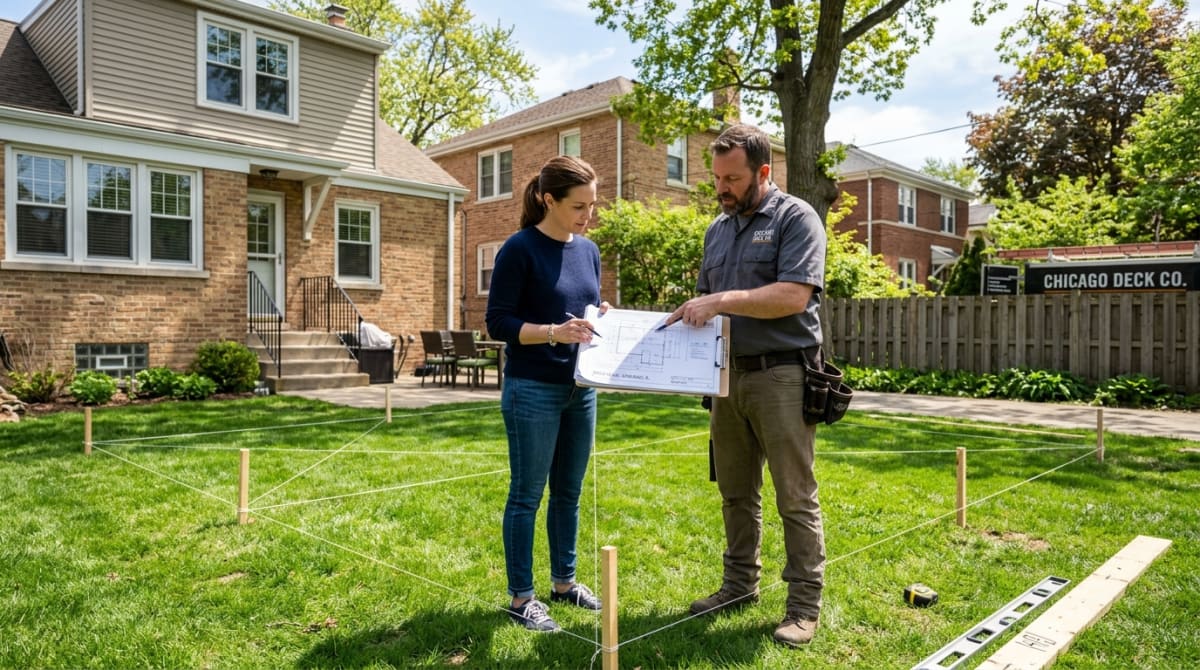
Building a new deck is one of the most popular home improvement projects for Chicago-area homeowners, but it is also one where skipping the permit step causes the most regret. A deck built without the proper permit can lead to stop-work orders, fines, complications when selling the home, and in some cases having to remove or rebuild work that does not meet code. Before you finalize your deck design, here is what you need to know about Chicago's permit requirements and how the process differs depending on where in the metro area your home is located.
When a Deck Permit Is Required
In Chicago and most surrounding municipalities, any deck attached to your home, or any freestanding deck above a certain height or size, requires a building permit. This covers the structural elements: framing, ledger attachment to the house, footings, posts, beams, joists, decking, stairs, and railings. The permit process exists to ensure that the structure can safely support the loads it will experience and that it is built with materials and connections appropriate for our climate.
Some jurisdictions allow small, low platforms that are not attached to the house and sit close to the ground without a permit, but the threshold for what qualifies varies by municipality, and many homeowners overestimate how small a deck needs to be to fall into this category. Because the definition of what counts as exempt differs from one town to the next, and because the consequences of guessing wrong can be significant, the safest approach is to confirm with your local building department before assuming your project does not need a permit.
City of Chicago vs. Suburban Requirements
One of the most important things to understand is that "Chicago deck permit" does not mean one single process across the entire metro area. Within the city of Chicago, deck permits go through the Department of Buildings, with requirements shaped by the city's specific construction code, which, like its porch code, tends to be more detailed than baseline residential standards in some areas.
Once you move into the suburbs, each municipality runs its own building department with its own permit application, fee schedule, and review process. Evanston, Oak Park, Skokie, and the dozens of other suburban communities in the metro area each have their own forms, their own required documentation, and sometimes their own additional requirements layered on top of the state building code. A deck design that would sail through approval in one suburb might need adjustments to meet another suburb's specific requirements. If you are working with a contractor who operates across the metro area, their familiarity with these municipality-by-municipality differences is a real asset, since it means your application is prepared in the format and with the documentation each specific building department expects.

Historic Preservation Considerations
Several Chicago neighborhoods and suburban communities, including parts of Oak Park, Evanston, and various historic districts within the city itself, have additional design review requirements for exterior construction that can apply to decks, particularly when a deck is visible from the street or attaches to a home with historic designation. These reviews are separate from the standard building permit and focus on whether the design is appropriate for the architectural character of the home and surrounding area.
For homeowners in these areas, this means the permit process may include an additional step where the deck design is reviewed for its visual compatibility with the home and neighborhood, not just its structural compliance. This is rarely a reason to abandon a project, but it does mean starting the design process with an awareness of any historic district guidelines that might apply, since a design that needs to be reworked partway through the approval process adds time that could have been avoided with some upfront research. If your home falls within a historic district, our guide to matching your deck to Chicago's architectural styles covers design approaches that tend to work well with these review processes.
HOA Approval for Condo and Townhome Communities
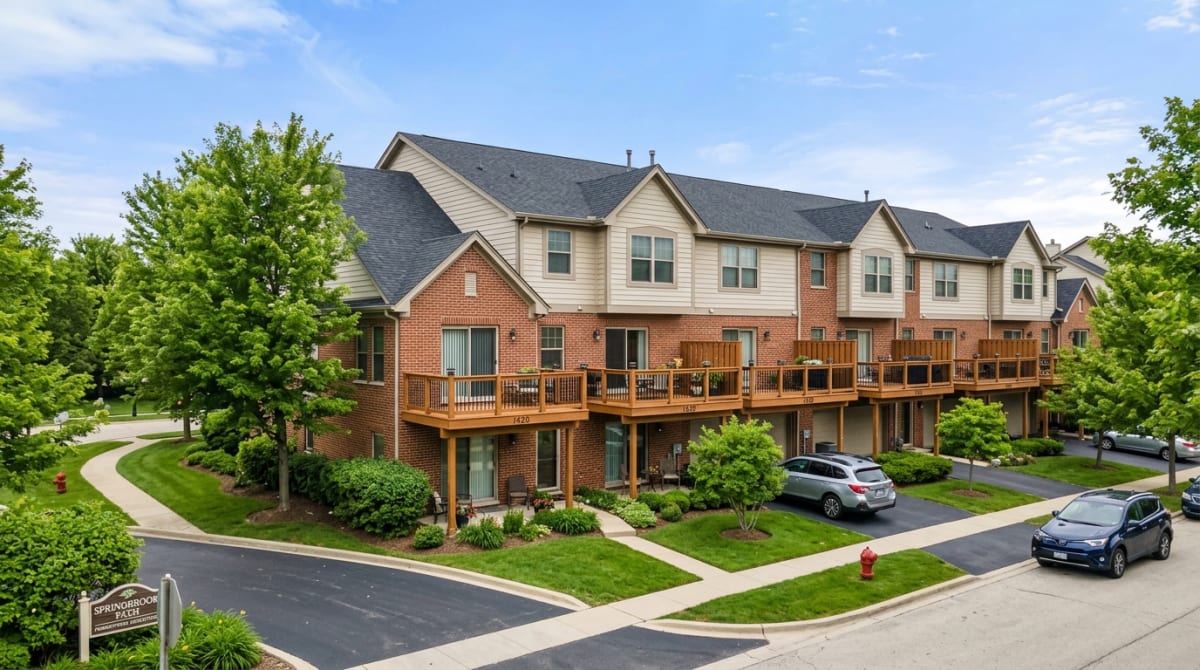
If your home is part of a homeowners association, condo association, or townhome community, the building permit from your municipality is often only half of the approval process. Many HOAs have their own architectural review requirements for exterior changes, including decks, and these requirements can be more restrictive than what the municipality requires. An HOA might dictate allowable materials, colors, dimensions, or even whether a deck is permitted at all in certain areas of the community.
Skipping HOA approval, even when you have a valid municipal permit, can lead to disputes with your association, fines under the HOA's own rules, or in some cases a requirement to remove work that did not go through the proper internal approval process. Before finalizing your design, check your HOA's governing documents or contact the association directly to understand what their approval process requires, and plan for the time that process takes alongside your municipal permit timeline. Submitting both applications around the same time, once you have a design you are confident about, helps keep your overall project timeline as tight as possible.
What Documentation You Will Need
Regardless of which jurisdiction you are in, most deck permit applications require a site plan showing the deck's location relative to your house and property lines, including setback distances from neighboring properties. You will also need construction drawings showing the deck's framing layout, footing locations and depths, ledger attachment details, and railing and stair specifications. The level of detail expected varies by municipality, but in general, more detailed and clearly labeled drawings move through review faster than sparse sketches.
For decks attached to the house, the ledger board connection, which transfers a significant portion of the deck's load to the house structure, gets particular attention. Many jurisdictions have specific requirements for the flashing, fasteners, and spacing used at this connection because a failed ledger attachment is one of the most common causes of deck collapses nationally. Footings also need to meet local frost depth requirements, which in the Chicago area means footings that extend well below grade to avoid the heaving that winter freeze-thaw cycles can cause in shallow foundations.
Inspections During Construction
Once your permit is issued, expect at least one inspection during construction, typically after the footings are dug and before they are poured, and often a second inspection of the framing before decking is installed. These inspections verify that the structural elements that will be hidden once the deck is finished actually meet code. A final inspection after completion confirms that railings, stairs, and other visible elements meet requirements as well.
Scheduling these inspections as your project reaches each stage, rather than trying to schedule them all at once after the deck is complete, keeps your project on track and avoids the situation where finished work needs to be opened up because an earlier inspection was missed. Your contractor should build these inspection points into the construction schedule from the outset.
Avoiding the Most Common Permit Delays
The most common causes of permit delays are incomplete applications, drawings that do not clearly show required details like footing depths or ledger attachment methods, and, in suburban communities, designs that do not account for setback requirements specific to that municipality. Taking the time to confirm your specific town's requirements before submitting, rather than assuming all Chicago-area permits work the same way, prevents the frustrating cycle of submission, rejection, and resubmission that can add weeks to a project.
Working with a contractor who builds decks across the Chicago metro area regularly is one of the most effective ways to avoid these delays, since they have likely already navigated the specific requirements of your municipality and know what a complete application looks like before it ever goes to the building department.
Permit Fees and Realistic Timeline Expectations
Permit fees for deck construction vary considerably across the Chicago metro area, and they are typically calculated based on factors like the estimated construction value or the square footage of the deck, depending on the municipality's specific fee schedule. While these fees are usually a small fraction of the overall project cost, they should be factored into your budget from the start rather than treated as an afterthought, since some municipalities also charge separate fees for plan review versus the permit itself.
Timeline expectations are just as important as fees, and they vary widely depending on where you are building. In some suburban municipalities with a straightforward review process, a complete application for a standard deck can be approved within a couple of weeks. In the city of Chicago, or in suburbs with additional review layers such as historic district design review or HOA approval, the process can take considerably longer, sometimes a month or more, particularly if revisions are requested.
Homeowners who want to build during a specific window, such as completing a deck before a summer of outdoor entertaining, should work backward from that goal and submit permit applications well in advance, accounting for the possibility of at least one round of questions or requested revisions from the reviewing department. A contractor familiar with your specific municipality can often give you a realistic estimate of how long the process typically takes there, which helps set expectations and avoids the frustration of a deck that was supposed to be ready for summer not breaking ground until the season is half over.
Getting Your Deck Project Started Right
A deck is a significant investment in your home's outdoor living space, and getting the permit process right from the start protects that investment. Whether you are in the city of Chicago or one of the dozens of surrounding suburbs, confirming your specific municipality's requirements, checking for any HOA or historic district approvals, and assembling complete documentation are the steps that determine whether your project moves smoothly or gets bogged down before construction even begins.
If you are planning a new deck and want help navigating the permit process for your specific location, contact us for a consultation and we will guide you through the requirements for your municipality from the very first step.
Related Posts
- Deck Installation Costs in Chicago 2026: Real Pricing for Wood and Composite Materials
- Matching Your Deck to Chicago's Architectural Styles: Design Ideas for Every Neighborhood
- Chicago Deck Weather Durability: How Freeze-Thaw Cycles Affect Wood vs. Composite
Reviewed by the Budget Construction Company Editorial Team
Budget Construction Company has served Chicago homeowners since 1976. Project costs and requirements vary by property, scope, and municipality.