
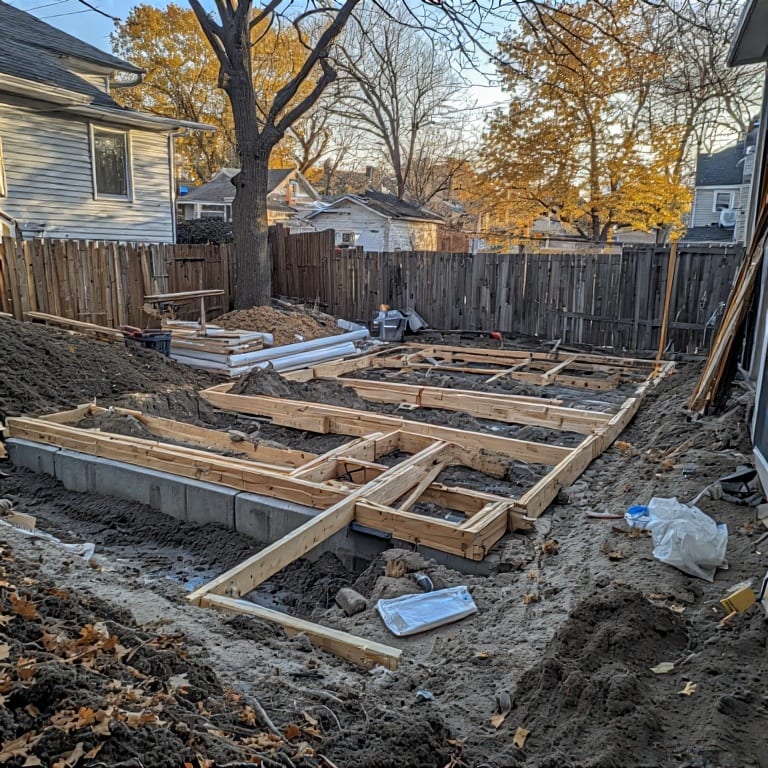
Begin With the Structure, Not the Finish
A porch transfers weight from deck boards and occupants through joists, beams, posts, connections, and foundations. Stairs and railings must also resist movement and everyday use. A contractor should evaluate the system from top to bottom.
Important inspection points include:
- deck boards and stair treads;
- joists, beams, posts, and post bases;
- connections to the building;
- stair stringers, landings, guards, and handrails;
- foundations or masonry supports;
- roof framing and drainage where present;
- flashing at doors, walls, and horizontal intersections.
When Focused Repair Makes Sense
Repair is often appropriate when damage is isolated, the porch remains stable, and most major structural components are sound. Examples include selected board replacement, a localized railing section, limited stair repair, flashing correction, or replacement of several damaged joists with accessible connections.
The repair should address the cause, not only the symptom. If a joist end rotted because water enters at a wall connection, replacing the joist without correcting flashing will repeat the failure.
When Rehabilitation Is Better
Rehabilitation keeps the viable parts of the porch while replacing major systems. It may involve rebuilding stairs and railings, replacing a section of framing, correcting drainage, adding proper connections, and resurfacing the porch.
This approach can be practical when the footprint works well and foundations or major framing remain usable. It requires clear drawings or a detailed scope so new and existing work function together.
When Full Replacement Is More Rational
Replacement deserves serious consideration when:
- deterioration affects several structural levels;
- posts, beams, stairs, and foundations all require work;
- the porch moves, leans, or pulls away from the building;
- previous patchwork has produced inconsistent framing;
- the layout creates unsafe circulation or unusable space;
- drainage and flashing failures are built into the existing design;
- repair cost approaches the cost of a correctly designed replacement;
- the owner wants a materially different footprint or function.
A full rebuild allows the structural system, stairs, railings, drainage, and connections to be designed together. It also creates a clean inspection sequence rather than blending extensive repairs into an uncertain frame.
Consider Remaining Service Life
Suppose a repair preserves one failing area but leaves several aging systems likely to need replacement within a few years. The lower initial quote may cost more over the next decade through repeated mobilization, finish replacement, permits, and disruption.
Compare the expected remaining life of the entire porch after repair with the expected life and warranty of a replacement. Ask which existing components the contractor is relying on and how their condition was verified.
Preserve Historic Character Deliberately
Front porches often contribute strongly to a bungalow, worker cottage, or historic facade. Replacement does not have to mean removing character. Proportions, columns, rail profiles, trim, roof forms, and materials can be documented and thoughtfully reproduced.
Properties in landmark districts or with protected features may require additional review. Confirm status before finalizing an exterior design.
Improve Function During Replacement
A replacement project may create opportunities to improve stair location, circulation, screening, storage, weather protection, lighting, and connection to the yard. However, expansions and redesigns can affect zoning and permit review, so feasibility should precede design promises.
Compare the Two Budgets Correctly
For repair, include investigation, temporary support, selective demolition, structural work, finish matching, and contingency. For replacement, include full demolition, foundations, structure, stairs, railings, roofing or covering, permits, restoration, and finish work.
Review our Chicago porch repair cost guide and contractor estimate comparison guide before selecting solely by total price.
Questions to Ask the Contractor
- Which structural components are sound enough to remain?
- How were concealed connections evaluated?
- What caused the deterioration?
- Does the proposed work correct drainage and flashing?
- What permits, drawings, and inspections are included?
- What conditions could trigger a change order?
- What useful life should the repaired porch have?
- What warranty applies to repair versus replacement?
For current regulatory direction, consult the Chicago Department of Buildings. For known safety issues, review common Chicago porch violations.
Budget Construction Company evaluates, repairs, and rebuilds Chicago porches. Schedule an assessment to compare realistic options for your property.
Reviewed by the Budget Construction Company Editorial Team
Budget Construction Company has served Chicago homeowners since 1976. Project costs and requirements vary by property, scope, and municipality.