

You own an aging Chicago home. The electrical system is outdated. The plumbing has issues. The HVAC barely functions. The kitchen and bathrooms feel ancient. The foundation shows signs of settling. You need to do something, but the question is: do you gut renovate the entire home, or pursue targeted remodeling of the systems and spaces that matter most? The answer isn't obvious. A complete gut renovation creates a beautiful, modern home built on solid systems, but it's expensive, disruptive, and time-consuming. Partial remodeling costs less and moves faster, but it leaves some problems unaddressed. Understanding which approach makes sense for your specific situation requires honest assessment of your home's condition, your financial capacity, your timeline, and your long-term plans. Not every aging Chicago home needs a complete gut renovation, but some absolutely require it.

When a Gut Renovation Makes Sense
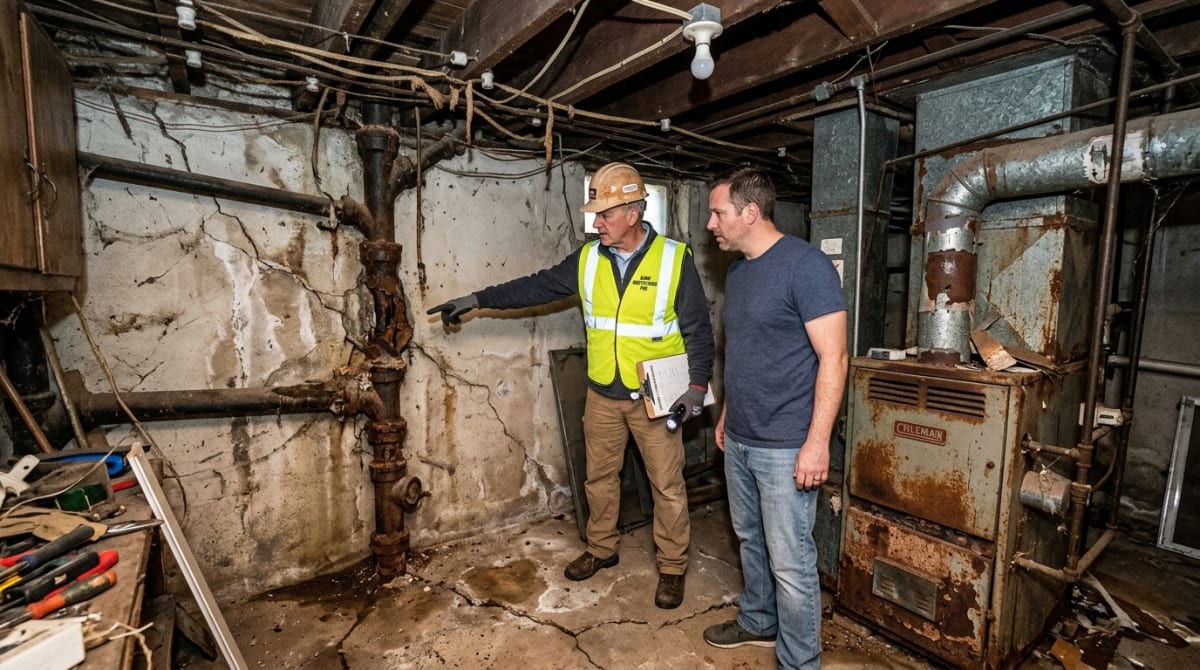
A complete gut renovation is the right choice when your home's underlying systems are so deteriorated that addressing them piecemeal through phased remodeling would ultimately cost more. If your electrical system is knob-and-tube wiring that insurance companies refuse to cover and that poses genuine fire and safety hazards, you need complete rewiring. If your plumbing is cast iron drain lines with galvanic corrosion failing in sections, you need new plumbing throughout. If your HVAC system is a forty-year-old furnace operating at minimal efficiency and failing regularly, you need new mechanicals. If your foundation shows active settling and structural engineers recommend reinforcement, you need structural work.
When multiple major systems need replacement simultaneously, the labor efficiency of a single comprehensive project often makes gut renovation cost-effective compared to phased work. A plumber called three times over five years to address different problems charges mobilization costs each time. A plumber working through your entire home's plumbing during a gut renovation works continuously and efficiently. The same efficiency applies to electrical, HVAC, and structural work. When everything needs updating, doing it all at once often costs less per unit of work than spreading it across years.
Gut renovation also makes sense when your home's layout fundamentally doesn't suit modern living. If load-bearing walls separate kitchen, dining, and living areas, creating choppy separate rooms instead of the open concept families want today, and if removing those walls requires structural support work anyway, a gut renovation accommodates this layout reconfiguration efficiently. If your home has only one bathroom and you need three, if it has a basement that's currently unusable due to moisture or low ceilings, if it has inefficient square footage that could be reimagined for better flow, a gut renovation allows comprehensive redesign rather than working within existing constraints.
Historic homes in Chicago's premium neighborhoods—Lincoln Park, Lakeview, Oak Park—often justify gut renovation because the location and neighborhood are irreplaceable. You're paying significant money for the address and community. Making that investment as livable and efficient as possible through a complete gut renovation maximizes the value of that location premium. A half-updated historic home doesn't command the same market premium as a fully modernized one in the same neighborhood.
When Partial Remodeling Makes More Sense
Partial remodeling is the better choice when your home's underlying systems are adequate, even if aging. If your electrical system is older but functional, properly grounded, and insurance companies will cover it, replacing the entire system to modernize is optional. If your plumbing works despite its age, addressing specific problems as they emerge is reasonable. If your HVAC is older but maintains consistent temperatures and passes annual inspections, replacing it now versus in five years is a budget decision, not a necessity decision.
Partial remodeling makes sense if your home has a solid foundation, good bones, and structural integrity despite age. Chicago homes built before 1950 were often built remarkably well. If your home hasn't experienced significant water damage, settling doesn't appear to be active, and structural systems are sound, the bones are worth working around rather than gutting. A targeted remodeling approach focuses on the spaces and systems that most affect daily living: kitchen, primary bathroom, HVAC if needed, and electrical if upgrading beyond basic code compliance.
Financial constraints often make partial remodeling the right choice. If your total renovation budget is $200,000, a gut renovation for a 2,000-square-foot home at that price point would be minimal—approximately $100 per square foot, covering basic systems and simple finishes. The result would be functional but not luxurious. That same $200,000 spent on targeted remodeling of kitchen, primary bathroom, main-floor systems, and finishes creates a higher quality result in those spaces. You're choosing to update the spaces where you spend most of your time rather than spreading limited budget across the entire home.
Partial remodeling also makes sense if you're uncertain about your long-term plans. If you might relocate in seven years, staying in your current home for only a few more years, or if you're planning to age in place and want to focus on accessibility modifications to specific spaces, a full gut renovation is over-investment. A targeted remodeling addressing your immediate needs and improving the home's function and appeal is more prudent.

Comparing Costs and Financial Reality
A complete gut renovation typically costs $150 to $350 per square foot in Chicago, translating to $300,000 to $700,000 for a 2,000-square-foot home depending on material selections and condition. A comprehensive partial remodel focusing on kitchen, primary bathroom, main-floor finishes, and critical systems updates typically costs $100,000 to $250,000 for the same home, approximately $50 to $125 per square foot of renovated area. This substantial cost difference reflects that partial remodeling updates perhaps 25 to 40 percent of the home intensively while leaving other areas as-is.
Over time, partial remodeling can eventually cost as much as a gut renovation if you continue adding projects. If you do kitchen in year one ($50,000), primary bathroom in year three ($35,000), basement finishing in year five ($60,000), second-floor bathroom in year seven ($30,000), and various updates scattered throughout, you might spend $200,000+ across years. The question then becomes whether you would have been better off doing a $300,000 gut renovation once, accepting some temporary disruption and financing challenges, rather than enduring seven years of intermittent construction.
However, this scenario assumes you complete all those projects, which many homeowners don't. A partial remodeling approach allows you to update based on actual needs and financial capacity rather than committing to a massive project upfront. If you do kitchen and primary bathroom and live comfortably for the next decade without further major work, you've spent less money achieving your primary goals. If you complete those projects and have no remaining renovation urge, you've been wise to avoid the gut renovation expense.
Comparing Disruption and Quality of Life
A gut renovation typically displaces you from your home for the project's duration or requires you to live amid constant construction for twelve to eighteen months. This is genuinely disruptive. Living in an apartment or rental home while your house is gutted is expensive and disconnecting. Living in your home surrounded by plastic sheeting, noise, dust, and construction activity affects mental health and family life. This disruption is a real cost that money doesn't fully capture.
Partial remodeling can be staged to minimize disruption. You might renovate your kitchen in month one through three, move into temporary space just for that phase, then return to your home while other projects wait. Later, you tackle the primary bathroom while living upstairs. A basement finishing project happens during winter when you're not using outdoor space. By spacing projects across years, no single project is catastrophically disruptive. You're living in your home most of the time, even during renovation phases.
However, phased remodeling creates its own disruptions. A contractor showing up multiple times across years, setting up dust containment, mobilizing equipment and crews repeatedly, is less efficient and more disruptive per square foot of work than a continuous project. You might prefer concentrated eighteen-month disruption followed by years of peaceful occupation to dealing with construction intermittently across seven years. The quality-of-life calculation is personal and depends on your tolerance for disruption and your specific circumstances.
Considering Your Home's Age and Condition
The age of your Chicago home affects whether gut renovation or partial remodeling is prudent. A home built in the 1950s with structures built to modern standards is more likely to support targeted remodeling. A home built in the 1890s with systems designed for a century ago and structures using outdated methods is more likely to benefit from comprehensive gut renovation. A professional home inspection provides critical information for this decision. An inspector examining your home's systems, foundation, roof, electrical, plumbing, HVAC, and structural elements can advise whether targeted system updates would be adequate or whether comprehensive renovation is necessary.
Water damage, previous repairs, and deferred maintenance matter significantly. A home that's had chronic moisture problems, where previous repairs were cosmetic rather than addressing root causes, or where deferred maintenance has cascaded into multiple system failures often justifies gut renovation. Addressing these issues comprehensively prevents future problems better than targeted patches. Conversely, a home that's been maintained well, where systems have been updated as needed, and where only aesthetic updating or lifestyle enhancement is desired, is a good candidate for partial remodeling.
Making Your Decision: Key Questions to Ask
Start by honestly assessing your home's critical systems. Are your electrical, plumbing, and HVAC systems functional, even if aging? Or are they genuinely problematic—failing regularly, unsafe, or insurance companies refusing coverage? Are there serious structural or foundation concerns that require professional assessment? Is water damage or moisture an ongoing problem? Your answers determine whether system replacement is necessary or optional.
Next, consider your neighborhood and market value. In Chicago's premium neighborhoods, a fully modernized home commands substantially higher value than a partially updated one. If you're in Lincoln Park, Lakeview, or similar sought-after areas, gut renovation often justifies itself through value recovery. If you're in a neighborhood where comparable homes don't command premium pricing regardless of renovation level, a more modest approach might be appropriate.
Assess your financial capacity and timeline. Can you finance a major gut renovation, or would phased remodeling better match your financial situation? Do you need to create modern, efficient space quickly, or can you wait years while phased updates accumulate? Are you planning to stay long-term and benefit from the improvement, or might you relocate in five to seven years?
Consider your lifestyle and disruption tolerance. Some people prefer concentrated chaos followed by years of peace. Others prefer intermittent, manageable projects spread across time. Your personality and family situation should influence this choice.
The Hybrid Approach: Strategic Partial Remodeling
Many Chicago homeowners find a middle path works best: comprehensive updating of critical systems and primary-use spaces, with selective modernization of secondary spaces. This might involve complete electrical and plumbing updates throughout the home for safety and code compliance, a new HVAC system, a fully renovated kitchen and primary bathroom, main-floor finishes and design updates, but leaving secondary bedrooms, guest bathrooms, and basement areas relatively as-is. This approach costs $200,000 to $300,000, significantly less than full gut renovation but more comprehensive than simple kitchen and bath updates.
This hybrid approach provides the efficiency benefits of updating critical systems comprehensively while controlling costs by not fully finishing every space. Secondary areas remain functional but less updated. If you later decide to finish a basement or upgrade a secondary bathroom, you have the infrastructure in place and can approach it as independent project rather than discovering mid-project that systems don't support your vision.
The Long-Term Value Perspective
From a pure financial standpoint, the value-add from renovation depends on your market and what comparable homes command. A well-executed gut renovation in a desirable Chicago neighborhood might recover 70 to 85 percent of costs. A targeted remodeling might recover 80 to 90 percent of costs because buyers value move-in-ready homes highly. Neither approach guarantees full cost recovery. You're renovating because you want to live in an updated, functional home, not purely as an investment strategy. The financial recovery is valuable but secondary to whether the renovation creates a home you genuinely enjoy.
If you're planning to stay long-term—ten years or more—renovation becomes less about resale value and more about quality of life. You'll benefit from the improved function, efficiency, and aesthetics for years. If you might relocate soon, you need to carefully consider whether any renovation justifies its cost.
Making Your Final Decision
The right choice between gut renovation and partial remodeling depends on your specific home, your financial situation, your timeline, and your personal preferences. There's no one-size-fits-all answer. A professional contractor experienced with Chicago homes can assess your specific property and advise whether comprehensive renovation or targeted updates make most sense. They can also discuss phasing options, staging approach, and how to sequence work to minimize disruption while achieving your goals.
If you're weighing gut renovation versus partial remodeling and want professional guidance on what makes sense for your specific Chicago home, Budget Construction Company has helped hundreds of homeowners make this decision. We can assess your home's condition, discuss your goals and constraints, and recommend an approach that aligns with your priorities and budget. Contact us for a consultation to explore your renovation options and develop a strategy that's right for you.
Related Posts
- Chicago Gut Renovation Costs in 2026: What Homeowners Actually Pay
- How Long Does a Full Gut Renovation Take in Chicago? Realistic Timelines for 2026
- Gut Renovating a Historic Chicago Home: Preserving Character While Meeting Modern Building Codes
Reviewed by the Budget Construction Company Editorial Team
Budget Construction Company has served Chicago homeowners since 1976. Project costs and requirements vary by property, scope, and municipality.