
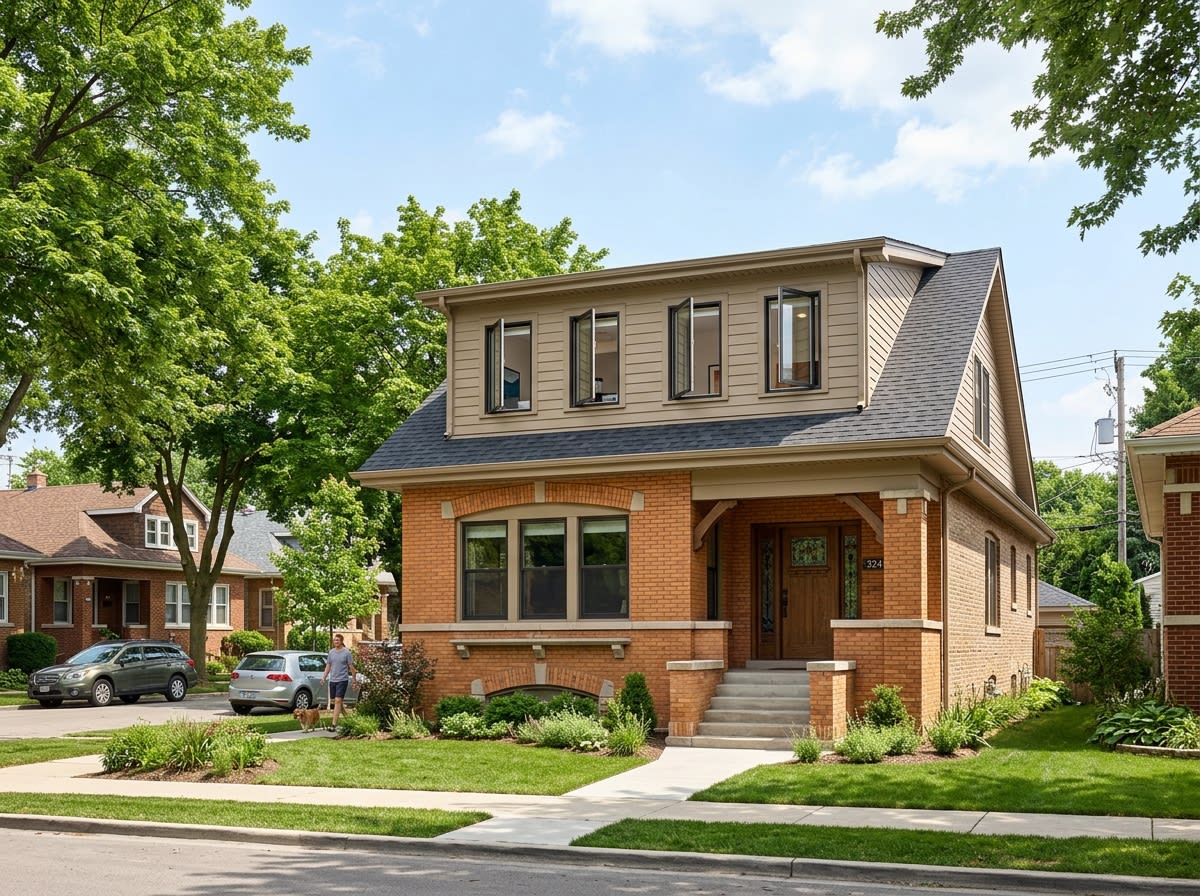
One of the most common questions Chicago homeowners ask is what a dormer addition really costs, and the honest answer is that it depends on several factors. A dormer can transform a cramped, dark attic into bright, usable living space, but the price ranges widely based on the dormer type, its size, the structural work involved, and the finishes inside. After years of completing dormer projects across Chicago and the surrounding suburbs, we can give you realistic ranges and, more importantly, explain what drives the final number so you can budget with confidence in 2026.
What a Dormer Addition Actually Includes
A dormer is a structural projection built out from a sloped roof, adding headroom, floor space, and windows to an attic or upper level. The cost reflects far more than the visible bump-out. A complete dormer project involves engineering and design, opening and reframing the roof, building the new walls and roof of the dormer, adding windows, weatherproofing and roofing it to match the home, and then finishing the interior with insulation, drywall, flooring, and often electrical and HVAC work.
This is why a dormer is priced as a true addition rather than a simple remodel. You are creating new conditioned space and tying it into the existing structure, which demands proper engineering and skilled construction. The benefit is significant: a well-designed dormer can turn an unusable attic into a bedroom, home office, or bathroom, adding both livable square footage and real value to a Chicago home where lot sizes make building up more practical than building out.
Cost Ranges by Dormer Type
The dormer style you choose has the largest single effect on cost. A small gable dormer, the classic peaked style that typically adds light and a little space for one window, generally runs $12,000 to $30,000 installed and finished, depending on size and complexity. Gable dormers are often chosen for appearance and modest light rather than maximum space.
A shed dormer, which has a single flat-sloped roof and spans a wider section of the roofline, delivers far more usable space and headroom, and its cost reflects that. A shed dormer in the Chicago area commonly runs $20,000 to $50,000 or more, and a large shed dormer that runs much of the length of the home, effectively creating a full upper room, can reach $50,000 to $100,000 once interior finishing is included. Hip roof and more complex dormer styles generally fall between these ranges and cost more than a simple gable of the same size because of their more intricate framing and roofing.

What Drives Your Final Price
Beyond the style, several factors move the number up or down. Size is the most obvious: a wider, taller dormer means more framing, roofing, windows, and finished space. Structural conditions matter just as much. If the existing roof framing, walls, or foundation need reinforcement to carry the new load, costs rise, and older Chicago homes sometimes reveal undersized framing or other surprises once the roof is opened.
The interior finish level is the other major variable. A dormer finished as a simple bonus room costs far less than one that includes a full bathroom, which adds plumbing, waterproofing, and fixtures. Electrical, heating and cooling extensions, quality windows, and built-in storage all add to the total. Permits, architectural and engineering fees, and the logistics of working on a roof in Chicago's climate also factor in. A realistic budget includes a contingency of 10 to 20 percent, because roof and structural work is exactly the kind of project where hidden conditions appear.
Permits, Engineering, and Soft Costs
A dormer addition is structural work that requires permits in Chicago and surrounding suburbs, and most projects need stamped architectural or engineering drawings showing how the new structure ties into the existing roof and how loads are carried. These soft costs are a real line item, typically several thousand dollars depending on the project's complexity, and they are not optional. Skipping permits on structural roof work risks failed inspections, problems at resale, and serious safety concerns.
Permit requirements and fees vary by municipality, so a dormer in the City of Chicago follows a different process than one in Evanston or Oak Park. Our companion guide to Chicago dormer permits across neighborhoods walks through that process in detail. Budgeting for the approval phase from the start, both the cost and the time it takes, keeps the project from stalling once you are ready to build.

Is a Dormer Worth the Investment?
For many Chicago homeowners, a dormer is one of the more cost-effective ways to add living space, because it uses the footprint and roof you already have rather than requiring new foundation. Converting an underused attic into a bedroom, office, or bath can add meaningful square footage and value, often at a lower cost per square foot than a ground-floor or second-story addition. In neighborhoods where homes are close together and lots are narrow, building up into the attic is frequently the most practical path to more space.
The return depends on doing the work well. A dormer that matches the home's architecture, is properly insulated for Chicago winters, and is finished to a quality standard adds value and comfort. One that looks tacked on or is poorly weatherproofed can detract from both. Choosing the right style for your roof and climate, which we cover in our dormer types comparison, is central to getting that return.
How to Keep Dormer Costs Under Control
A dormer is a significant investment, but several choices help manage the cost without compromising quality. Choosing a dormer style and size matched to your actual needs is the first lever, since an oversized dormer or a complex roofline adds cost that a simpler design serving the same purpose would not. Designing the dormer to keep any new bathroom plumbing near existing stacks, rather than running new lines across the house, saves meaningfully. And finishing the interior to a sensible standard, rather than the most premium options throughout, controls the largest variable portion of the budget.
Timing and coordination help too. Combining a dormer with other planned roof or upper-level work spreads mobilization and labor costs across more of the project. Working with a contractor who provides a detailed, itemized estimate lets you see exactly where the money goes and make informed tradeoffs, rather than reacting to a single lump-sum number. What you should not cut corners on is structural work, waterproofing, insulation, and permits, because savings there tend to become expensive problems later, especially in Chicago's demanding climate.
Comparing a Dormer to Other Ways to Add Space
It helps to weigh a dormer against the alternatives when deciding how to gain space. Compared to a ground-floor addition, a dormer is often less expensive per square foot because it uses the existing footprint and foundation rather than building new ones, and it avoids consuming yard space, which is precious on Chicago's narrow lots. Compared to a full second-story addition, a dormer is a more targeted and affordable way to make an existing attic livable, though it adds less total space.
Finishing an attic without a dormer is cheaper still, but it leaves you with the low headroom and limited light that made the attic underused to begin with, which is exactly the problem a dormer solves. For many Chicago homeowners, the dormer hits a practical sweet spot: it converts wasted attic volume into bright, full-height living space at a reasonable cost and adds genuine value. Weighing these options against your space goals and budget clarifies whether a dormer is the right move or whether another type of addition fits better.
Budgeting for the Whole Project, Not Just the Bump-Out
A frequent budgeting mistake is to picture only the visible dormer and overlook everything required to make it livable. The framing and roofing of the dormer itself are just one portion of the cost. Finishing the interior with insulation, drywall, flooring, trim, and paint, extending electrical for lighting and outlets, connecting heating and cooling so the space is comfortable year-round, and adding quality windows all contribute meaningfully to the total. A dormer that looks complete from the street still needs all of this work to function as a real room.
Planning your budget around the finished result, rather than the rough structure, leads to far more accurate expectations. It also helps to decide the room's purpose up front, since a simple bonus room costs much less than a dormer suite with a full bathroom. When you account for the complete scope from the beginning, including the soft costs of design and permits and a sensible contingency, the final number holds few surprises. The homeowners who feel a dormer was worth every dollar are typically those who understood the full cost going in and chose finishes and features deliberately rather than discovering add-ons along the way.
Why Quality Construction Pays Off Long Term
When evaluating dormer costs, it is tempting to focus only on the lowest number, but a dormer is a structure exposed to Chicago's harshest weather for decades, and construction quality determines whether it remains an asset or becomes a liability. A dormer built with proper structural framing, careful flashing, quality windows, and thorough insulation stays dry, comfortable, and efficient through countless freeze-thaw cycles. One built cheaply, with shortcuts at the roof junction or inadequate insulation, invites water intrusion, ice dams, and heat loss that cost far more to remedy than the initial savings.
This is why the cheapest bid is rarely the best value on a dormer. The difference between a contractor who details the roof connection correctly and one who does not may not be visible at completion, but it shows up years later in leaks or energy bills. Investing in sound construction protects the considerable money you put into the project and ensures the added space genuinely enhances your home. When comparing estimates, weigh the contractor's experience and the quality of what is proposed, not just the bottom line, because on a dormer the long-term cost of cutting corners is steep.
Getting an Accurate Dormer Estimate
Because dormer costs depend so heavily on your specific roof, structure, and finish goals, the only truly accurate number comes from an assessment of your home. Published ranges are a useful starting point for planning, but your framing, the dormer style, and the interior scope will determine where you land within them. If you are considering a dormer addition and want a realistic estimate for your Chicago home, contact us for a consultation and we will assess your attic and roof and give you a clear, itemized picture of what your project will cost.
Related Posts
- Chicago Dormer Permits Explained: Navigating Building Codes Across Neighborhoods
- Shed Dormer vs Gable Dormer vs Hip Roof Dormer: Which Works Best for Chicago Homes
- 2026 Chicago Area Renovation Costs: Room-by-Room Budget Breakdown
Reviewed by the Budget Construction Company Editorial Team
Budget Construction Company has served Chicago homeowners since 1976. Project costs and requirements vary by property, scope, and municipality.