

Chicago's permit process can delay or derail your room addition project if you're not prepared. Learn exactly what permits you need and how to avoid costly mistakes.
Chicago homeowners planning room additions frequently underestimate how complex the permitting process is. You see a space that could be a bedroom or home office. You imagine the renovation. You get excited about the timeline and budget. Then you contact the Chicago Building Department and discover that what you thought would take a few weeks to permit actually takes months, and the process is far more complicated than you anticipated. The permit requirements vary significantly between Chicago and suburban municipalities like Evanston, Oak Park, and Skokie. Building codes are stricter in historic districts. Zoning restrictions limit what you can add depending on your lot size and property setbacks. Without understanding these requirements before you commit to your room addition project, you'll face expensive delays, missed timelines, and scope revisions that derail your plans. This guide walks you through Chicago's room addition permit requirements, the process timeline, municipality-specific information, and the common mistakes that homeowners make that create costly delays.
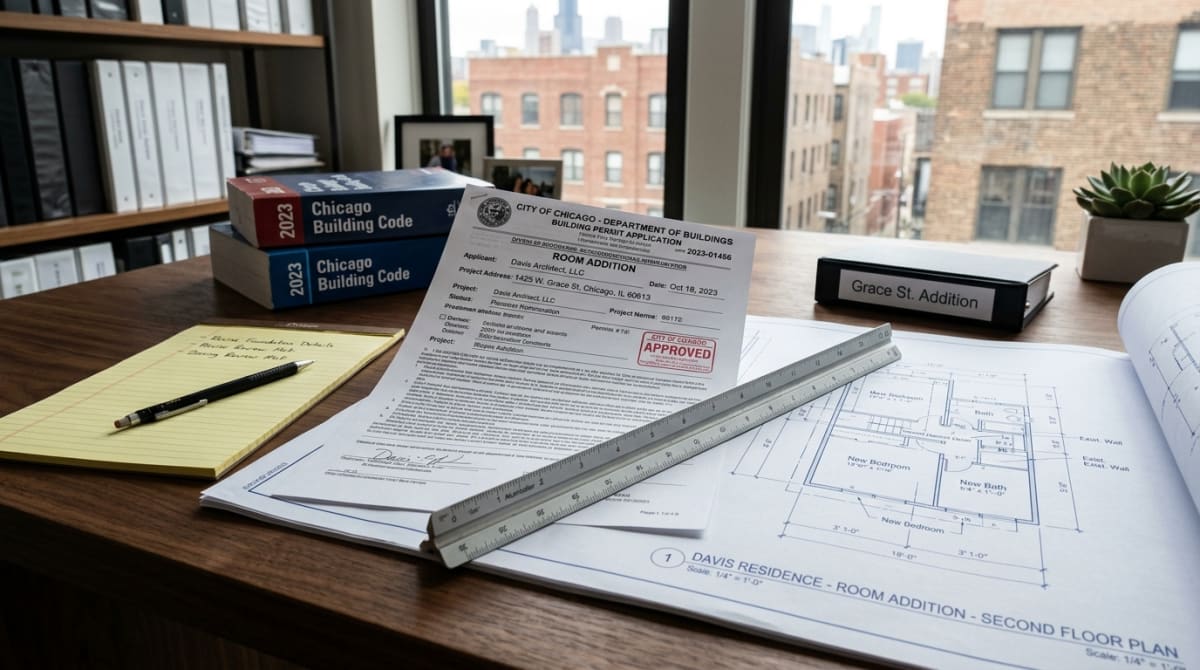
Understanding Chicago's Room Addition Permit Requirements
Chicago requires permits for virtually any room addition that involves structural changes, electrical work, plumbing, or changes to exterior walls. Skipping the permit process is illegal and creates serious problems when you try to sell the home—buyers' lenders require proof that renovations were permitted and inspected. If you added a room without permits, the lender won't finance the buyer, and you'll have to disclose unpermitted work and potentially reduce your sale price. Don't skip permits to save time and money. The long-term consequences far exceed any short-term savings. With that said, understanding what you actually need to permit and what the real timeline is helps you plan appropriately rather than being blindsided by unexpected requirements.
The specific permits required depend on the scope of your addition. Any room addition involving structural changes requires a building permit. Electrical work requires a separate electrical permit and inspection. Plumbing requires a plumbing permit. HVAC work requires mechanical permits. Roof modifications require separate permits. If your addition changes the footprint of your house, exterior appearance, or any structural elements, building permits are mandatory. If you're adding a room that's primarily interior with minimal exterior changes, the permit requirements are still extensive but might be less complex than exterior additions requiring foundation work or significant structural changes.
The Chicago Permitting Process Timeline
Homeowners chronically underestimate how long Chicago's permit process takes. Most room additions require two to four months from application to final permit approval, though complex projects or those in historic districts can take longer. This timeline does not include the actual construction work—this is just the time required to obtain the permits before you can legally start any work. Many homeowners think they can get permits in a few weeks. That expectation is unrealistic for Chicago. Budget four months minimum from initial application through permit approval before your contractor can legally break ground.
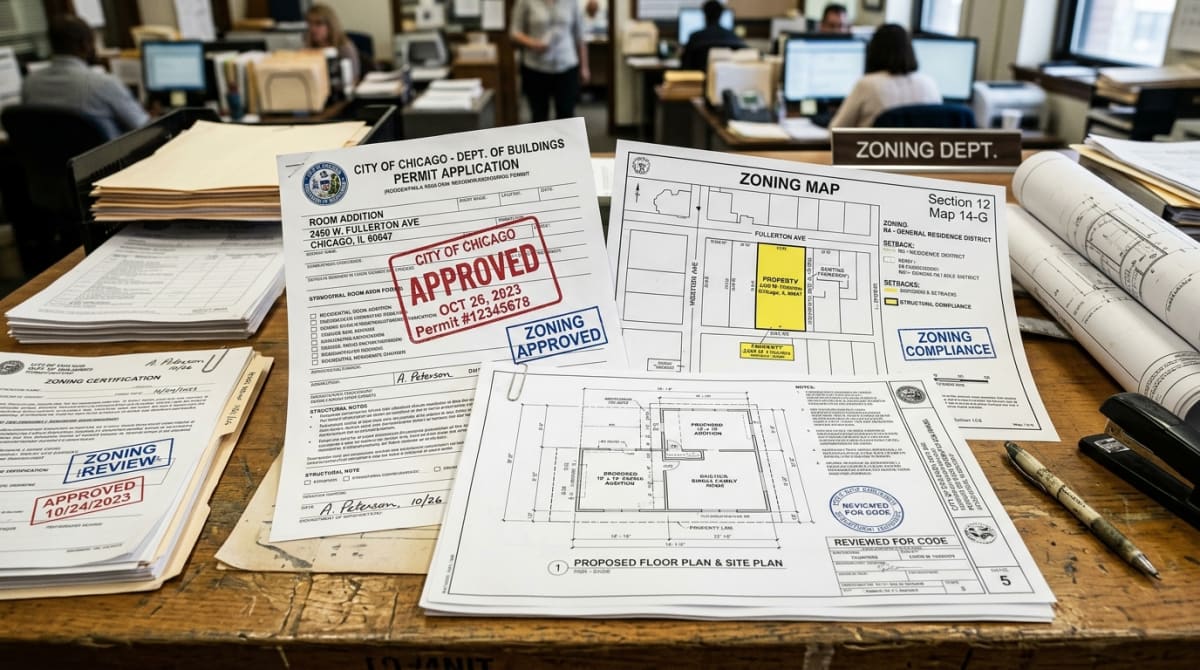
The process typically unfolds like this: First, you submit detailed plans and specifications to the Chicago Building Department (or your municipal building department if you're in suburbs). City planners review the plans and may request modifications or additional information. This review phase typically takes four to eight weeks depending on the complexity of your project and the current workload of the building department. During this review, they're checking whether your addition complies with Chicago's zoning code, building codes, and any historic district guidelines if applicable. Once plans are approved, you receive your building permit and can legally begin work. Even before construction is complete, the building inspector will conduct inspections at multiple phases—foundation, framing, electrical rough-in, plumbing rough-in, and final inspection. Each inspection requires scheduling and can add weeks to the timeline.
Chicago Building Department Requirements and Costs
The Chicago Building Department has specific requirements for room additions that every homeowner should understand. Your addition must comply with current building codes for structural design, electrical systems, plumbing, HVAC, and energy efficiency. Code compliance is stricter than many homeowners expect. This isn't negotiable—inspectors will require corrections if code violations are discovered during construction. Better to know the code requirements upfront than discover violations mid-project when correction is expensive and disruptive.
Permit fees vary based on your project's estimated construction cost. The Chicago Building Department charges based on the valuation you declare for your project. A typical room addition of 200 square feet might carry permit fees of $500 to $1,200 depending on the addition type and estimated cost. These are separate from your contractor's costs—they're municipal fees. Most contractors factor permit costs into their bids, but confirm this with your contractor. Some contractors try to split permit costs with homeowners, and you want clarity on who's responsible before work begins.
Plan also for inspection fees. Depending on your project scope, you might have five to seven separate inspections during construction—foundation, framing, plumbing, electrical, HVAC, and final. Some inspections cost nothing (included in permit fees), while others may have small fees. Ask your building department or contractor to detail all expected inspection costs so there are no surprises.

Zoning Restrictions and Lot Line Setbacks
Chicago's zoning code restricts where you can build additions based on your property's zoning classification and lot dimensions. Your addition must maintain specific setbacks from lot lines depending on your zoning. In a residential zone, you typically need setbacks of 5-10 feet from side lot lines and varying distances from rear lot lines. These setbacks prevent buildings from consuming entire lots and ensure light and air access to neighboring properties. If your lot is small or your house is already positioned close to lot lines, these setback requirements might limit your ability to build where you'd prefer.
Before planning your room addition, have a surveyor determine your exact lot boundaries and current setback distances. This $300-500 investment clarifies what's actually possible on your property before you spend money on detailed plans that might not be feasible. A surveyor's report prevents expensive design revisions later when you discover your vision violates setback requirements.
Suburban Municipality Differences
Room addition permits in Chicago suburbs often differ significantly from Chicago's requirements, and each suburb has its own process. Evanston, Oak Park, Skokie, and other suburbs near Chicago have building departments with their own permit requirements and timelines. If your room addition spans a property line between Chicago and a suburb, you need permits from both municipalities. This complexity adds time and cost, so understand which jurisdiction governs your property before planning.
Evanston's building department is particularly strict about historic preservation because much of Evanston is in historic districts. If your Evanston addition is in a historic district, you need design review approval from Evanston's Historic Preservation Commission in addition to building permits. This can add two to four months to your timeline. Oak Park has similar requirements for historic properties. If your property is in a historic district in any Chicago suburb, plan for extended review and approval timelines. Skokie and some other suburbs generally have less restrictive historic preservation requirements but still have their own specific permit processes and building codes.
Permit fees vary by suburb. Chicago's fees are generally less expensive than some suburbs, but each municipality sets its own schedule. Confirm permitting requirements and fees with your specific municipality before committing to a project timeline or budget. Your contractor should handle this research, but verify it yourself before signing any contracts.
Common Permitting Mistakes That Delay Projects
Room addition projects are delayed regularly because homeowners or contractors make avoidable permitting mistakes. Understanding these pitfalls helps you avoid them. The most common mistake is submitting incomplete plans to the building department. Plans must include specific details about structural design, electrical layout, plumbing, HVAC, materials, and code compliance details. Incomplete or unclear plans get rejected and require resubmission, adding weeks to the timeline. Hire a qualified architect or designer to prepare plans specifically meeting your municipality's requirements rather than using generic plan templates.
Another common mistake is underestimating the project's scope when applying for permits, leading to the discovery mid-project that additional permits are needed. Be comprehensive in your permit application describing exactly what work will be done. It's easier to get comprehensive permits upfront than to discover halfway through that work you're doing requires additional permits.
Failing to schedule inspections promptly is another delay creator. Once your contractor is ready for inspection, call the building department immediately to schedule. Waiting delays your schedule. Building departments book inspections on their schedule, not yours, so prompt requesting ensures timely inspection.
Not understanding contractor licensing requirements also creates problems. In Chicago, many types of work require specifically licensed contractors. Electrical work requires a licensed electrician. Plumbing requires a licensed plumber. Structural work requires a licensed structural engineer's approval. Your general contractor might not be licensed for all work types, so you might need multiple specialized contractors. This complexity requires clear project planning, so discuss licensing requirements upfront with your contractor.
Budget and Timeline Planning
A realistic budget for room addition permits in Chicago includes the permit fees themselves, design and engineering costs, contractor's time for coordinating permitting, and any inspection-related fees or timeline extensions. For a typical 200-square-foot room addition in Chicago, budget $500-1500 for permits plus design/engineering costs of $800-2000. These costs are separate from the actual construction costs. Many homeowners focus only on construction costs and are surprised by permitting and design expenses.
For timeline planning, budget four to five months from initial design phase through permit approval and first inspections before your contractor breaks ground. This is a realistic minimum timeline, not an optimistic one. Projects in historic districts add another one to two months. If your addition is complex (two-story, structural changes, multiple utilities), add additional time. Once construction begins, plan for inspections at multiple phases, which require scheduling delays and potential corrections if violations are discovered.
Working with Contractors Who Understand Chicago Permitting
The best protection against permitting delays is working with a contractor experienced in Chicago room additions who understands the permitting process inside out. Experienced contractors know which documents are required, what the building department wants to see, how to schedule inspections efficiently, and how to respond to inspection findings. They've done projects similar to yours and understand the timeline and requirements. Inexperienced contractors frequently make permitting mistakes that delay projects or create cost overruns.
When interviewing contractors for your room addition, ask specifically about their experience with Chicago permits. Have them describe projects they've completed and how the permitting process went. Ask how they handle design review, plan submissions, inspection scheduling, and any modifications required during the permitting process. Their answers reveal whether they truly understand Chicago's permit process or are just hoping for the best.
Next Steps Before Breaking Ground
Before committing to a room addition project, research your specific property's zoning and permit requirements. Have a surveyor determine lot dimensions and setbacks. Get a qualified architect or designer to evaluate your addition concept and determine feasibility. Request a pre-application meeting with your building department to discuss potential issues before detailed design. Hire a contractor experienced in Chicago room additions who can guide you through the permit process. Budget realistic time (four to five months minimum) and costs (permit fees, design, inspection fees) for permitting before your actual construction timeline.
Chicago's room addition permit requirements are complex, but they exist to ensure safe construction and protect neighborhood character. Skipping or ignoring permits creates serious problems. Respecting the process, budgeting realistic time and cost, and working with experienced contractors results in properly permitted additions that serve you well for decades and protect your home's value. Budget Construction has completed dozens of room additions in Chicago and surrounding suburbs, and we understand every municipality's specific requirements and timelines. We manage the entire permit process so homeowners don't have to navigate it alone. If you're considering a room addition in Chicago and want guidance on permitting requirements, feasibility, and realistic timelines, visit https://budgetconstructioncompany.com/ to schedule a consultation. We'll assess your property, discuss your addition goals, review permit requirements, and give you realistic expectations for timeline and cost before you commit to the project.
Related Posts
- Room Addition Costs in Chicago 2026: Neighborhood-by-Neighborhood Pricing Guide
- First Floor vs. Second Story Addition: Chicago Homeowner's Complete Decision Guide
- Chicago Building Permits for Gut Renovations: A Step-by-Step Guide for Homeowners
Reviewed by the Budget Construction Company Editorial Team
Budget Construction Company has served Chicago homeowners since 1976. Project costs and requirements vary by property, scope, and municipality.