
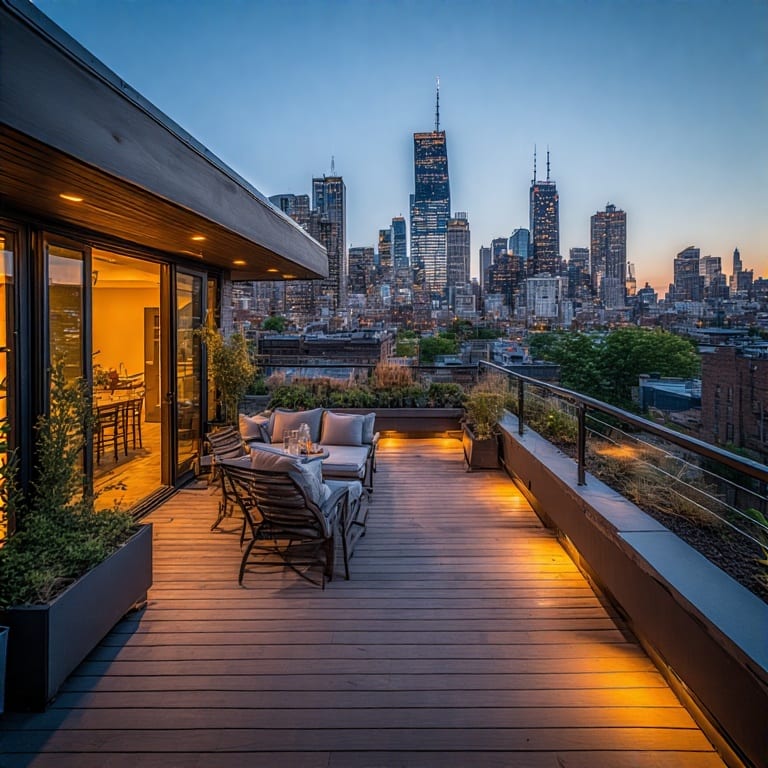
The right feasibility sequence is structure first, waterproofing second, access and code review third, and finishes last.
Determine What Is Supporting the Deck
A deck over a house, addition, or garage adds dead load from framing and finishes plus live load from people, furniture, planters, snow, and other features. Existing roof framing may not have been designed for those loads.
A qualified structural professional may need to evaluate joists, rafters, beams, walls, foundations, and connections. The design should identify where loads travel rather than relying on the roof surface itself.
Heavy features deserve early review. Large planters, outdoor kitchens, masonry, pergolas, and hot tubs can add concentrated loads that materially change the structure.
Protect the Roof and Drainage
Waterproofing failure can damage ceilings, insulation, walls, electrical systems, and framing below. The deck system must allow the roof membrane, flashing, drains, scuppers, and overflow paths to remain functional and serviceable.
Important questions include:
- How will supports avoid puncturing or trapping water on the membrane?
- Can roofing components be inspected and repaired later?
- Does the deck preserve the roof's drainage slope?
- Can leaves, snow, and debris be cleared from drains?
- How are doors, parapets, and wall intersections flashed?
Removable deck panels or accessible pedestal systems may simplify future roof service. The correct assembly depends on the existing roof and structural design.
Plan Safe Access
Rooftop access must be practical and code-compliant. A steep ladder or improvised hatch may not support the intended residential use. Interior stairs, exterior stairs, roof access structures, and door openings each affect layout, structure, weather protection, and permit review.
Access decisions should happen before furniture and amenity planning because they determine circulation and usable deck area.
Guards, Privacy, and Wind
Elevated decks require robust guards and connections. Privacy screens and pergolas also experience substantial wind loads, especially above surrounding buildings. They cannot simply be attached to deck boards or treated as lightweight decoration.
At the same time, privacy design should account for neighboring windows and sight lines. Screens, planting, and furniture placement can create privacy without turning the deck into a high wind sail.
Utilities and Outdoor Features
Lighting, receptacles, gas, water, drainage, and audio should be planned before the deck surface is installed. Outdoor electrical components require weather-appropriate equipment and protection. Gas grills and fire features require careful placement and applicable safety review.
Avoid assuming an indoor appliance is suitable outdoors. Use listed exterior equipment and follow manufacturer clearance requirements.
Chicago Weather Exposure
Rooftop decks experience stronger sun, wind, rain, snow, and temperature swings than sheltered ground-level decks. Material movement, fastener durability, surface temperature, and snow management all matter.
Compare material performance in our Chicago deck weather durability guide. A low-maintenance surface still needs an inspection plan for guards, connections, drainage, and the roof below.
Permits and Property Constraints
Rooftop deck requirements depend on the building, location, proposed use, access, structure, and zoning conditions. Historic or landmark properties may have additional exterior review. Verify the current permit path with the Chicago Department of Buildings.
For condominiums, the roof may be a common element even when one unit has exclusive use. Obtain association approval and clarify responsibility for roof warranties, maintenance, damage, and future replacement before construction.
Build a Complete Budget
A rooftop deck budget may include:
- survey, design, engineering, and permits;
- structural reinforcement;
- roof membrane, flashing, and drainage work;
- deck framing and walking surface;
- stairs, doors, hatches, and access structures;
- guards, privacy screens, and wind-resistant features;
- electrical, gas, water, and lighting;
- crane, hoisting, access, and neighbor protection;
- future roof-access provisions;
- contingency for concealed conditions.
Questions to Answer Before Construction
- Can the building safely support the proposed deck and features?
- Who owns and maintains the roof?
- Will the project affect an existing roof warranty?
- How will workers access the roof and move materials?
- Can drains and roofing remain serviceable?
- What happens when the roof eventually needs replacement?
- Are stairs and guards part of the permitted design?
Budget Construction Company builds custom Chicago decks and outdoor living spaces. Request a rooftop-deck feasibility consultation before committing to finishes or equipment.
Reviewed by the Budget Construction Company Editorial Team
Budget Construction Company has served Chicago homeowners since 1976. Project costs and requirements vary by property, scope, and municipality.