
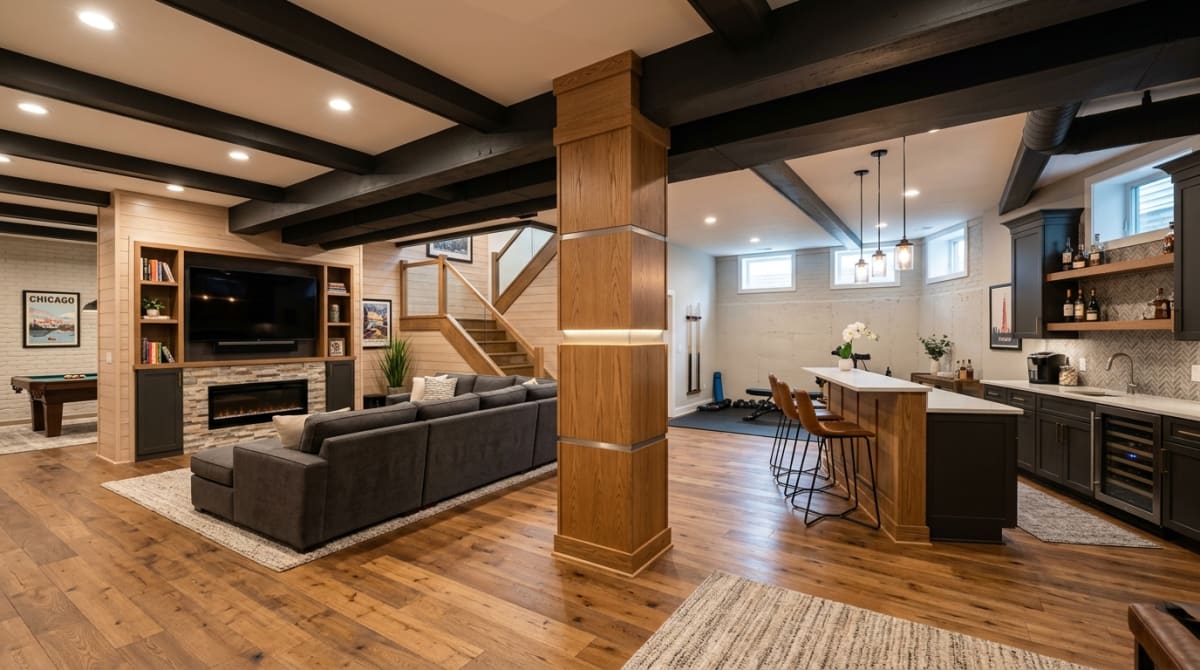
That basement support pillar does not have to cramp your style. Here is how Chicago contractors transform structural obstacles into design focal points.
Many Chicago basements have structural support columns or pillars running through the center or middle of the space—necessary structural elements supporting the home above but seemingly limiting how you can layout your finished basement. A basement column in the middle of the space you want to use for a family room, home office, or bedroom feels like an obstacle. You see that column and think "this will ruin my layout." But thoughtfully designed basements incorporate these columns as intentional design features rather than working around them or trying to hide them. The best basement designs acknowledge the column, work with it rather than against it, and sometimes make it a visual anchor that actually improves the space. This guide walks through practical design strategies for incorporating basement columns and support pillars into functional, attractive basement spaces.

Understanding Your Basement Columns
Chicago basements support the weight of the entire home above through a structural system that might include center beams with support columns, perimeter foundation walls, and potentially additional posts in the basement. These aren't cosmetic features—they're essential structural elements. You cannot remove them, and hiding them behind walls wastes valuable basement space. Understanding what you're working with is the first step in designing around them effectively.
Basements with a single center column have more flexibility than those with multiple columns because one column can be positioned to define and organize space. Multiple columns throughout the basement create more design constraints but also more opportunities for creative layout if you embrace the structure rather than fight it.
Column materials vary—older Chicago basements might have wooden posts, cast iron columns, or steel I-beams. Material affects how you can finish around the column. Modern approach typically wraps columns with matching material so they integrate with the design rather than standing out as obviously structural.
Design Strategy 1: The Column as Room Divider
One effective approach is positioning the column as an intentional room divider, creating separate functional zones in your basement. A family room on one side of the column and a home office, guest bedroom, or exercise area on the other side creates natural separation without requiring interior walls that would waste space or block light and air flow.
This approach works particularly well when your basement is longer than it is wide. A central column provides a natural point to divide the space into distinct areas, each serving different purposes. The column becomes an organizing element rather than an awkward obstacle in the middle of your space.
Design Strategy 2: The Column as Visual Anchor
Wrapping a basement column with distinctive material—wood paneling, stone cladding, tile, or paint color contrasting with surrounding finishes—makes the column a visual anchor rather than trying to hide it. A column wrapped in natural wood reads as an intentional design element in a modern basement. A column finished in stone or tile creates visual interest and defines the space around it.
This approach requires embracing the column rather than minimizing it. A column that's obviously finished as a design feature reads better than one that looks like it was reluctantly accommodated. Material selection and finish matter—quality finishes make columns look intentional.

Design Strategy 3: The Column as Functional Support
Some basement designs incorporate columns as functional supports for other elements. A column can support floating shelving, creating built-in storage and display integrated into the column itself. Columns can support suspended elements like hanging chairs, meditation alcoves, or decorative installations that integrate the structural element into your design intentionally.
This approach requires creative thinking but produces spaces where the column feels like part of the design rather than something to work around. A column supporting open shelving becomes a focal point of the space rather than an obstacle.
Design Strategy 4: The Column and Furniture Layout
Thoughtful furniture placement can work with rather than against basement columns. A column at the edge of where you'd place a sofa or sectional becomes a natural endpoint rather than an obstacle in the middle of the room. A column at the back of where a desk or work surface would sit becomes part of the workspace definition.
This approach requires planning your furniture layout around the column position, but it often results in more functional spaces than trying to center furniture and work around an awkwardly placed column. Layout planning with the column in mind is more successful than layout planning that ignores the column and then tries to accommodate it afterward.
Design Strategy 5: The Column in Multi-Use Spaces
Basements serving multiple functions benefit from columns as natural zone separators. A column can separate a media area from a gaming zone, an office from a home gym, or a guest bedroom from a common family area. The column provides spatial separation without requiring walls that consume valuable square footage.
This approach works well in active basements where multiple people use the space for different purposes simultaneously. The column provides psychological separation between zones even when physical walls aren't present, allowing multiple activities without interference or line-of-sight problems.
Practical Design Considerations
When designing around basement columns, consider ceiling height. Columns often have angled or sloped ceilings near them as they extend toward upper floors. Work with these height variations rather than trying to force uniform ceiling heights everywhere. Lowering ceiling height intentionally in certain zones can emphasize the column's role as a spatial organizer.
Lighting around columns matters significantly. Uplighting that illuminates columns from below creates visual interest. Downlighting that casts shadows can emphasize the column's structural nature. Thoughtful lighting design makes columns architectural features rather than obstacles.
Flooring transitions at columns can define space intentionally. Different flooring on each side of a column emphasizes its role as a room divider. Flooring that runs continuously under the column minimizes visual separation, if you prefer more unified space.
Specific Applications in Chicago Basements
Lincoln Square Bungalow Basements: Many Lincoln Square bungalows have single center columns in relatively large basements. This setup is ideal for creating divided spaces—a family room on one side, guest bedroom or home office on the other. The column naturally separates the zones.
Portage Park Multi-Column Basements: Older Portage Park homes sometimes have multiple columns creating a grid-like structural system. This constraint requires creative layout but can result in interesting modular space organization if embraced. Multiple columns can define a series of distinct zones rather than fighting against them.
Avondale Historic Basements: Avondale's older homes sometimes have basements with mixed structural systems—some areas with columns, others with solid walls. Design solutions should acknowledge this variation and work with the existing structural layout rather than trying to create uniformity where the structure doesn't support it.
Material Finishing Options for Columns
Columns can be finished in multiple ways depending on your design goals:
Natural Wood Wrapping: Wrapping columns in wood paneling creates warm, traditional aesthetic that works in family rooms and finished basements. Wood finishes range from natural stain to painted finishes matching your overall design.
Stone or Tile Cladding: Finishing columns in stone, brick, or decorative tile creates distinctive visual elements. These finishes work well in modern designs and create clear visual separation between zones.
Paint Treatments: Simple paint finishes can make columns blend with walls or stand out as accent features depending on color choices. A column painted same color as walls recedes; a column in contrasting color becomes a focal point.
Metal Cladding: Steel or aluminum finishing gives modern, industrial aesthetic appropriate for contemporary basements. Metal finishes work well with modern furniture and minimalist design.
Built-In Integration: Incorporating columns into built-in cabinetry, shelving, or other functional elements makes them integral to the design rather than separate features.
Working with Contractors on Column Design
When discussing basement finishing with contractors, specifically ask how they'd recommend working with your columns. Experienced contractors have seen many solutions and can suggest approaches that work for your specific column configuration. Design-forward contractors can help you think creatively about transforming structural obstacles into design assets.
Get visual examples of how they've incorporated columns in other projects. Seeing actual finished examples helps you envision possibilities for your own space and builds confidence that your contractor can execute your vision successfully.

Next Steps for Column-Conscious Basement Design
Before planning your basement layout, assess your columns carefully. How many are there? Where are they located? What materials are they? Are there height variations around them? Document your structural layout with photos and measurements. When you meet with contractors or designers, bring this documentation so you're all working from the same understanding of your space's structural constraints.
Think creatively about how your columns could serve your design rather than just constraining it. Could they divide zones? Could they anchor design elements? Could they support functional features? Budget Construction has incorporated countless basement columns into successful designs throughout Chicago. We understand how to work with structural elements creatively to create basements that serve you functionally while being visually attractive. If you're planning a basement remodel and want guidance on designing around your structural columns, visit https://budgetconstructioncompany.com/ to schedule a consultation. We'll assess your basement's specific structure, discuss your goals, and suggest design solutions that turn your columns into assets rather than obstacles.
Related Posts
- Chicago Basement Remodeling Costs 2026: Real Pricing for Homeowners in Chicago and Suburbs
- Do You Need a Permit to Finish Your Basement in Chicago? A Suburban Permit Guide for Homeowners
- Basement Home Office Design for Chicago Remote Workers: Creating a Productive Space Below Ground
Reviewed by the Budget Construction Company Editorial Team
Budget Construction Company has served Chicago homeowners since 1976. Project costs and requirements vary by property, scope, and municipality.