




Bathroom Safety Tips for Seniors
For AARP members and their families, maintaining independence while prioritizing safety is a top concern. Unfortunately, the bathroom—a space we use multiple times daily—presents some of the highest risks for serious injuries among older adults. Understanding these risks and taking proactive steps can mean the difference between a minor slip and a life-changing accident.
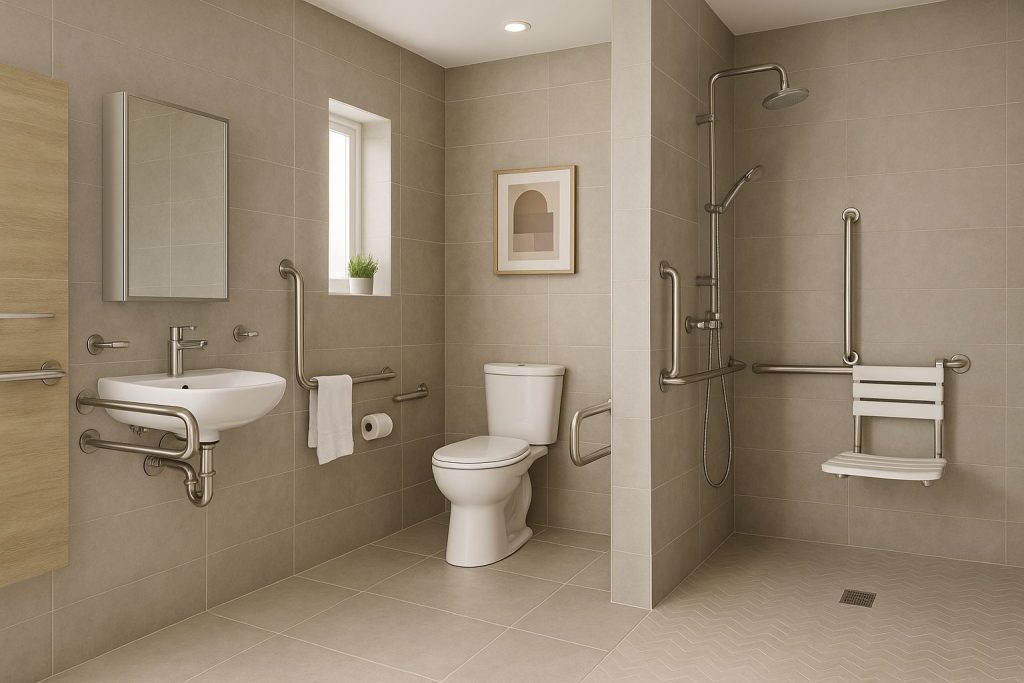
The Hidden Dangers in Your Bathroom
Every year, nearly 235,000 Americans over age 15 visit emergency rooms due to bathroom-related injuries, with seniors accounting for a disproportionate number of these incidents. What makes bathroom falls particularly dangerous isn’t just their frequency—it’s their severity.
Unlike a stumble in the living room that might result in a bruise, bathroom falls often lead to:
- Serious head injuries from hard tile surfaces and fixtures
- Hip fractures from falls onto porcelain toilets or tub edges
- Cuts and lacerations from glass shower doors or sharp corners
- Severe bruising from contact with hard surfaces
The combination of wet surfaces, limited space, and unforgiving materials creates what safety experts call a “perfect storm” for serious injuries.
When Bathroom Accidents Most Often Occur
Understanding when accidents happen helps us focus our prevention efforts. Research shows that most bathroom falls occur during three critical activities:
Entering and Exiting the Shower or Tub
The transition from dry to wet surfaces, combined with the need to step over a tub wall or threshold, creates multiple fall risks. Add soap residue or inadequate lighting, and this simple daily activity becomes hazardous.
Using the Toilet
The process of sitting down and standing up requires significant leg strength and balance. As we age, these movements become more challenging, especially when there’s nothing sturdy nearby for support.
Moving Around on Wet Floors
Even small amounts of water can create slip hazards. Many older adults instinctively grab for towel bars or sink counters for stability—fixtures that were never designed to support body weight during a fall.
AARP-Recommended Bathroom Safety Solutions
The encouraging news is that most bathroom injuries are preventable with the right modifications. Here are the most effective upgrades recommended by AARP and aging-in-place specialists:

Professional Grab Bar Installation
Why towel bars aren’t enough. Standard towel bars are designed to hold lightweight items, not to support a person’s full body weight during a fall or transfer.
Strategic placement matters: Professional-grade grab bars should be installed:
- Inside and outside the shower or tub area
- Next to the toilet at the appropriate height for your needs
- Along any steps or level changes
- Near the sink if balance is a concern
Quality grab bars can support up to 500 pounds when properly installed into wall studs or with appropriate anchoring systems.
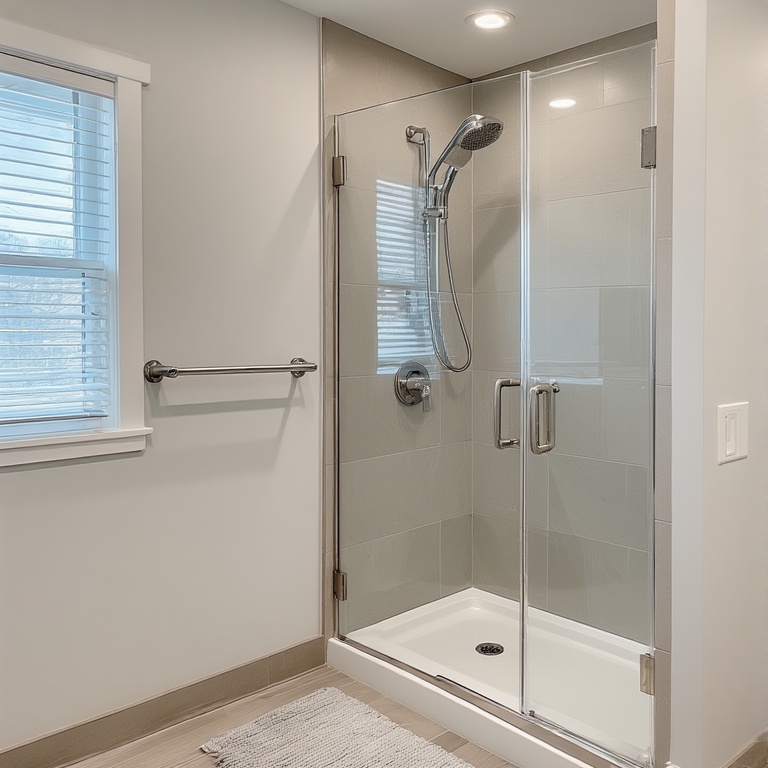
Walk-in Showers and Tub Modifications
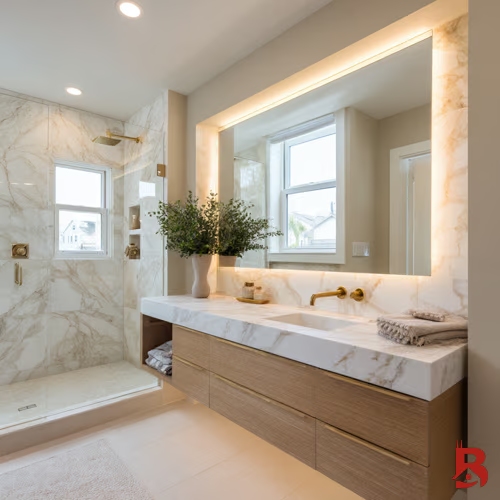
Curbless shower conversion: Removing the step-over barrier eliminates one of the most common fall triggers. Modern walk-in showers can be beautifully designed while maintaining excellent drainage.
Tub-to-shower conversions: For many seniors, stepping into a traditional bathtub becomes impossible. Converting to an accessible shower maintains independence while dramatically improving safety.
Shower seating options: Built-in shower benches or removable shower chairs allow for safe, comfortable bathing. Look for models with:
- Non-slip rubber feet
- Adjustable height settings
- Drainage holes to prevent water pooling
- Comfortable, contoured seating
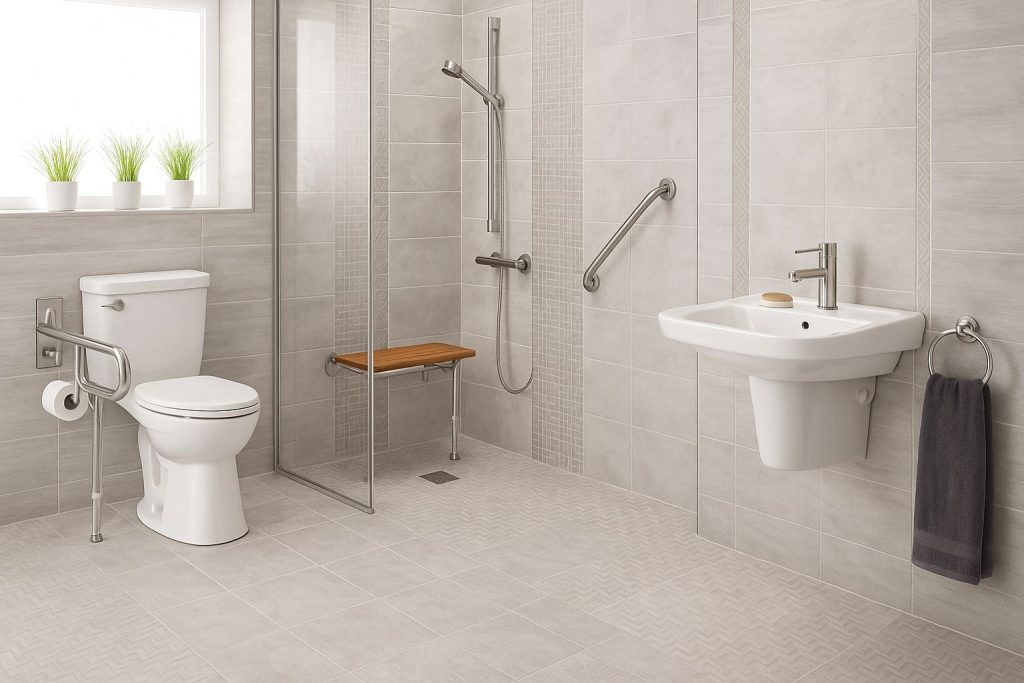
Toilet Safety Enhancements
Comfort-height toilets: Also called “chair-height” or “right-height” toilets, these fixtures sit 2-4 inches higher than standard models, making sitting and standing significantly easier.
Toilet safety frames: These adjustable frames provide sturdy armrests on both sides of the toilet, offering support during transfers without requiring permanent installation.
Raised toilet seats: For those not ready for a full toilet replacement, raised seats can add 3-6 inches of height while maintaining the existing fixture.
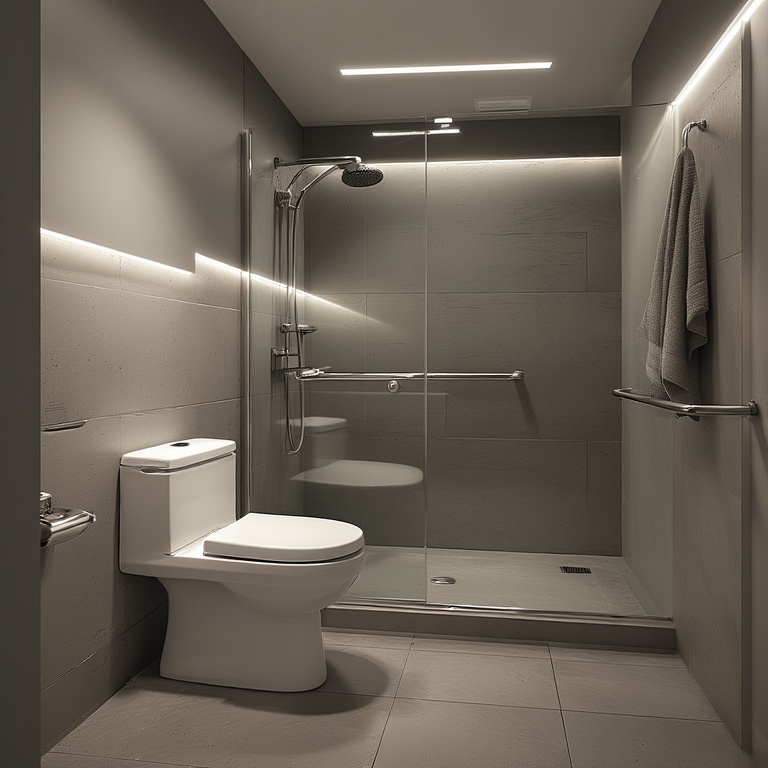
Advanced Safety Technology
Motion-sensor lighting: Automatic lights eliminate the need to fumble for switches in the dark—a common cause of bathroom accidents during nighttime visits.
Anti-scald devices: Thermostatic mixing valves prevent dangerous temperature spikes that can cause burns or startle someone into losing balance.
Smart home integration: Voice-activated lights and emergency alert systems provide additional layers of safety and peace of mind.
Ready to Improve Your Bathroom Safety?
If you recognize bathroom safety risks in your own home or a loved one’s home, don’t wait for an accident to occur. Start with a professional safety assessment to identify the most critical improvements for your specific situation and budget.
Remember, the goal isn’t just to prevent falls, it’s to maintain your confidence and independence in your own home for years to come. Every safety modification is an investment in your continued quality of life and peace of mind for your family.
Contact us today for a complimentary home safety evaluation and learn how simple modifications can make a dramatic difference in your daily safety and comfort.
Your independence is worth protecting. Let us help you create a bathroom that supports your lifestyle safely and beautifully.